
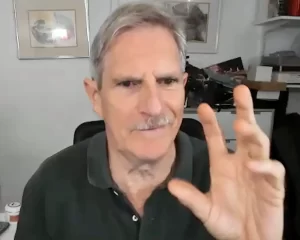
Dick Allgire – Master Remote Viewer
Dick Allgire is a Professional Remote Viewer who uses his over 3 decades of expertise that allows him to identify specific and highly accurate details about our future.
Dick is Formally known for his award-winning television News Journalism as an anchorman, reporter, and producer over at KITV, an ABC News Affiliate in Hawaii.
He’s considered one of the most gifted Remote Viewers in the world, who has taken his skills and training to found The Future Forecasting Group, a private membership group that allows him and other remarkable Remote Viewers to dedicate full-time to identify yearly and monthly future events of import with uncanny specificity and accuracy.
The Future Forecasting Group Remote Views cryptocurrencies, as well as the changes in the monetary system, along with market outcomes that allow others to take advantage of timing in the buy and sell area of investments.
If you are concerned about events that will be impacting the world and you would like to know more about Mr. Allgires’ work and experience over the many years in his field, this special is for you. Our guest has a low-key way of communicating along with s wonderful sense of humor. He has the kind of magic about him that draws you in.
Don’t miss this extensive discussion with Dick Allgire.
Read the Full Verbatim Transcript with Dick Allgire on It’s Rainmaking Time!
It’s Rainmaking Time!®
A Conversation with A Remote Viewing Master — Dick Allgire
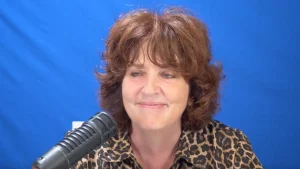
Host & Interviewer: Kim Greenhouse
Kim: Ladies and gentlemen, welcome to It’s Rainmaking Time. I’m Kim Greenhouse. I want to wish you all a happy new year. That is when this video is going to be published and available to you all. If you’ve watched It’s Rainmaking Time, you know that we cover new and ancient knowledge and discovery and we love exploration. And of course, when you love exploration and you track this, you have to be willing to learn things you didn’t know before. Things that you heavily believe in, you may find out are really different — the reality of it — and it takes real courage to embrace new knowledge. And sometimes that new knowledge is ancient knowledge that’s been buried or suppressed or lost in time throughout different civilizations. The subject that we’re going to talk about today and the guest that we’ve invited on is one of my favorite subjects and also one of my favorite guests who we’ve never had on the show before.
Kim: We’ve done several shows on the subject of remote viewing and I’ll just translate and then we’re going to have him do the formal translation. The ability to identify any data, any information happening at any time in history — past, present, or future — through a protocol that’s been taught. Originally started at the Stanford Research Institute and also over at Army Intelligence, and it’s developed over the last 40 years. There are different groups of people that do this work. Some call it psychic spying, some call it seeing specific detail into the future using the subconscious in a trained protocol, and there are different factions of remote viewing. Some are trained in only something called controlled remote viewing and others are trained in remote viewing. Whatever it is, whatever it is that brings through the data and information into accuracy, we’re interested in. I’m always interested in that. The gentleman we’ve invited on the show is considered a master in the field, has been doing remote viewing for 27 plus years.
Kim: He’s had a long trajectory, believe it or not, in the news, in mainstream news. He’s been part of the news that even was around presidents — Bush and Obama and Reagan, senior and junior, both senior and junior Bushes. He is considered a journalist, but he’s really a fine reporter and he is one of the top remote viewers in the world. He is part of a group that he founded called The Future Forecasting Group, which is a team of remarkable remote viewers that work together to bring through what we need to know about the coming times, how to prepare our lives for these very, very difficult times and changes ahead. Ladies and gentlemen, welcome Dick Allgire to It’s Rainmaking Time. Thanks for being here.
Dick: Kim, it’s great to be with you. It’s good to finally meet you and I’m so happy to be here. This is going to be a really interesting discussion. We’re going to have fun.
Kim: I know. That’s one of the things I love about you is that as good as you are, as great as you are in what you do, you’re very lighthearted and you’re fun and it’s very hard to find that integration of lightheartedness and fun with the gravity of what you actually do and are part of.
Dick: It’s rare. What’s fun for me is I started doing YouTube and got some notoriety on YouTube and there are a lot of people that had only seen me doing my segments with Courtney Brown at Farsight, so their only exposure to me was me at a whiteboard where I’m being completely focused and I’m doing really heavy duty remote viewing on Sirius, 9/11, Roswell, the JFK, and I’m here in the midst of all this turmoil and a very serious person. So they saw me doing stuff on YouTube where I’m just being sarcastic and flippant and making jokes of things and they said, wow, you’re a pretty funny guy, Dick. So yeah, I can be lighthearted. I don’t take myself too seriously. Hopefully.
Kim: I did some research about you and one of the things I really appreciated — from somebody who has a long lineage of teachers and mentors and coaches and people who have helped me in different fields throughout my life — you talked about Professor Nemar. Who helped?
Dick: Nemar? Yes. Oh man, that’s going back to 1970.
Kim: I know, but he was an important part that trained you about integrity, honesty, not being biased, how to be in your earlier craft, and I see it in you now today.
Dick: I remember him telling us — and I was very young, I was like 18 at the time in journalism school — when he said, as a journalist, you have the honor, you have the privilege of witnessing something and being the eyes and ears of the general population. You have a duty to witness that and transcribe it and report it accurately without bias. And I always took that to heart. When I was at a news story, I was seeing that for the general population. In my career I interviewed presidents, governors, senators, congressmen, mayors, city council members. None of them ever knew my political bias. Well, I never had political bias. But they never could have known how I voted because I never injected myself. And now I see journalists that are just pushing propaganda, pushing a company line. They’re totally biased and it’s okay now. It’s like — that’s not okay.
Kim: It’s a tough time to be a journalist today. I mean, I think it’s even worse and also even in many of the online portals to be a journalist too. I really don’t know how they would even compete if they don’t do what they’re told — they’re gone. The internet has created a lot of great things, but also a lot of polarization. So it’s a tough time.
Dick: Well, everybody can be a journalist these days. Back when I was on TV, there was no Zoom. You couldn’t do videos on your iPhone — you had to have a video camera. These things cost $40,000. The editing suite cost $150,000. You couldn’t transmit it only over the television cable or satellite. So it was limited, and to be part of that, to be an insider and be able to do that was something significant. Now, everybody can do it, but it’s a model that they’ve used. It used to be to own a TV station, you had to invest in all this equipment, pay all these people, go out and get advertisers. You had to have a building with the whole infrastructure. Now you can just give someone a smartphone and they can be the content creator and Google will find the advertisers for you. So it spreads it out. It decentralizes information.
Kim: Kind of. I think that you’re right when you talk about it that way, but I think the centralization still is in full force because of so many years of algorithms.
Dick: Somebody told me very early on how easy it is — if you take an influencer, someone that has a YouTube channel and somebody gets ahold of them and says, okay, hey, let me give you a good story you might want to do, or here’s an interview, and then the YouTuber puts that segment up and notices all of a sudden the algorithms make it go viral and they start making money off that. You can steer them in a direction by just gently applying pressure and giving them more views and they will acquiesce to that. So it’s very easy to do. There are entities, there are people, there are organizations that do this. Everything is controlled.
Kim: It’s phenomenal how much it is. I remember years ago I was told, put all those interviews on YouTube and monetize, and I have to tell you, my instinct was do not be dependent on it. If you have a slogan like Don’t be evil, and they’re doing what they’re doing with data — everything in my instinct said, don’t be dependent on them. And the algorithms all these years, they just gathered more and more data. They actually tricked the public. They trick the common person who entrusted them. Everything would be changing the protocol. So we’re in a different world.
Dick: Well, Kim, here’s some breaking news for you. We just did a remote viewing project that as we’re recording this conversation hasn’t come out yet. It will come out with the new year, so it probably will come out about the time that this is released. We did a remote viewing on Google in the future — like 2027 — and what we saw is startling. I can’t give it away now, but that’s a tease for you.
Kim: I think it’s important. I actually think it’s very, very important and I’m very glad that you have a private membership group because —
Dick: Well, the reason for that is all information is controlled, and if you’re putting something out in public, you have to be careful. So if you’re in a private setting, it is allowed.
Kim: I will tell you that I just finished, just briefly, an interview with Valentina Kova, who’s a solar physicist and a mathematician of galactic — no pun intended — galactic proportion. And I had done 26 shows on climate and weather, every facet of it, and I got a lot of flack for it in the years before I went to live in Europe. I was totally open. I covered every aspect you could think of except for the sun, and I started to learn about solar cycles and all that. Anyway, I did this hour and a half interview with her, and it’s kind of the verification that two to 300 years of old tools to measure things in a different realm — and she got into the layers and the detail of what the Grand Solar Minimum is, the Grand Solar Maximum is, and all of that. And even just as an example, the fact that CO2 — we all know those in the know that it’s the breadth of life — but what it’s turned into is something completely different. Well, she figured out what they did to make this thing about CO2 that has nothing to do with anything, but it’s what the world is believing now. So I decided I’m done with Google and YouTube. I put a four and a half minute trailer and that’s it. And everything else is on It’s Rainmaking Time.
Kim: But I think a private site is even better.
Dick: We have a source at Future Forecasting who is a gentleman whose voice can’t be on YouTube. We put it on as a promo accidentally, and the algorithms caught it, and some people got ahold of him — and I’m sure you know, if you’re on YouTube — he went, no. And we had to take it right down. So we have a source that can only speak privately.
Kim: Totally understand.
Dick: Which is one of — yeah, I totally understand.
Kim: I want to go back — your dad was a photographer, correct?
Dick: Yeah. My dad had a picture in Life Magazine. My dad was a public relations guy, worked for US Steel, and he took a famous picture of a ship being launched sideways into the Detroit River. I was probably six years old. He took us there and this ship was up on shore — they had constructed it and they knocked out the supports and the thing slid into the water. My dad got this photograph that was put in Life Magazine. Famous picture.
Kim: Wow.
Dick: My dad was a great guy. He was a musician. He played music. He was a great father. He just took the family sledding, Christmases, vacations. I grew up in the Leave It to Beaver, Father Knows Best era.
Kim: God help us all.
Dick: Yeah, that whole era — one father, you had your back. And you had your background as a young child taking still pictures, right?
Kim: Still photography.
Dick: My father had a Nikon camera — two old school cameras and a dark room in our basement — taught me how to use it, let me use his cameras. So I went out and took pictures, and that’s how I got into journalism because I was a photographer for the school newspaper and the advisor to the school newspaper gave me hall passes that would let me cut class and be where I shouldn’t be to take pictures. And so I thought, wow, this is great. Journalism is big fun. So that got me into journalism and I went to college, took a journalism course, got an internship at KUTV, the NBC affiliate in Salt Lake City, Utah, and became a newscaster at 20 years old.
Kim: Wow. I didn’t know you grew up in Utah.
Dick: I did. Well, I was born in Detroit, moved to Utah when I was 10, grew up and went to school in Utah and worked there for about 10 years. Then came to Hawaii in January.
Kim: On business to Hawaii or love, what was it?
Dick: Neither — to get warm. And I got off the plane and I went, I’m home. I’m not leaving. And I went and I packed up and I thought, I’m going to try this. I’m young enough. If it works, it’ll be great. If not, I’ll just go back home. And I brought videotapes — back when you used to have three quarter inch cassettes — and I gave one to all the TV stations here and went to the beach, came back one day and one of the news directors had left a message, call Paul Udell at KITV. I went in and he hired me, and here I am still in Hawaii.
Kim: So you and Hawaii have a love connection there. It’s a beautiful place. Still a beautiful place.
Dick: The culture, the people — it is just wonderful. Not to mention the weather. It’s also, I think it’s a heart chakra of the earth.
Kim: Very much so. Very much so. It’s funny that you should say that because when I was in Europe and I went to all these different places, one of my favorite places was Italy, and somebody said, why? I said, it’s the heart chakra of Europe.
Dick: I need to go to Italy. I’ve never been there. I would just go there and eat the food.
Kim: They’re wild. Okay. Just tell me one thing — I just want to ask about your mom. If your mom were alive today, what would she say about your work in remote viewing? I’m dying to know.
Dick: She would think it was great. Well, all moms are psychic, as you know. My mom was particularly psychic. She used to call me up and say, I had a feeling something happened to your dog. And I went, yeah, my dog just fell out of the car. So I think I got some ability from her. She would think it was great. She passed away before I was remote viewing then, but not as good as I am.
Kim: You were still training, right?
Dick: Yeah, I was still training. But she totally believed in it, thought it was cool.
Kim: What did your dad think? Was he alive to know what you were doing?
Dick: Yes. He actually tested me one time, gave me a target, and I nailed it. He was probably scared at that point.
Kim: Yeah, it’s fascinating. Talk to the audience — from your translation — what remote viewing is.
Dick: Remote viewing is a natural communication skill. It’s something inherent in all of us. The goal is to open a pathway — a communication pathway — between your primary awareness and your subconscious so that you can on demand have moments of non-local awareness. The way I describe it is the stock human being comes off the shelf with a subconscious awareness — a part of us that is in a greater field of consciousness — but we’re not aware of that because we’re inhabiting these bodies, having this three-dimensional experience, and our brain is like a filter that filters out this subconscious awareness. Throughout your whole life, most people’s subconscious is trying to tap you on the shoulder and go, hey, hey, listen to me, listen to me. And you don’t tune in. The US military came up with a way to use these protocols, this methodology, to quiet your conscious mind and turn your attention toward your subconscious awareness, using a series of steps and protocols to form queries — little questions — and have that moment of non-local awareness and then let that bloom into a greater aperture, a greater opening.
Kim: The non-local awareness — can you describe that for the audience so they have a reference point? Because you speak it from the inside of the ability.
Dick: My teacher Glenn describes it as — can you stand beside yourself? Could I, while I’m talking to you, walk to the door behind me and open it? It’s like being two places at once. The way I describe it — it’s like if all information exists in a greater field and we’re right now focused on this moment. It’s like watching a video on YouTube. Think of all the videos that are there, and when you go to a specific video, you play it and the timeline goes through it in a linear fashion, but you can go pick another video and go to a different spot on the timeline. And remote viewing allows your awareness to go be in a different place at a different time.
Kim: It’s hard to explain well — that you can be here in your body, be alive, and at the same time send your awareness out whether it is to the backside of the moon or to Mars or to the back of your car or in a drawer. And still be here, but you train how to send your awareness out and extract data from that location — sight, smell, feel, everything. Correct.
Dick: I did a target one time where I was sitting at this very desk, I had a red light on and white noise going, and I was working a target. And I realized there was a room, and in the room there was a safe hidden under a floor. And so I realized that, and I’m sketching that and drawing it, and I’m going back and forth. And then I said, well, I need to know what’s in the safe. And so I set my intent, closed my eyes and did a protocol and I saw inside the safe a gun, some coins, and a ledger — a fake ledger. So yeah, you can send your mind anywhere if you learn how to do it.
Kim: The origin of this capability and this expertise originally was classified, then it was unclassified. And yet there seems to be a growing number of people who are training — whether it’s in Lynn Buchanan’s group or whether it’s at Future Forecasting Group — and you’re doing it differently. He does what he calls controlled remote viewing. You do remote viewing. But the thing I also love about what you’re doing with your group — and I think it’s going to really forward the whole field — is that by joining the group, I get to see what works and what doesn’t. I get to see whether you’re accurate or not. You’re willing to put yourself out there. It’s not this mysterious hidden thing. I love that you’ve put sunlight on it. It’s more risky because you don’t know your targets. Explain that part to the public — that you never know what you’re going to be looking at.
Dick: It has to be blind and preferably double blind because the signal is so faint. When you sit down at a target, what we do is we generate random letters or numbers. So the target could be 1, 2, 3, 4, 5, 6, 7, 8, or we use A1, B2, C3, D4. We have a random letter-number generator generate that. Someone called a targeter knows that if we’re going to look at Google headquarters in 2027, you don’t tell the viewer that because there’s too much conscious mind interference.
Kim: 2027?
Dick: 2027. Yeah. I just want to make sure. Well, you could do that too — you could look at 2007. That would be interesting, going back in time. You’ll be in a new film called Back to the Future.
Dick: So somebody — the targeter — assembles all the information about Google and looks at that and immerses their consciousness in that. And they write a target queue like Google headquarters activity 2027, and then they generate a random set — A1, B2, C3, D4. And they say that aloud, they say A1, B2, C3, D4 is Google headquarters in 2027. They imprint that into it. We’re just given the random numbers and we say, here’s your target, A1, B2, C3, D4. And then what that allows you to do is have what we call a null moment. When I address that target ID — and by the way, A1, B2, C3, D4 is not a real target, that’s just a reference of what we’re doing — I sit down and I go, okay, and I look at that for one second and I have to be open to anything and I go from there. So it allows the viewer to have no preconceptions.
Kim: In remote viewing as I understand it, and controlled remote viewing — how do you distinguish in what you and your team are doing, the distinction between what you’re pulling through and your own analytical overlay? In other words, your own biases, just stuff that’s your own. The ability to distinguish the data from your own stuff — how do you do that? How do you manage that?
Dick: Practice, practice, practice, practice. Hundreds of targets. You have to learn. What I maintain is that the protocol methodology — controlled remote viewing, HRVG, any method — it gives you the tools to learn how to remote view. That doesn’t teach you how to remote view. It gives you the structure. The learning how to remote view is a result of addressing a target, getting data, and then getting feedback. And when you get that feedback, you realize what the good data felt like, how your mind was working when you got that. In the method I was taught — which is HRVG, formed by US Army Special Forces — we never were afraid of AOLs. We never used the term analytical overlay. Our goal was to name the target. And if you saw the session I just did on Maria Orsic, I actually at one point wrote her name. There was a point in the session where I knew it was a very psychic lady.
Dick: At Far Sight. So what I was doing was I was going to attempt to put something in the death mask. Let me draw this. Yeah, that right there is called Nemo. And that’s a neurolinguistic programming probing tool. If you ask me to remember something — like what did my first car look like? — my eyes would go up into the left to remember. And if you asked me to recall my mother, I would go down to recall the kinesthetic of that. We use that as a probing tool. Anyway, that’s a very distinctive thing. I tried to put that in Napoleon’s death mask. And also the word HAM.
Kim: Okay.
Dick: That’s an insight — that’s something that I published as an entrainment in 2009, the term HAM. And so I did my thing, and I’m not going to say how I did it, but I went and looked at — after I got feedback — if you look at the picture of Napoleon’s death mask, you can sort of see that radial. And you can see the word HAM. I’ll publish that out. We’ll do a segment on that.
Kim: That’s phenomenal. That’s fascinating.
Dick: Let me get to the theory behind that. Remote viewing is generally regarded as a passive activity. If I go back to Napoleon in 1802 and I bring back valid data about Napoleon — information has to move. Information moves from one point in consciousness, in reality, to me sitting here in Maui, Hawaii in my condo in a dark room addressing a target ID. My consciousness goes somewhere and gets valid data about Napoleon with his cannon and his death mask. Information has to move to get to me. Information moves. So if it can move from 1802 to 2023 — from France or Italy or wherever he was fighting his battles — information moves. Can information move from me? Can I place information in that time? Is there some way I can do something to affect that target that would show up in the here and now — that would be verifiable, unique enough and verifiable? So I used that little icon that I don’t think they ever used in his time, and the word HAM. I’m going to publish that pretty soon. That’s the kind of stuff where — you really, there are some things that make you wonder.
Kim: Just before you go into the next thing — you say information moves. I get that at the level of consciousness. But in your practice, you in your consciousness move to that location — space and time and event. That event space is captured somewhere. Whether we call it the Akashic Records or whatever — what do we call this? Nothing goes away.
Dick: I call it a greater field of consciousness. If I go like this, that’s an event that has a robust electromagnetic signature. I do that again — that’s another event. Those exist, those are still happening back in time. So if you move your awareness just back to when that happened, it’s still happening. So I believe remote viewing is in essence time travel. And the reason I believe that is because we’ve done enough. Some say, well, you’re just remote viewing the feedback. You’re just getting what someone’s going to tell you about the target, or you’re remote viewing what the tasker knows — you’re going into the tasker’s consciousness and getting what they know. But I’ve seen many, many, many instances of remote viewing where the remote viewer gets data that the tasker didn’t know. And that is not part of the tasking. So I believe you’re getting it from the source.
Dick: So the question is, can you go affect that source with your consciousness? We think so. But the observer’s effect is so small — you have such little gain. I know some remote viewers that were remote viewing a famous tragedy, a famous mass death event that’s part of history, and someone died — a little girl died in that event. So the remote viewers went and they found that little girl, and they know that in the confusion of the event, she was running with some people and she turned right and became trapped. If she would’ve turned left, she would’ve gotten out. So what they were attempting to do was to nudge her to go left so that she would survive the event and not be on the casualty list. How would you do that? How can you as a remote viewer go there and communicate, go left?
Kim: Isn’t there a disruption in the flow of events of one’s karmic path?
Dick: The paradox? Yeah.
Kim: I mean, it seems like it would be crossing the Rubicon from the profane to the sacred — but interfering with the sacred of one’s trajectory of a life.
Dick: I know someone that’s writing a book about that, a novel that’s very interesting. What if you could, just by causing some small little event, save someone’s life?
Kim: I have an idea for both of us right now. Here’s what’s going to happen. You and I are going to go back and talk with Nikola Tesla — the real deal. We’re going to tell him to shut his mouth to the guy he was talking to who wants to meter all of the energy. Keep it quiet, let him have his deal, and he does his thing on the side as a parallel path. Boom.
Dick: Yeah, there you go. That would change humanity. But would it be allowed by the greater power? And I don’t mean God is the greater power. I mean the earth power — that kind of a thing.
Kim: It’s kind of like open sourcing. My company, the Rainmaking Company, I helped inventors and pioneers bring their work to the world. My background’s in packaging and communication and strategic planning for people that have a lot to lose if they don’t get it right. And typically people don’t do a parallel path — they go straight in and they go right to the patent office and all that. And then a lot of them don’t make it. I mean, there was a guy I interviewed, Joseph Longo, who was called the King of Garbage. He had a plasma generator that could get rid of anything — plutonium, this, that and the other. And after I interviewed him, he was going to go with a three letter agency. They wanted him to do a deal with them. I said, please don’t do this. It’ll be buried forever. They’ll say, yeah, give us that. And then they use it and you never see it again.
Dick: He ended up doing a deal with them?
Kim: Well, he ended up doing a deal with them and he’s no longer with us. But the point of the matter is, by the time a pioneer gets to the deal with people, a lot of times they don’t care anymore. They’ve risked everything. They’ve lost friends, family, love, children, money, credit, everything. They’ll just go — they’ve had heart attacks, they’ve had whatever. So this is very chronic what happens. But the thing is, the few people in history that I would love to go back with you and have a talk with — Nikola Tesla. I would like to manage Nikola Tesla personally. I’d like to manage what couldn’t be managed. He didn’t have the right people around him.
Dick: We remote viewed him. Edward Reardon — I saw that too. I didn’t get very good data on Nikola Tesla. When I got the feedback on that I was like, I didn’t really get it. But sometimes it doesn’t work. I have this brilliant Napoleon and brilliant Maria Orsic, and then Nikola Tesla. Some days it just doesn’t work. I’m not a machine.
Kim: That’s very refreshing about you. I was a former tournament tennis player for 13 years, and I will tell you something — there are days that I would go out there and I just played like hell. And there are days where you just have it. It doesn’t matter how good you are, it doesn’t matter how competent you are. It doesn’t matter how skilled and developed you are. You’re going to go out and you’re going to have those days. They’re just days where you’re off the mark, period.
Dick: Well, somebody just asked me, what does it take to become a remote viewer? And I said, stubbornness, tenacity. I did so many targets, so many nights at Hawaii Remote Viewers Guild where I’d get a hit and I would be walking on air like I am magical. But for every one of those, there was a half dozen where I would slink away not wanting to talk to anybody. They’d give us the feedback and I’d go and just feel despondent. So it’s just a matter of — do it again, do it again, try it again, get a little better. And you’re always going to have some totally embarrassing, glorious misses where you think you’re really smart. You just don’t get it. So I had a day like that on Tesla. I was like, why didn’t I do better? But yeah, I’d love to talk to that guy. Tesla — I think Tesla was somehow involved with things we can’t fully explain.
Kim: He wasn’t from here at all. He wasn’t from this planet. He can’t not have been, right?
Dick: Well, the person that we communicate with at Future Forecasting — I don’t know if he’s totally from this planet. There are people that get selected at a young age and they get an education that we don’t get. They’re upgraded and they have knowledge.
Kim: You don’t think you’re upgraded, man? You’re very upgraded. Everybody may have the capacity to remote view, but nine out of 10 people will never become the remote viewer that you are, will never reach the level that you are. Because it requires the initiation and the continuous practice. And let me tell you, I took a remote viewing class for five days — not by Lynn, it was by a woman whose last name was Smith. Laurie, I think. This was before I went to live in Europe. And the reality is that while I got some hits and I was very excited, it is a very concentrated, focused, isolating thing — the practice. It’s not like you’re getting these big kudos. You could go hours and hours and hours focused and drawing in and everything. You have to have a tremendous spirit and a dedication to do this again and again and again in practice. Without applause.
Dick: Yeah, you’re right. I used to be the weekend anchorman at KITV, the ABC affiliate in Honolulu. And being the weekend anchorman at that time was for me a pretty easy job. You’d go in about two thirty in the afternoon, I’d do the six o’clock news or the five o’clock news and the ten o’clock news. So you go in, you get a little briefing — this was really before the internet, the internet was fledgling at that point. And then I’d rewrite some intros, help write some of the national news. But the workload wasn’t that intense with only two newscasts. So I would have a few hours of downtime. I would sneak back into a quiet office and work remote viewing targets while at work. And I remember being on Mars or back in time, and over the intercom — Dick Allgire, come to the newsroom, Dick Allgire — and I’m like, whoa, where were you? I said, oh, I was in the other office. We need you to cut a tease on the murder. And I’m like, oh my God. I was just remote viewing. That’s wild.
Dick: One time I was in my office working a blind target, and I went to the ERV portion where I was in my chair and I was going out into that near-sleep state. And all of a sudden I was in the deep blue ocean on a sunny day and a single engine airplane went and plowed into the ocean right in front of me.
Kim: Oh my God.
Dick: And it was as real as full color experiential reality — like the most vivid dream you’ve ever had. And I jumped out of the chair and I was like, oh my God. And I go, okay, I’m in my office. I was remote viewing. And so I went, what the hell was that target? And I sketched it and I went, that was intense. Remote viewing is not always like that. Very often when I remote view it’s dim and blurry. It’s just a little tiny faint, one second flash. Sometimes it plays as a flickering little movie. This time it was full on. I see the whole thing. And so I drew this plane slamming into the ocean and I submitted the target and I got feedback a few days later — and it was US Coast Guard Hawaii, next rescue event, near future. So they were looking at what would be the next time the Coast Guard would have a newsworthy rescue event.
Kim: Oh my God.
Dick: So a week after that, I’m on live TV, I’m on the news, I’m on the set. I got my IFB in, got my makeup on and my necktie, and I got my script — listen, still ahead, the mayor says the new sewer fee is too high, or whatever. And they come out and they hand me a script. They go, we have breaking news. So they go, go. And I go, the US Coast Guard is on the scene of a rescue event four miles northeast of the island of Oahu. A Cessna airplane has just crashed into the —
Kim: Oh my God.
Dick: And I realized I’d remote viewed that. And I’m on live TV, and this realization hits me while I’m trying to ad-lib the story. And I’m thinking, what a weird life I have. No one would ever believe this. And I have to be on live TV and maintain as the straight newscaster going. That was one of the more bizarre experiences of my newscasting remote viewing life. I lived a double life. I was this credible anchor — you couldn’t admit to being a remote viewer back then. People thought you were crazy.
Kim: True.
Dick: We were doing work for the Honolulu Police Department — missing persons. We had a detective that we had an association with. We did one missing person’s case that we did really well on. And he had us meet with the mother of this guy that had disappeared while hiking and we gave her the data and she was so thankful. She said, I finally have closure. I know what happened to my son. I believe you. And the detective helped us do that. But I went to a press conference once and he was there and he looked at me and he went — don’t pretend you know me, don’t talk about remote viewing in this setting. He didn’t want it publicly known that they were relying on remote viewing. Lynn knows all about that because Lynn does that work too.
Kim: He shared that a lot. Even today it goes on. Yeah.
Dick: Yeah, he does a lot of that work. You can’t do targets like that all the time. It would mess with your head. Those are the hard ones to get feedback on too.
Kim: How do you decompress when you go into a target? There’s a protocol, I guess, for decompressing from going to the target.
Dick: I play guitar and that calms me down. Remote viewing is inherently destabilizing. The difficult ones for me are missing persons or future events. There was a shooting at the Garlic Festival in California two years ago, and I had seen that one. I saw the tents and the signs, I saw the people running for their lives, and it was like a little colored dream I had for five seconds. I go, wow, there’s tents and booths and it’s some event like a state fair and something bad happened and the people are just frantic. And I drew that and put it in, forgot about it. And I got up one morning a few weeks later and I saw the news reports of the shooting at the Gilroy Garlic Festival, and it was those tents. And I rushed to my computer and I looked at it and I was just there sobbing. I was just overcome. It’s real eerie. It’s kind of spooky.
Kim: It’s a spooky part of this for sure, particularly when it’s future oriented like that.
Dick: My wife is — I have a wonderful wife. She’s so cool. Mimi.
Kim: Mimi.
Dick: Mimi is her name. Yeah. She’s Korean. You want to hear a really great romantic story?
Kim: Please. I love it. Let’s hear it. Bring it on.
Dick: I was never associated that much with the military. I was a Grateful Deadhead — I was more of a hippie in the seventies. And now I have great respect for — I worked with Special Forces guys like Lynn, even though they’re very far out. I was on the news and we used to go to this bar in Honolulu. This would be 1989, 1990 — after the Friday news we’d have a few drinks. We were at this bar, the news team, and this very clean cut young man came up and bought us a round of drinks and introduced himself. He goes, I’m Captain Mueller. And he was a Marine officer and a gentleman, really nice guy. We became friends with him just randomly meeting at this bar. And he threw a party and some of us went, and we became friends.
Dick: So he said, I’m going to go to this 4 AM bar that’s owned by Tom Selleck. And I said, I’m tired, I’m going home. And he called me later and said, I met this Korean woman, she’s just fabulous. I’d like you to meet her. So I’ll jump to the punchline. He married this Korean woman and asked me to be the best man. And I said, okay, sure. So I got a tuxedo, put it on — it was Super Bowl Sunday — and I had to leave the Super Bowl. I’m going, man, I really would rather watch the Super Bowl than be in a tuxedo and go to a wedding. So I go there and his bride’s sister — I go, this is Mimi. And I went, oh. And I’m sitting there in the ceremony in a tuxedo, he’s in his dress uniform, she’s in a wedding dress and Mimi’s on the other side in a pink dress. And I had a vision of me marrying Mimi and him being the best man. I could see that. And I shook it off. This was before I was ever exposed to remote viewing. But I said, wow, I’m not going to marry a Korean woman and I’m a bachelor, I don’t want to get married. Why am I thinking this? And the ceremony ended and we were walking arm in arm up the aisle. And when she touched me, I knew. I go, this is my soulmate.
Kim: That’s amazing.
Dick: Yeah. And so that came true. That vision came true. And I married her and I’ve been happily ever after. She’s wonderful.
Kim: How long ago was that?
Dick: That was 1992.
Kim: So you’re making the Guinness Records book. You’re in Guinness.
Dick: Back to remote viewing.
Kim: That’s a great story. But I want to say one thing — the vision that popped in your head about Mimi, it may not have come from you. It was given to you, I think.
Dick: Yeah, probably. I agree. She should remote view. I go in my room and she’s out watching Korean dramas or something, and I come stumbling out after two hours and I’m still a little dazed and I’ll be talking to her and she goes, you’re not all the way back yet, are you? And sometimes I show her my work — I’m still under blind protocol. So I go, look, I saw this, this, and this. I don’t know what it means. I don’t know what it is, but I saw people doing this. And then a week later I’ll get the feedback and I’ll go, hey Mimi, remember I told you about that target? Come look. And she gives me a high five. But one time I remote viewed the Ron Brown plane crash, and I saw a plane hit a mountain and crash, and I finished and I put my paper together and I went down and I laid down on the bed next to Mimi and she was watching TV and I was just sitting there and I started sobbing. I went, they all died. They all died. And she goes, oh, you’re still there? I said, yeah, there was a plane crash. So she’s very supportive.
Kim: That’s really important. Years ago, I did an interview with Trevor James Constable, who used to do weather engineering using some of Rudolph Steiner’s work and others. He would literally make it rain. And one of the things I’ve noticed — and I think you have a real blessing here — because a lot of the spouses of pioneers, I should say male pioneers, a lot of who I have assisted, have not been supportive of their work. And it impacted their whole lives. They suffered their whole lives. I think it’s such a blessing that you and Mimi found each other. Honestly. Huge.
Dick: Huge contribution. Oh, for sure. For sure. So I have friends that if I told them, yeah, the government has programs that can control the weather, they go, oh no. They won’t even consider the idea, but they’re still my friends.
Kim: I’m going to show them the patents. They’re easy to show — just look at the patents.
Dick: They’re over 50, they don’t want to see it, don’t want to know. They won’t believe it. All these things. You must have people you come in contact with — friends and family — that you can’t talk about this with.
Kim: None of my family, except anything I’ve ever covered on It’s Rainmaking Time, including It’s Rainmaking Time. They live in their own bandwidth, in their own bubble of comfort. And I have to respect that. My older sister is much more receptive. My parents are gone. But it’s the kind of thing — when information comes to you and you get evidence of something, it doesn’t mean everybody wants to know, will know, or should know. There are a lot of people who can’t handle it.
Dick: Well, here I am — mainstream news guy — and I was in a lane that I had to stay in. When you’re working for the ABC affiliate and you’ve done hits on CNN and CBS, you know what the parameters are. You know well when you’re a mainstream newscaster. And there came a time in 2012 when I was doing a live broadcast when Obama came to Hawaii and I was out there at Air Force One and Obama peeled off and started shaking hands with the military people there. And the producer said in my ear, keep talking, keep talking. This is great. And I had about two minutes worth of material — where Obama was coming, what events he’d be attending, where he was staying, when Michelle and the kids were coming. So I had material. Well, I went through all that and here he is over shaking hands. And they told me, keep talking. And I’d run out of stuff to say, and there was nobody to interview and nothing to interact with. And I knew things by then about Obama that I couldn’t say on TV. And those started flashing in my head and I was like, man, I don’t know how much longer I can do this.
Dick: So here I am with a worldview, and because of my remote viewing I start getting conversations with someone who’s telling me things like, Dick, we didn’t create this place. Someone else created it. And they administer the earth and there’s an authority. This is who runs it. And do you know that your birth certificate is a certificate of ownership and there’s a prepaid account at the Bank for International Settlements, and you can look up your social security number and see all the liens that are against the value of your body, of your soul — that someone claims. Incredible. What do I do with that? And by the way, you can’t really talk about this publicly, but remote view this and we’ll put this out. So we have our audience and they have theirs. There are people that want to know about this, that will delve into this and look at the evidence. And so we talk to them and that’s what we do at Future Forecasting Group — people that realize we’re in a system, we don’t really have much control over it, but if you have information, you can thrive within the system. You can navigate your own life. So we don’t give financial advice, but we do give information that helps people hopefully thrive better. And it’s just downright fascinating to learn.
Kim: It’s fascinating. But also I think that one of the reasons why what you’re doing is so important is that people have an opportunity to be in front of some things if they’re receptive to being in front of it, versus behind it after it’s happened. And I’d say a great deal of what you cover that’s relevant to life today and that is actionable — if people are receptive and they’re really listening carefully to what the entire team is doing, you will be called to make very different kinds of decisions because this is going to inform you. Maybe you don’t go right, but you go left. Maybe during this time you will stay out of the city because these events are going to happen. And I know you can’t talk about it here, but when people get to Future Forecasting Group they can watch it. But there is a major event, correct? There’s a major — I don’t remember if it was geological or whatever — there’s a major —
Dick: An explosive event. There’s some kinetic events. It’s a kinetic event, it’s a serious event. I can’t remember if it was 2024 or 2025. Sorry about that. But for stuff like that, one can ask oneself, where do I need to be? Am I in the right place? Not that one is going to run and so forth, but what do I need to do to prepare to have the best outcome no matter what? If it’s your time, you’re going, right? But if there’s something that you can do to sustain yourself and live through it, you’ll do what you can. And that’s what I like about it. There’s real world stuff. It’s not playtime over at your site, let me tell you.
Dick: But we try to avoid fear porn and I particularly try to avoid telling people what they should do. I’m just an eccentric old former newscaster who plays guitar.
Kim: But Dick, you still will reveal and transmit the data — you and your team — and then us who are receiving it are left with what to do. And we have to sit with it and look and ask, what is the call here?
Dick: So we just did this target that was artificial intelligence, blockchain, and Google. And I was thinking we didn’t have a very good session. I thought, well, that’s one of our misses. It’s a hard target — a really hard target to remote view. And that would be a great topic to discuss with Lynn Buchanan. Like, Lynn, how would you task that? Because artificial intelligence — where does it exist? What is it? Where is it? There’s no place you can go to see artificial intelligence on computer motherboards. Blockchain the same thing — what is blockchain? Where does it exist? What is Google? Is Google a search engine? Is it a corporation? Is it a store of vast amounts of information? Is it YouTube? What is Google? So we’re given this tasking — blockchain, AI, and Google. And we’re giving the presentation and Edward Reardon says one of them’s not going to make it, one of them won’t be here at the timeframe. And I’m remote viewing it and I’m listening to him in the debriefing and I’m going, AI is still going to be here. We’re not stopping AI. And blockchain is — blockchain is not going away. It’s going to be the accounting of the new civilization. That leaves — if one of those things is going away — is Google going away?
Kim: You broke the news about Theta. You and Lan Vo. Basically —
Dick: We did a blind remote viewing on Theta and I lit up. It’s huge. I went, oh my God. I saw full color people looking at screens, but not screens — they were looking at total immersion video, like virtual reality video.
Kim: Holographic for all we know.
Dick: And I go, this one’s based on the remote viewing. I bought a ton of Theta at like seven, twelve cents or something. And in 2021 I had made a lot. I didn’t cash it out, but I’ll get another chance. I just had a conversation three days ago with a gentleman that is running a Theta node. We’re going to put it out for people to stake their Theta Fuel too. Theta and Theta Fuel — I still think that’s going to be a good one.
Kim: Look at what they’re building. They’re building the most remarkable infrastructure. They’re building the transformation of the internet via video audio streaming into the blockchain so that it’s simpler, easier, faster, less expensive. It’s new infrastructure. That’s why Samsung’s in it, Google’s in it, YouTube’s in it. It’s the new infrastructure for entertainment, video, audio, documentaries — the whole caboodle.
Dick: I just got a list of the corporations that are running Theta nodes. Huge. Big ones. Okay. So what if — just theoretically here — what if Google ceased to be, and Google wasn’t running YouTube, and all the YouTube infrastructure had to go somewhere else and it went to Theta. How big would that be?
Kim: That’s what I’m saying. That’s what I’m feeling. I’m feeling they’re going to integrate whatever it is and it won’t be what we thought it was. It’ll be this new thing.
Dick: Yep. You got it. We’re on the same page. I can’t really give it all away.
Kim: It’s so big. No, no, no. Everyone just go into Future Forecasting Group and join.
Dick: Okay, so you have some cryptos. You’re into cryptos.
Kim: I do. Yeah, I do. And I benefited greatly from your sessions and the guidance and my own prayers and meditations about it.
Dick: When I did the Hitler remote viewing many years ago and the gentleman got ahold of me because of that, he told me, Dick, you have a skill. And throughout history, people with this skill have not needed to worry about money. Creature comforts, food — they always have the best, so they’re free to pursue this talent that they have. He said, what you need to know is that we’re in the transition to a new financial system. If you learn about cryptocurrency, you’ll attain generational wealth. This is your opportunity to never have to worry about money, or anybody in your family. That’s all he needed to tell me. And at that point I didn’t know anything about cryptos, and I went and learned, and I’ve done pretty well in cryptos, and we’re going to do really well. They’re going to be big.
Kim: It’s scary for a lot of people. I think about the people over a certain age getting into Bitcoin, the crypto, the whole bit — and how foreign the interface is, how foreign everything is. I consider myself fairly astute. And I want to tell you, I hired a Sherpa to help me navigate inside because it’s so easy to not know what you’re doing unless you really learn it.
Dick: Yeah, it’s not just cryptos, it’s the whole infrastructure.
Kim: Exactly.
Dick: You’re going to have a digital ID. You’re only going to be allowed to pay for things with your phone. They’re phasing cash out. Now, there are people our age who say I’m never going to give up cash, but young people have no problem — they don’t use cash. China — they don’t use it. Daz Smith says he hasn’t used cash since before COVID. Not one pound.
Kim: I have a question for you, and I don’t know if you’re okay to answer it, but I’m going to ask you anyway. Do you ever have a concern that you will be taken advantage of in the times to come when you have to have a digital ID and you report something on your private membership? And even though it’s private, it’s not private — I mean, you know what I’m saying. It is to the people who are paying for it. But anybody can go in there and say, what is Dick doing with the team? And oh, he’s talking about something — tell him to shut up or we’re turning off his digital ID. What’s going to happen with you in the future? Do you ever concern yourself about it? Honestly.
Dick: We just found out we have an LLC in a state that is not Hawaii because the taxation in Hawaii is just outrageous. So we have an LLC. There are new regulations coming.
Kim: They’re not out yet, by the way. They’re not out yet physically. I’ve called and called.
Dick: But it’s coming where you’re not going to be allowed to have a secret LLC in another state. You’re going to have to be compliant. There are companies —
Kim: Wait. Just for the public — I would imagine your LLC was about being in a more optimal tax location. That’s why people go to Wyoming or Delaware or Texas or Florida, et cetera.
Dick: Okay. Also, maybe I didn’t want them getting into my private business with my name being associated with it.
Kim: Understood. Understood.
Dick: Okay. So in the past, you could hire what they call a registered agent.
Kim: A registered agent, right?
Dick: You have a registered agent and they make the LLC for you. And they have a mailing address — like 212 Front Street, Fake Lane, whatever zip code. And they’ll do your mail for you and forward it to you. That’s not allowed anymore. You can’t do banking with that. We had a situation where we couldn’t pay our bills. I have Future Forecasting — we put up so much 4K video, just to host the video costs me a lot of money. The Zoom accounts, overhead things. We found we couldn’t pay that through that company. So what we had to do was come out into the open — where in that state we have to rent a real office, have an employee on payroll, and pay payroll taxes and have a residence. All that’s required. There are people in other countries that are doing tax-free things as LLCs in the US. And we contacted an attorney who represents like 5,000 clients, and the attorney just went, oh my God, we’re screwed.
Kim: Well, I contacted my accountant and the head of a registered agent in Nevada — one of the biggest in Nevada. They don’t agree that it’s going to manifest like that. They don’t agree that it’s going to translate into whatever, including the people that set up corporations. However, the regulations are coming. They’re changing. I mean, the devil’s always going to be in the details. It hasn’t been laid out yet. It’s coming, but it’s not out yet. Even my accountant was briefed on some of this for the last six months.
Dick: I know someone whose job it was to travel the world and tell corporations what was coming and what they needed to be compliant with. So we decided that we would become totally compliant.
Kim: Are you closing these companies? Is that what being compliant is? Or you’re going to have to hire people in whatever jurisdictions you have? I’m just saying something like that is going to have to happen. Or you’re just operating out of Hawaii.
Dick: Part of my thing is in Hawaii. When I married Mimi in 1992, I couldn’t even balance my checkbook. She married me. She said, yobo — which is honey in Korean — she says, yobo, give me your paycheck. I said, why? She said, well, it’s Korean custom that the woman handles all the finances, so I’ll handle the finances and I’ll give you an allowance. And I said, that’s not an American custom. And she said, do you want to fight already? And I said, no. She said, give me your paycheck. So I gave her my paycheck and I handed all the finances over to her with some trepidation. It was the best thing I ever did. I don’t use an ATM. I never balanced a bank account. I never paid any bills. And so suddenly I’m thrust into running Future Forecasting and making it compliant — there was quite a learning curve for me. But we’re totally compliant. I am in a position where I can’t have anything that could come back and bite me.
Kim: Me neither. I’m with you on that. And that’s why I made all these calls.
Dick: And more to come. Okay, on a bigger level — that’s the business regulation side. I think what you were getting at was more, is there forbidden knowledge that I would think better of giving? Yes, there is knowledge that we can only give in a private setting. I could blow up YouTube. I could go on and do 10 segments on YouTube that would get me so viral. But it would be the last videos I ever did.
Kim: Exactly.
Dick: So why would I want to do that? There is — are you concerned about me in the future?
Kim: You and Mimi, your wellbeing and your ability to continue, your sustainability — sorry to use that word but it’s overused. Do you have some worry? Because obviously you are being watched. You are being watched. I don’t mean it from a point of view of hiding. I just mean you get into some unusual areas — to be able to go in and know what’s happened with Google and where things are going — it’s a big deal.
Dick: Well, one of the reasons Future Forecasting Group is set up the way it is, is to protect the viewers — to allow us to work targets in a safe environment. So we don’t just get targets off the internet. We don’t just get targets that somebody says, hey, remote view this. Because it usually turns out to be my cat’s missing, or my wife lost her diamond, or is my husband having someone — you know. We have someone protecting us. So we were offered a lot of money to do a target about somebody. I don’t select the targets — I’m kept in the dark, the viewers have to be blind. So we have an infrastructure, an organization that selects targets for us. And I was told about a year ago, we just had an offer for a really big target. They were going to pay us a lot of money. And I said, let’s do it. And we talked to an advisor. Don’t do that one. You’re not going to touch that one. You don’t want to anger the people you would anger by doing this one, and get that attention. It’s not worth the money. Don’t do it. So we do self-censor a little bit. There have been times when we’ve gotten data in a remote viewing session — I’ve had data that was redacted. And to admit that to the subscribers, they hate that. You can’t charge people to see your product and then keep them in the dark.
Dick: I’m such a newsman. I love telling juicy stuff.
Kim: I know you do. I love it. You remind me of my family. You love it.
Dick: The value of information for me was being the first to tell it. I would go as a newsman, get information, and then rush to tell everybody. It didn’t do any good to hold it. But I’m working with people who were spies and the value of information for them was to know it and not let anyone else know it. So I did this — the coronation, the secret coronation of King Charles. And I did an ERV. I actually videotaped it where I was laying down in a little EMF tent and I went — this energy came through me, it was like The Exorcist. I started jerking and I started whoa, whoa. And I was like, ah. And I ripped this mask off and I looked at the camera and went, that was too powerful. And we didn’t show that. It was deemed not necessary.
Kim: Not necessary for the future of Future Forecasting Group.
Dick: When kings are given power, they’re literally given power. There is a physical manifestation and energetic field that is put into them. The world is really far more bizarre than you understand. Royalty — they’re not just figureheads. It’s not just an anachronism like, oh, the monarchs are just a quaint little throwback. They don’t really have any power. They really do.
Kim: They have huge power. That’s why they have millions of acres of land. Come on.
Dick: Yes. Billions. It’s called Allodial title — Allodial title. They own the land. There’s the secret that people don’t want to accept. People that are the patriots saying we’re going to take the world back — the United States, we don’t own it. Somebody else owns it. We’re a business. We’re allowed to operate as a corporation. People will dismiss that and go, well, that’s a conspiracy.
Kim: All they’ve got to do is look. It’s all there. It’s all there.
Dick: It’s all out in the open. It really is. If you care to look and see it.
Kim: Dick, how long do you want to live? How long would you like to be part of the ride? Continue the ride.
Dick: My dad lived to be 95. I don’t want to brag, but — there’s a commercial on TV, a woman doing a financial thing like invest with us. And she’s going, how long will I live? What if I outlive my money? I’ve got my 401k. I am on the verge of having more money than I ever dreamed possible. So I want to enjoy that. I want to do some good with it, and I want to see the transition. So yeah, I’d like to go another 20 years. I’m 70 this year. I don’t know if we’re going to survive the — there are going to be some really big changes coming, starting in 2024, 2025.
Kim: Just keeping everybody up to date here.
Dick: I think we come here to this existence with a purpose and something we have to accomplish. And when it’s our time — Mimi and I were down in Belize during COVID and everything was locked down. We thought the world was going to end, and Mimi just turned to me and said, if it’s our time, it’s our time. There’s nothing we can do. You can try to be the safest person in the world and a lightning bolt can hit you. There are people that are driving down the road drunk at 95 miles an hour and they have a horrific accident and they just walk out of the crash because it’s not their time. So I mean, don’t be silly. But yeah.
Kim: Can you share a little bit with the public that’s on the outside — the other side of Future Forecasting Group, not a member at this point — can you share some of what you can share without giving away what you don’t want to give away until they’re members? About 2024. Is there something that you can share that would be important for them to dive deeper into?
Dick: Nation states as a means of organizing and administering the world are becoming obsolete. They’re being deconstructed, and they’re being deconstructed right in front of our eyes. You’re seeing the influx, the migration that’s being allowed. They’re not going to close the borders. They’re flying — how do all these people get from Sub-Saharan Africa to Mexico to come across the border? How do they fly across the ocean? Someone’s flying them. They’re going to erase the borders. We’re going to have more and more natural catastrophes — fires, earthquakes, tsunamis, that type of thing. The financial system — it doesn’t take a genius to look at that and just do the math. We had 33 trillion in debt in September and now it’s 34, so we’re putting on a trillion every three months. That’s not sustainable. So we’re going to a new digital ID, blockchain, totally different administration, and technology is going to increase exponentially. Have you heard the story of — is it the 42nd fold? If you take a piece of paper, it’s how many microns thick, and you fold it over — it’s not very thick. And then you fold it again. By the time you fold that 42 times, it would stretch to the moon. And you can look that up — fold a paper 42 times. I’m illustrating the exponential rate of technology.
Kim: Does that have to do with Moore’s Law?
Dick: Yes, but it’s exponential. We are going to see blockchain, artificial intelligence, Theta coming. People will look back at how we look at old grainy still photographs or video from the twenties — that jerky black and white film. They will see high definition TV as so archaic like that, when they’re looking at three dimensional interactive video on Theta. That’s by way of some brain implant or — I mean, this is changes in technology that you can’t fathom.
Kim: Mind blowing. I want to make a suggestion — maybe your membership may be interested in this — to go back not knowing when you’re being tasked and revisit Theta three years later. Because you and the team —
Dick: Remote viewing cryptocurrencies is really difficult. Because it doesn’t exist — you can’t see it. A blockchain is zeros and ones that exist on computers all around the world. So what we finally figured out was that you can remote view the people that created it. What is their intent? Who are they? Where are they? What do they think? The people that are invested in it — how are they going to feel? What’s their sentiment going to be a year from now, two years from now? You can remote view the headquarters. You can remote view the function. Like in Theta, I saw interactive video. If it’s Energy Web Token, you would assume you’d see power lines or that type of thing. So we try to find physical things that can be remote viewed that are associated with the token. And then I came up with a way — I think I can see the chart for just a minute, I can see kind of this jagged line. Okay, it’s going up. And we’ve had some success with that. Not all the time. So the point I was making with Theta was — some of these tokens we’ve done, we didn’t get good data. It was like totally off. We’re not getting anything. It turns out that token doesn’t exist three years later. So that’s why we didn’t get data. But Theta we locked on. We all had a good feeling about that. We were all like, yeah, this is going to be big.
Kim: Well, you have a lot of evidence for this too, in terms of the infrastructure. They’re the biggest players in the world in this infrastructure.
Dick: Oh, yeah, it’s pretty serious. When I learned about blockchain, my mentor that was getting me into this — we’d take something like XRP Ripple. Like, you go to their website and it will say, who’s the foundation? What’s the Ripple Foundation? Who’s on it? And you look at all those people and then you Google their name and see who they’re associated with. Like, oh, they’re on the board of directors of Microsoft, or they’re on the board of directors of —
Kim: XRP is huge.
Dick: XRP goes back to the Fuer family — European bankers that go back to the time of the Medici family. They’re like Italian black nobility.
Kim: Black nobility.
Dick: Yeah. You think they know what’s coming? Of course they do. They’ve been running the financial system. So XRP has been making deals with every country all over the world. I’ve never seen anything moving so fast in my life.
Kim: I’ve been watching this unfold.
Dick: So people might not like it — it’s the bankers’ coin and it’s the old guard. That’s why I’m putting some money in. It doesn’t matter whether I put a couple thousand dollars into Ripple — it’s not going to affect whether they live or die — but if it can make me comfortable.
Kim: People don’t understand. It’s complicated. But they are all over the place.
Dick: So that’s one of the things we look at behind the scenes. We don’t give financial advice, but we do look at tokens that we’re buying and why we’re buying them. Because if it’s so heavily connected to BlackRock and old nobility and existing corporations and governments and high power structure, then it’s been designed for a purpose that will serve the bigger picture.
Kim: Ripple made a deal with the International Monetary Fund. Come on.
Dick: Yep. Yep. So there you go.
Kim: So yeah, there you go.
Dick: I think 2024 is going to be a big year for cryptos, don’t you?
Kim: I do. And Bitcoin just got the accounting matter sorted out. The accounting side is now in — everybody was waiting for the accounting portion to come in, and it’s now come in.
Dick: Well, the ETF is going to be approved too. It’s going to be a big year. But certainly everyone who listens to your segments knows something’s wrong. Something big is coming. They can feel something. I think a lot of the general population — I talk to people because I’m pretty well known from being on newscasts, so I have a wide swath of people I interact with. But even normal people are realizing something big is happening, something’s not right, something’s stirring. They can feel it. The herd is spooked like a herd of deer. The tails are going up and their ears are going — what’s coming?
Kim: Are you worried about the potential election coming up in 2024?
Dick: It looks like they’re pushing us into civil war. I think that they want a civil war.
Kim: It looks like it, doesn’t it?
Dick: Well, they’re invoking a constitutional clause that was used in the Civil War.
Kim: But this is misused in modern times though. Totally misused. Yes.
Dick: Yes.
Kim: I’m going to bring back Dr. Edwin Vieira. I asked Dr. Edwin Vieira — I did a two hour special with him on the Constitution in 2020, and it was completely suppressed. It’s called Calling in the Constitution. You should all listen to it.
Dick: Who was it that used to talk about him? DV Kidd. I haven’t heard from her in a while.
Kim: I think she got cancer.
Dick: I used to hear her on Jeff Rense, and she was always talking about Dr. Edwin Vieira.
Kim: Dr. Edwin Vieira is one of the greatest minds in the realm. Not only does he know the full scope and breadth and details of the entire Constitution, Bill of Rights — he brings the Constitution as an initiation into your existence. Like you’re there as if you’re with the founders. It’s that amazing.
Dick: What an incredible document. What does he say about what they’re doing to Trump?
Kim: I just emailed him the other day. He’s waiting to see what one particular group does and he’s going to come on.
Dick: Oh, I want to hear that. Yeah. He’s a brilliant man.
Kim: He’s remarkable. I’m going to send you — in case you’re interested — the interview. It was a few years ago but it was remarkable. His ability to articulate the keys to this are unfathomable. He even had a remedy for the Trump White House — even if it was a Democratic White House. He had a constitutional remedy to usher into the White House so that the country would not go into civil war and that the election could be not just audited, but forensically audited and completed. Exactly what needed to happen. And it never got to be implemented.
Dick: But will that be allowed to happen?
Kim: That’s a different story, but it was a marvelous, incredible —
Dick: Trump needs more people like him around.
Kim: I don’t think I tried to get Trump to interface with Dr. Vieira. I think Trump is realizing now that he had some traitors in the inner camp his first time around. I think he’s going to kick ass if he comes in.
Dick: If they don’t kill him, he stays. I think.
Kim: Yeah, that’s a good point.
Dick: I hope his security is good.
Kim: I hope if he gets in, or whatever, that he does have constitutional guidance. Seriously.
Dick: Yeah. He needs someone like Vieira.
Kim: Vieira is the man.
Dick: He was listening to Bill Barr, and that wasn’t good.
Kim: It was a divine pleasure to be with you. Oh my God. So much. We went all over the place.
Dick: Oh yeah. We were going three directions. It was wild.
Kim: Are we ADD?
Dick: Are we ADD? Well, we’re so brimming with good information and interaction. It was really enjoyable. We’ll do it again sometime.
Kim: I have many more questions. Ladies and gentlemen, I want to invite you to share this with your friends and your associates. Share it widely. You need to know about the Future Forecasting Group and Dick Allgire and the work that the team is doing and why it’s important to you. I think we’re going to really need to rely on what you can make available to us and also Lynn Buchanan and his team in the coming times. It’s going to be a challenging time.
Dick: It’s been a great pleasure talking with you. We’ll do it again. I had a wonderful time. Did we just do two and a half hours? It feels like about —
Kim: Five minutes. I could do another 10 days with you.
Dick: Well, we’ll do it again.
Kim: Yes. I have many, many, many more questions, but we covered so much ground. It was fabulous. What a delight.
Dick: Thank you so much.
Kim: What a Hanukkah gift.
Dick: Have a wonderful New Year. Be safe and have a good journey as we go into 2024.
Kim: Thank you so much.
Dick: So have a great 2024. Have a wonderful new year, and stay safe everybody, and aloha from Hawaii. I will now go play guitar.
Kim: Aloha. God bless you. Thank you so much. It’s Rainmaking Time. Come to itsrainmakingtime.ch, and you go to futureforecastinggroup.com.
Dick: There’s a seven day free trial too, so you can just sign up and look at some of our stuff and if it’s not for you, you don’t get charged. Seven day free trial.
Kim: It is Rainmaking Time. It’s rainmaking time to all of you. God bless you. Thanks again. That’s a wrap.
Podcast: Play in new window | Download

Lots of important information about the future shared in this interview with light and levity. Thanks to both of you.
Thanks for sharing. Very important conversation!
I thoroughly enjoyed this interview! I loved hearing Dick’s personal story about how he and Mimi met. Super sweet! Thank you both!
I was delighted to watch the show. I’m a psychic life coach and reader this topic is one I’m interested and supportive of.
I enjoyed it very much. As always Kim you did a great job of pulling it all together.
Dick’s sharing of his personal life added a great feeling of really getting to see who he is. I think the way you interacted together brought a nice flow to it!
I’d love to see more shows like this.
⭐️⭐️⭐️ ⭐️⭐️
I loved this amazing conversation with Kim. I was pleasantly surprised at how prepared she was, and our wonderful talk went in many interesting directions. I’m going to listen to it again! Kim is a great interviewer. I was in the business many years, so I appreciate a skillful conversationalist.
I have a hard time when someone has catastrophic information and you have to pay $120 a month on their website to know it.