

Felix Cavaliere
At a time in history where personal strife, ideological conflict & chaos appear to dominate life on earth, the one thing that often heals, unites and energizes people is music. Music engages the mind, the body and the soul. The powerful impact of music can’t be denied.
Kim has been a music lover since she was a little girl. She’s attended over 100 concerts in Los Angeles of just about every kind of music group you can imagine. One of her favorite groups that she never got a chance to see in concert was The Young Rascals.

In this upcoming segment, Kim welcomes in one of her favorite songwriters & singers, Felix Cavaliere. He’s responsible for so many Mega Hits, “People Got to Be Free”, “A Beautiful Morning”, “Lonely Too Long”, “Groovin”, “How can I be Sure”, “Good Lovin”, “Carry Me Back”, “A Girl Like You”, “Heaven”, “A Ray of Hope” & many More.
In 1997, The Young Rascals were inducted into The Rock & Roll Hall of Fame. Mr. Cavaliere has been bringing his music to audiences and is releasing his new CD, “Then and Now”.
As part of Music History, the timeless contributions of Felix Cavaliere will live on long after his life, as his music continues to soothe and engage music lovers across all ages & generations.
Don’t miss this Special Event.
Read the Full Verbatim Transcript — A Conversation with Felix Cavaliere, Rock & Roll Hall of Fame Singer Songwriter on It’s Rainmaking Time!
It’s Rainmaking Time!®
A Conversation with Felix Cavaliere, Rock & Roll Hall of Fame Singer Songwriter
Host & Interviewer: Kim Greenhouse
[Musical Opening — People Got to Be Free, The Rascals]
Kim: Ladies and gentlemen, welcome to It’s Rainmaking Time. This is Kim Greenhouse. I’m so delighted today. Have you ever watched somebody throughout your childhood and your growing up years and listened to their music and went absolutely out of your mind that almost everything they wrote and played and sang you were so excited about you’d share it with your friends? I’m delighted to tell you today we have an incredible singer songwriter, musician, the founder of the Young Rascals who also became the Rascals. He is the author of the book Felix Cavaliere: A Memoir of a Rascal, which you should all pick up. I just want to tell you a little bit about him. I have read his book from start to finish. He has been inducted — he and his band — into the Rock and Roll Hall of Fame. You’re not going to believe the list here. The Musicians Hall of Fame, the Vocal Group Hall of Fame, the Songwriters Hall of Fame, the Grammy Hall of Fame, the Hammond Hall of Fame. I think if I can read this and I understand it has something to do with a Freedom of Speech Award.
Kim: In the 60s, there was tremendous racism, segregation. There was fighting. There were wars. There were assassinations of presidents and peace leaders like Martin Luther King. And it’s not a popular thing to stand up to the record producers, the music studios. And he stood up and insisted that Black musicians would open or close with his band. He’s a man that is a rare gem in the industry for standing up to things when it’s unpopular but necessary and the right thing to do. It is with great pleasure and a great honor to welcome Felix Cavaliere to It’s Rainmaking Time. Thanks for being here.
Felix: Well, thank you. Good to see you.
Kim: Good to see you too. Good to meet you. All right. Let’s start out with all my notes from your book. You had the privilege and the great — not only good luck, but the blessing — to have a record studio, Atlantic Records, work with you, bless you, give you free studio time, really support and empower your career. It was an unheard of thing at the time. You had remarkable people working with you that really knew what they were doing, like Arif Mardin and Tom Dowd, which you spoke so highly about, whose contributions are and will be timeless.
Kim: However, at the same time, this is at a time when payola was popular, paying off the radio stations was popular. If you didn’t get on the radio station, people didn’t hear your music. It was a complex time, and yet you endured what seems like the impossible. I’d like you to just share a little bit about your experience of how music has changed in your awareness today versus when you started The Young Rascals.
Felix: Well, if you mean as far as the business, the business of music. Yes. Well, it’s interesting that you said payola, because what is payola? Well, in the old days, you paid or somebody paid a radio station to play your music. Now, here we go, 2023. That’s called advertising. That’s all it is. So in other words, the powers that be today have got a new trick. How about if I buy five minutes of time and you play my record? It’s no difference. They found a way to do it legally. So unfortunately, advertising is running our business. And if you want a hit record, advertise. It’s just like any other product. If I come up with a cornflake, I’m going to have to let you know that it’s there.
Kim: (laughing) Hello. Are we back?
Felix: I’m back. I’m on my iPhone so it might sound a little weird.
Kim: It’s going to look a little bit different, but that’s okay — things crash. All right, ladies and gentlemen, Felix and I were discussing payola and something above us sent a thunderbolt in and he got knocked off. But he’s now on his iPhone. Thank you to Apple. So basically, yes, it’s about advertising, but there’s another part — which is now today, the music industry is so different that anybody, just like anybody can open their mouth and do a podcast. So it’s way more competitive and there’s less access. And I don’t know if you have an issue with this, but I want to ask you this personally. When you hear anything on the radio now, do you notice they don’t announce who you just heard anymore? They used to announce who was there.
Felix: Correct. Now, the artists are not getting the benefit of actually saying, and that was Felix Cavaliere. Nothing. You don’t hear anything. How is that possible? Well, I think there’s some rule that they’ve instilled to do that. I do remember hearing about that a while back. It’s been a long time. But like I say, the question that you asked — there’s so many answers to it. For example, technology. In our day, Atlantic Records had the only eight track studio in existence. Well, there was one other — Les Paul. He had a four track. Now you think about that. You got four channels. Today we have unlimited channels. I can record on my computer endlessly. I could have 200 tracks. Four tracks — all that music was made on four tracks. That shows you the talent. The talent that those people who pushed those buttons and put those microphones had to make that sound like that. And from a technical point of view, it was quite a challenge.
Felix: That also includes what we call auto-tune. Auto-tune means you don’t have to sing. I’ll make you sing. Now we have even worse — we have AI. When you have a singer on a microphone and the singer makes a mistake, I can fix it. But not only can I fix it, I can fix syllables. I’m telling you — and all due respect, the older artists were really good. There are so many. We know. And if they were good you never noticed. But that’s some of the differences. And you know, these keyboards around here — they’re amazing what I can play on this keyboard. I could play the Mormon Tabernacle Choir with my hands. Why? Because they have a thing called sampling. Sampling is like, for want of a better word, recording that particular instrument or sound and putting it on a keyboard so I can actually play it. It’s magical. It’s amazing. So I can have strings, I can have drums in my hands out there.
Felix: But these young people today — that’s their instrument. They have whole computers, whole orchestras. Let me sum it up like this. You know, I studied for many years, as you know from the book, with a guru. His name was Sachidananda.
Kim: Did he know Muktananda?
Felix: Absolutely, yeah.
Kim: That was my guru. You’re kidding. Swami Muktananda. I was in Siddha Yoga and then when he passed away, many years later, Thich Nhat Hanh, but he just passed about a year and a half ago.
Felix: Well, you know, it’s interesting how these men who have really helped our generations over the years to stay sane — they brought in meditation, they brought in yoga, they brought in mindfulness, they brought in practices, they brought in the ancient knowledge. It’s still kind of here because everybody thinks yoga is just exercises. But anyway, I wasn’t going to say there’s good and bad in everything. I love the new technology. I’m a real big fan of it. As far as the industry, it’s a whole different world now. Whole different world now.
Kim: There was something that I read in the book that really kind of made me sad. I want to bring it up because it’s very important for all artists and you’ve been through it and so has the group. The music publishing rights are not a given even when you have written the songs and sung them and had record deals with them. What happened to your music rights and what happens to artists’ music rights? I know it’s a sensitive subject but it’s very important.
Felix: Publishing rights. Copyright. Well, basically, you know, the people who come into the music business are more aware than a lot of us were in the early days. Let me just preface it by saying this. The reason that Paul McCartney is a billionaire is because of his publishing. In other words, your songs are worth money. Everybody knows that, including the record companies and the people who buy it. So you want to keep your publishing as long as you can. Very difficult. Because it’s like these people here — there’s a housing boom in Nashville, Tennessee right now. Do you want to sell your land? We’ll buy it. Well, you’re not going to get that land back. It’s the same thing. Especially if you have partners, which is what happened in my case, cause we were all considered equal partners in our group. I want people to know — never sell your publishing unless you have to, because that’s where the money is.
Kim: I was offered three and a half million for the library of It’s Rainmaking Time in 2014 and I declined it. It made me sick, the offer. There were people who said, I can fund your network. Not really. But I said, I know what I have and it’s for this and future generations. I can’t do it.
Felix: That’s amazing. Well, good for you. Very painful, very painful. You know, as I say, the subject is very simply explained by — that’s where the money is. Now you can sell product. You could make money off a product, but the amount of albums and things that sell today, unless you’re Taylor Swift, Garth, or Beyoncé, is miniscule compared to what it used to be. Used to sell two million, three million albums. Only a few people do that. So you don’t make any money off of that. The broadcasting rights have been really watered down as far as Spotify and Apple Music. However, a song is still worth a lot.
Felix: At a time when artists like Tony Bennett, Frank Sinatra, Perry Como — at that time they didn’t write their own music. It was very different. I think the public has no idea where it really was. Also, not only did a lot of artists not write their music, when you went on stage you had to bring all your stuff up. You had to get yourself there. There was nothing like people helping you bring your Hammond organ on stage and all that kind of stuff. You had to do a lot of the legwork.
Kim: Explain to the audience a little bit about that — artists didn’t write their own music. It was more common.
Felix: It was a different world. Basically that’s what the Songwriters Hall of Fame is all about. There was a group of people who were songwriters. Some people like Neil Diamond and Carole King decided to take their songwriting and become artists. And it paid off and did very well. Some people should have stayed in the songwriting thing because they can’t sing. But anyway, when I first started I had a singing group in high school. I would go down to New York City to a place called the Brill Building where the songwriters worked and we’d look for songs. Then along came people like Bob Dylan, Paul McCartney, Laura Nero — dear friend of mine. Boy, was she incredible. The point is they’re writing their own songs. Well, this kind of defined a whole new industry. Paul Simon, Lovin’ Spoonful. So now that became the new norm. So if you’re a singer songwriter, you play your own songs. Now a lot of recording artists, a lot of young artists — that could be a real downfall for them because evidently not everybody can write hit songs. Not everybody can write good songs. So sometimes it’s a stumbling block. But if you want to write and you want to record, that’s where it’s at.
Kim: I also noticed that Groovin’, for example, was remade by other artists. And Kenny Rankin, by the way, did a beautiful job with it.
Felix: Yeah, he was a lovely guy. Soft, yeah. And he died too young, Kenny Rankin. Yeah, very young. Good man. Good version. I liked what he did. And isn’t it a compliment to artists when other artists take your music and do it?
Kim: Absolutely. Absolutely. It’s an honor.
Kim: Let’s talk a little bit about your mom and dad, because that’s where we all start and come from. You lost your mom very young. Your dad was a dentist. And I had no idea, being from an Italian family, that you went through prejudice as a younger person, that you noticed prejudice in your family about that. Speak about that, because that has an impact on our life, and your work is so soulful, and you bring people together. What happened? Tell the audience what happened.
Felix: Well, basically what happened is my parents — they were medical people. As a matter of fact, they wanted me to be a doctor. I started off that way. My father came from the Bronx, New York. My mom came from Manhattan. They decided that they were going to move to a suburb in Westchester County. I think primarily it was education because the schools were so good up there and they wanted my sister and I to have a good education. So we moved to a town called Pelham — P-E-L-H-A-M. I really believe that minority is not even the word. I don’t think there were any other Italians in the whole town. And a series of events happened, which as you know, I put in the book.
Felix: My mother was a professional woman. She was actually in charge of a hospital pharmacy in the forties, which was unheard of for a female. And I’m sure she would have been an MD if it was a little easier for women to get into school. Well, she wanted to join this particular club, just to be part of whatever was going on in that town. And they said, well sure, ma’am, you could come in and you could serve the food.
Felix: Well, I got a little ticked off at that. And I’ve stayed ticked off until now. Do you have a master’s degree? Are you better than me? Well, that started to trigger in me and it hit a nerve. That unfortunately continued for a long time. I mean, it’s still there in me and it’s still there in our country, which is sad. It’s really sad because it just shows that in 2023, we haven’t evolved. We really haven’t evolved that much.
Kim: Was there an Italian thing having to do with being Italian in there or not really?
Felix: People just don’t like anybody that’s different. I really think that, because I don’t think they like anyone that’s different, seriously. It seems to me, I’ve done a lot of traveling as you have, that in some ways things are more diversified, better. There’s more acclamation to meeting people from different cultures, different countries, different religions and all that. As the situation gets more polarized in the world, however, those things that are down there in the subconscious are coming to surface and being magnified. That’s what I think you’re talking about — like it was always there.
Kim: Anyway, back to the ranch, Felix. You have worked with so many other remarkable people — Tom Jones, what, Billy Preston, Billy Joel, Stevie Wonder. Stevie Wonder?
Felix: Yeah, we shared the same stages with a lot of people. When I did the book, I put a page together of all the people that I’ve been with. It’s staggering. It’s a lot of fun. We actually did a television show with Bing Crosby and Andy Williams. For those people who don’t know who they are, that’s why you have to read these books. Mahalia Jackson. I mean, seriously, you know, these people had television shows or they were guests on television shows. And that’s what was available. And so we did them.
Felix: You know, it’s really amazing when you think about how many people you’ve been on stage with. You meet some real gems. You were talking earlier briefly about tennis — one of my dear friends was chairman, was the head of the tennis association for many years. I met Martina, I met Chrissie Evert. I met so many greats and I’m still a big fan. I try to get to the open whenever I can. Some of them are really nice people. They really are. A lot of them have remained very humble even in their greatness and their mastery. I think musicians and athletes have a mutual admiration society for one another. They want to play and I want to play.
Kim: John Sebastian talked about you, and talked about at a time when you and the Rascals were coming into your own, about how competitive bands were — that they weren’t really friends with each other at that time. I thought that was interesting. I would have thought it would be the opposite, but it wasn’t.
Felix: Well, I think it’s still like that. When you get on stage with another band, you want to make sure that you do just as good, if not better. John’s one of my dear friends and I love him dearly, man. Great guy. But yeah, in those days, there was a competition. Interesting enough to name with my new album — Then and Now. Then and Now is really interesting. They had downtown, like the village, the folk, and we had uptown, which is kind of the dance R&B. And it’s just so much fun. That rivalry, I’m sure it exists today.
Kim: You talk about also in the book — first of all, one of the other things that was delightful to me about the book, Felix, is that you never put people down in the book. In other words, you carefully said in a nice way you didn’t particularly care for blank, but you never spoke ill of the people that you noticed throughout your life. I like that. That was like a universal thing I noticed. And you gave a lot of gratitude to the people who made a huge contribution to you. But one of the things you said was record executives can be wrong in identifying what will be a hit and what won’t be a hit. At that particular time you were talking about Jerry Wexler and Groovin’ — and there was like a disc jockey that took a liking to this and really did the rainmaking for it to get it on the air. Talk a little bit about that.
Felix: Well, start at the beginning of your conversation. Your guru probably told you — if you don’t have anything good to say about somebody, don’t say anything. Yeah, that’s stuck with me. You know, that’s a good idea. What good is it going to do to say something bad? The media, boy, they let you know when somebody’s a jerk. The classic answer for that question — and I’m sure anybody that wants to Google, how many record labels turned down the Beatles?
Kim: How many? I know one. I know one that will remain in infamy. That was Decca. They’ll never make it.
Felix: Well, that’s very, very common in our industry. I mean, you’d be surprised because, after all, who knows? That’s a very subjective thing. What’s a hit? The public decides what’s a hit. They can guess. But the record companies do these test playings for people and they get their vote. They don’t trust their own ears. So it’s a matter of opinion. And like I say, it’s okay to be wrong, but if you’re the artist, you’re up against that. Sometimes they say — like for example, when we did Groovin’ — how come you guys don’t have a drum in Groovin’? Aren’t you a rock and roll band? Yeah, I guess from a business point you could say that, but we live in New York City. There are a lot of Latin people here. They really like that conga drum, don’t they? So he was wrong about that. Probably was right about a thousand other things, but that’s what makes the world go round.
Kim: I want to share something with you that I notice as I’ve been doing It’s Rainmaking Time. When I go to sync music to a special and I usually try to do it in a way that it enhances or opens the space for the dialogue and closes the space and completes it, I’ve noticed there is a stronghold that’s so serious in music licensing. I can’t believe the stronghold. It’s as severe as the stronghold in licensing images. And I want to tell you this one thing. I did an interview with a guy that was hired by the NSA to do something called controlled remote viewing — it was a secret spy program out of Army Intelligence, Lynn Buchanan. So at one point I was talking about his level and it is at the level of a Bruce Lee. I’m just referencing Bruce Lee. So I went to license a quick picture to put up for three seconds of Bruce Lee, for people who didn’t know him. Weeks went by. I had to go through Getty Images. It’s $500 a month for the rest of your life to show three seconds. I got so upset.
Kim: I called them up and I said, this is insane. All I’m doing is referencing the guy. And by the way, I totally respect people that take photographs and imaging — I’m a creative myself, I totally get it. It’s not about that. It’s about what has happened in the domain of licensing. There’s a stronghold. And it’s in music, and it’s in imaging. So I ended up finding one open source, the only one. It took me a month and I used that. I was so mad. But I imagine, and I want to say to you, in today’s day and age — I believe if music licensing were to be courageous enough to open it up, and the actual creative, the musician, the writer, would approve the use of it, however many seconds, online or whatever — how else are people going to be heard? Not on the radio. In an elevator, it’s not the same anymore. I feel this is the domain of entry to start to let more artists, more musicians and writers be heard. Am I wrong?
Felix: Well, I mean, no. I was not aware of what you’re saying as far as the imagery. I am aware as far as from the music point of view. There are certain rules — basically, for example, if somebody wants to re-record a song and use what they call sampling, a lot of the rap artists took other people’s music and used the actual recording, part of the recording or part of the beat. They have to get permission from the publisher. That’s why publishing is so important. In some cases they have to get permission from the writers if they want to make any change to the lyric. So there is some control factor, but for the most part — you know, if you’re not using it for sale, it’s kind of silly, isn’t it? You show somebody’s picture, you’ve got to pay for the picture because you showed it.
Kim: I was so upset. But you can show my picture whenever you want.
Felix: Well, that’s why it’s funny. When I communicated with your publicity person, Melissa, she gave in an email that it was okay to use the images and to use the music. I still went back into several emails because when I interviewed Tommy James, they gave me permission to use Crystal Blue Persuasion in 2014 before I left to live in Europe. Do you know that YouTube went retroactively back, took it off and said I was violating copyright? I had to go back to his person. There was a couple of people in between and they talked to some mysterious person behind the scenes and it was brought back. Then five years later, it happened again.
Felix: Well, in many cases, Tommy didn’t know anything you’re talking about.
Kim: No, I know and I’m not even blaming Tommy. Who owns it? Who controls it? Well, that’s the whole thing. This also happened with Joseph Corrielli, who’s a wonderful musician, composer and arranger who’s worked with thousands of people at your level. And he owned his own publishing, gave me the right to use it and YouTube still gave me a hard time and went back retroactively. So even when you do the right thing, you’re still getting friction for whatever reason by these controllers. Anyway, I wanted you to know this.
Felix: The same thing happens to us as writers and publishers. What we do — we, the people who are with ASCAP and BMI — we have to go down to Congress to lobby, to let those people know behind the desks that we need some help. These things you’re talking about — they affect us in big ways. I kind of enjoy going down there and talking to some of the senators and representatives because some of them are so smart and some of them are so stupid I can’t even believe they’re sitting down there. They don’t even know what we’re talking about. This is a thing that has to do with money and control. Don’t you think? You’re going to fight Google? Good luck. It’s just the way it is.
Kim: No, no, I mean there’s no fight. It’s just that in life there’s a consciousness when we go into an ecosystem. And that consciousness and the protocols that are there rule the thing, whatever it is. I’m looking forward to new platforms coming, particularly the one I’m working on. Anyway, every single child and teenager and young adult is dealing with their own individuation, becoming who they are to become. Your dad wanted something very different for you, but then you lost your mom young. Then to become a musician — and yet as you came into who you are, he was supportive of you. Can you just speak a little bit about that?
Felix: Well, yeah. It’s kind of like you got to get your father’s permission to do something, but that’s called respect. And a lot of the families that I came up with — we show respect to our elders. You don’t need the permission, but you want the permission. One of the reasons that I wrote the book basically is because I just wanted people who are in school and think they know what they’re doing and where they’re going — you never know what you’re going to do. I had no idea I was going to be a musician. I knew I wasn’t going to be a classical musician, which is what my mom wanted me to be. At that time there was not a lot of career paths being a musician. There was not a lot of money for artists and writers and things like that.
Felix: Then it became a big deal because the entire world hooked up internationally to selling product. When we were on Atlantic, we had a different record company in almost every country of the world. It was impossible. When Atlantic was bought by Warner Brothers, who was already international — long story short, when I went on my summer job, gig as they say, down in the Cascade Mountains — and it’s in the book, you probably know the story — Joey Dee came in, saw me, invited me to go to Europe with them because their organ player quit. Lo and behold, the opening band for Joey was the Beatles. The Beatles were opening up. What? That kind of said, wow, I could do this. We didn’t know that they were giant monster songwriters, the best that ever lived. I was just able to think, I could do this. I changed my plan. And fortunately my father said, yeah, give it a try. Take a year off and see what you can do. And I always, always was appreciative.
Kim: What do your children think about the fact that you’re still working, you’re still singing, you’re still writing, and you’re still involved? Do they know how rare that is at this time in a person’s life? Did they get it?
Felix: I think they get it. Yeah, they understand. One of the things when you lose a parent — and I know a lot of people, John Lennon, Paul McCartney, they all lost parents as well — you have a tendency to keep yourself in better shape than most people. Because first of all, you don’t want that to happen to your kids, to be without one of their parents. So yeah, I worked pretty hard. And then of course, we go back to the yoga. Swami kept me in pretty good shape. He said, you Americans — I could give you a pill to do all this, you’d take it. I said, absolutely. In one minute he said, there’s no pill. Basically he did teach us that mentally, physically, and spiritually, you’ve got to keep working. And so fortunately, the physically and the mentally has kept up with me. And I’m blessed to be able to do it, and I know that.
Kim: I also want to say that I really enjoyed the way you spoke about the realities for you in the band that were very difficult and very hard on you and very agonizing throughout time. And also how you loved your bandmates and that you had a brotherhood with your bandmates, but at the same time, there was a lot of suffering too. There was pain. And I didn’t realize that you really not only started this band, but you led this band. You were like the prime mover of this band, The Young Rascals, and then became the Rascals, right?
Felix: Well, it’s the truth. And the truth is that my friend Dion — you guys know Dion from the Belmonts — he told me, he said, you know, you start a band, you start a singing group, you start a band and you think everybody’s on board where you’re at. They’re not. They’re all in it for different reasons, maybe. They all have different brain cells. Big disappointment. But I think that the fellows in my band thought I was a little crazy because I never, not once, thought this was work. I mean, this was a joyous experience to be able to write a song, record a song, have people love the song, go out and play the song. They thought it was work, some of them. And so they rebelled for a number of reasons. But that’s their business.
Felix: I chose not to put any of that in the book. Who cares? Like I say, it’s the story of every group out there. It’s not just our story. It’s the story of every partnership out there. Every team, right? Many marriages, same thing. You lose the path and you start going downhill. We know the answer to that because we studied. There is a common ground. If you have that common ground, you’ll be all right. If you don’t have that common ground, that’s what we have prayer for.
Kim: You do a lot of prayer?
Felix: I’m sorry to ask you such a personal question, but it’s the meditation, the meditation. And yeah, I try to stay on the good side. Because it’s all about connection. That’s what it is. That’s what my teacher taught me. It’s all about connecting. That’s what yoga means — the union. You want to connect. I stay connected as much as I can. When I go on stage, before I go on stage, I connect. You can tell.
Kim: You’re such an old soul. I think when the creators said, my God, this one’s coming in — you were probably evaluated as a senior soul at that point. You were like, are you sure you want to come in?
Felix: You’re like, yeah, I want to come in. It’s so simple. Connect. It’s there anyway. If you want to keep denying it, it’s okay. It’s still there. Why not connect?
Kim: Are you worried for musicians today?
Felix: I’m worried for everybody today. I think a lot of people ask me that — will you ever see another Michael Jackson or a Prince or a Beatle? Yeah, you will. The God takes care of special people for special periods. And they’ll be here. They’ll be coming and they’ll take over the music industry. Look at some of the people who are out there now. When Taylor Swift came out in Nashville, I looked and I said, what? Are you kidding? Do you have any idea the power this woman has? I mean, it’s incredible. No one can control that. I don’t believe that’s a manmade thing. I think that’s made in heaven or wherever you make superstars. There’s going to be a lot more.
Kim: Are you okay with streaming, exclusive streaming rather than the ownership of like buying somebody’s record or CD? I notice a shift toward all streaming. Where are you at about that?
Felix: Well, that’s an interesting thing, because I just completed an album. It took me two years to get a vinyl pressing because there’s not a lot of pressing plants. And I said to my manager, why vinyl pressing? Because that’s what people are buying. I said, you’re kidding me. I didn’t know that. You look at the numbers, you’ll be amazed at the resurgence of that old technology. People say, well, why is that? Well, I thought it was mostly for DJs. No, man. People want to have this thing to put in their hand. They’re sick and tired of having the ones and the zeros on their little phone. You don’t own anything. It’s in here. I think they like that box. I know that the artists and the actual audience — vinyl and streaming now. What’s next? I don’t know, but it’s exciting.
Kim: I know what’s next. Can I tell you? It’s between us only.
Felix: There you go.
Kim: Holographic. Oh yeah. Holography.
Felix: I can imagine what my holographic will look like. Oh boy. Holographic technology — 45 years ago the military did all kinds of patents on it. So when Nature came out with their magazine and one of their top people said, oh, we’re this far in holographic technology, I already knew way before that how far along it was. Soundlight, CGI, the whole thing. So I think it would be very interesting — if somebody has passed, it would be interesting to have them on stage. I know they’ve done some trials, some concerts — I think one with Michael Jackson and I think with others out of Europe. But it would be very interesting. I think if we can stay well and alive, we’ll see in the next five years holographic technology. Hopefully we can enter public spaces and celebrate music together like we have with your music and others.
Felix: Well, that would be really something. We need more of that. We need more of that desperately to bring people together. Live music is alive and well. It’s good. People still realize they enjoy that energy that you can get one on one. I don’t think that’ll ever go away. It’s nice to be able to broadcast it all over the world. But I recently saw a concert on Apple Music — this Nigerian singer, Burna Boy. I don’t know if you’re familiar with him.
Kim: I’ve heard about him. I haven’t heard him, but I’ve heard of him.
Felix: He filled the entire Wembley Stadium. Not only did he fill the stadium, they knew every single word he sang. And I’m talking about rap words. Rap words are very hard. It’s still alive and well, believe me. Thank God, even post COVID, it’s still alive and well. And I want it to keep going no matter what happens because we need it. I think you’re helping out here. You’ve got some interesting concepts of the world. And I’m going to have to tune into your podcast, find out a little bit more about you.
Kim: God help you.
Felix: God help me.
Kim: Well, there’s three words I always say to children and they always start laughing and they smile. I say, hello, da da da. And then I go, it’s rainmaking time. And big smiles come on their face. So it means together, good things, great things happen. It’s been a pleasure and honor.
Felix: That’s really cool. I appreciate your tuning in to the entire universe. I like that. It’s rare these days. Thank you. Appreciate it.
Kim: Thank you. God bless you. Thank you for your profound contribution as a human being, as a soul, and in the work and in the field that you’re in and what you’re putting out. Really, we need it more than ever. Thank you so much, Felix.
Felix: Right back at you. As you well know, that’s what we’re here for. God bless you. It’s rainmaking time.
Kim: You’re welcome on any time if there’s any other things you’d like to discuss.
Felix: All right. Well, hey, God bless you. Thank you so much for your time.
Kim: Stay well. Keep bringing the love and the light. Thank you.
Podcast: Play in new window | Download

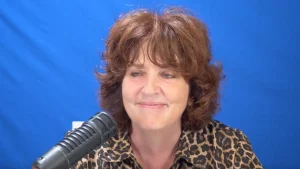
That was so much fun! Thank you for letting us spend a little backstage time with Felix Caviliere up close and personal. I had no idea vinyl was making a big comeback!
Great interview, Kim !
Rascals were a classic then and
remain so today.