
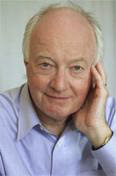
Gavin Menzies
Peer review was established to ensure quality and accuracy of academic research and publications. As one university library tells students,
“Peer review ensures that an article—and therefore the journal and the scholarship of the discipline as a whole—maintains a high standard of quality, accuracy, and academic integrity. When you consult peer-reviewed sources, you are tapping into a wealth of established, verified knowledge.”
Does this mean non-peer reviewed materials have no value? What happens if academics refuse to peer review? Are they the only arbiters of quality and accuracy?
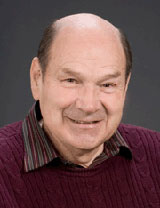
Dr. Tim Ball
Few people outside of academia know what peer review is or how it operates. Like most ideas and methods, peer review has evolved from its original purpose in ways that academics never anticipated – for example, the scandals involving climate science and the perversion of scientific and academic method. While peer review has mostly been thought of as the way ideas get their credibility, in fact, peer review has become an incestuous system that often invites corruption and territoriality so that most of the realm of new discoveries can’t make their way to the world. The peer review process is often antithetical to innovation and perpetuates prevailing knowledge. We need a new and better process and paradigm because of the implications for the betterment of all of society.
Gavin Menzies, the author of 1421 and 1434 and Dr. Tim Ball, a climatologist, teacher, and writer from Canada, lay out what we need to know about peer review to think of other ways of empowering discovery in the modern world.
Read the Full Verbatim Transcript — Examining Peer Review with Gavin Menzies & Dr. Tim Ball on It’s Rainmaking Time!
It’s Rainmaking Time!®
Examining Peer Review — Gavin Menzies & Dr. Tim Ball
Host & Interviewer: Kim Greenhouse
Kim: Ladies and gentlemen, welcome to It’s Rainmaking Time. This is Kim Greenhouse. I’ve long been interested in examining peer review, which has been established to ensure quality and accuracy of academic research and publications. This has been the credibility maker of ideas, inventions, and new paradigms in both trade and journal publications. Peer review ensures that an article, and therefore the journal and the scholarship of the discipline as a whole, maintains a high standard of quality, accuracy, and academic integrity. This is what it’s known for. When you consult peer reviewed sources, you’re tapping into a wealth of established verified knowledge. But does this mean that non-peer reviewed materials have no value? What happens if academics refuse to peer review? Are they the only arbiters of quality and accuracy? Few people outside of academia know what peer review is and how it operates. And like most ideas and methods, peer review has evolved from its original purpose in ways that many academics never anticipated.
Kim: Some of these were part of the scandals involving climate science and the perversion of the scientific and the academic method. In fact, it’s become an incestuous system that often invites corruption and territoriality so that new discoveries cannot make their way to the world. Peer review, seen by some, is antithetical to innovation and perpetuates prevailing wisdoms. We need a new and better process and paradigm because of the hugely important implications for the betterment of all society. And with us today is Gavin Menzies, the author of the blockbusters 1421 and 1434, and Dr. Tim Ball, a climatologist, educator, environmentalist, and writer from Canada who joins us today to lay out what we need to know about peer review, their thoughts and experiences with it. Gentlemen, thank you for being here today. Welcome to It’s Rainmaking Time.
Gavin: Well, thank you very much for inviting me.
Kim: Alright, Dr. Tim Ball, explain in your longstanding experience inside academia, what is peer review? How did it get started and how is it used? And then Gavin, I want to call upon you to add to this.
Tim: Thank you. Well, I think that it’s like with so many things — they start as a fundamental idea with a specific purpose and that gets perverted over time. And of course, as with anything, it can be used for good or evil. Peer review was the idea that you could use the knowledge and experience of people in a particular area to determine whether your ideas and research had some validity to it. In fact, just to illustrate — I practiced, and I’m not ashamed of this — I would write an article and have some trepidations about it, then I would send it to a journal for review in order to get feedback from people that I couldn’t normally contact.
Tim: And of course, it also allowed me to anticipate any criticisms of the article, and therefore it would go out as a much broader and more acceptable idea. But that practice by me is a bit of a sleight of hand in a way. But it speaks to how easily the peer review process can be misused. Part of it came with two things. One was increasing specialization — the group of people that became qualified to peer review narrowed. And even though peer review is done without the names of the reviewers being disclosed — and I happen to think that’s part of the problem — you could get an article to review, but because the field was so small, you knew who had written it.
Tim: And therefore it was very easy to take control. So the specialization issue. The other is that the control of publishing became a difficulty because academic journals developed this peer review process as part of the publishing angle, and that became exploited. I realized that when I speak specifically about climate science. I became very suspicious when the people at the Climatic Research Unit started saying, well, you know, that person doesn’t have peer reviewed articles. It became a weapon rather than what it was originally intended for — a device to ensure wide ideas, ideas that had some logic to them. So what started out as a good idea gradually became perverted and misused within the academic world. But the idea of peer review goes beyond that.
Kim: Gavin, what has been your experience in the publishing of 1421 and 1434? I realize that they’re New York Times bestsellers. They’ve been around for years and it took off. But you have your own experience with this.
Gavin: Well, Kim, my experience — which is a very small part of history — is that peer review is an absolute disaster as far as historians are concerned. To give an example, I’ve just sponsored a number of talks at the Royal Geographical Society in London, at which Emeritus Professor John Sorenson and Emeritus Professor Carl Johansson spoke. Now, there are two historians who have specialized over the last 50 years in outlining the history of contact between the old world and the new from 7,000 BC onwards. Sorenson has published a book with Martin Raich — Pre-Columbian Contact Across the Oceans — which lists no less than 5,000 voyages between the old world and the new before Columbus. And scholars can read this enormous tome, which is 1,200 pages long. He and Johansson have collaborated in a book about pre-Columbian contact across the oceans as evidenced in the distribution of plants.
Gavin: Now, these two very learned professors get absolutely nowhere. They can’t get a commercial publisher to publish their books. The reason being that they’re absolutely frozen out of the academic world, as far as I can see, because they challenged the notion that Columbus discovered America. As far as I’m concerned, the concept that Columbus discovered America is absolutely ridiculous. He had maps — he accepts the fact he had maps. They came from an Italian called Toscanelli, and they were copies of Chinese maps. And the contract which Columbus signed with the King of Spain, Ferdinand, wasn’t anything about going to China — he was to become Viceroy on behalf of King Ferdinand of the land on the other side of the ocean. So if you’ve got maps of the place you’re going to sail to, and you’ve got a contract saying you’re going to be Viceroy of the place when you get there, how on earth can you say that you’ve discovered the place? And in fact, he never did argue he discovered the place. So the whole concept of Columbus discovering America is absolutely ridiculous. And it’s only there because it’s buttressed by the fact that anyone who challenges it gets frozen out by the peer review historians who stick to the ridiculous assertion that he did discover America. So I think it’s an absolute catastrophe. It muzzles historians, it prevents the truth being put out for people to learn. And as a result, history as it’s currently taught is just one long fairy story.
Tim: Can I support and comment on Gavin’s experience? His experience is just a very small part of history. In fact, I would argue that it’s a much larger part of what has been going on. I worked with Sam Bawlf, who was one of the youngest cabinet ministers in British Columbia, and became very interested in the visits to the west coast of British Columbia, Canada. He was particularly interested in the voyage of Sir Francis Drake. And of course, he ran headlong into exactly what Gavin is talking about with regard to Columbus. I had to take Sam aside a couple of times because he was saying, look, what are the academics going to say? How can I get around the academic attacks? And I said, look, they’re going to say what they’re going to say — you can’t let that be your controlling factor. And of course, the prevailing wisdom was that Drake had discovered San Francisco and had only visited that part of North America. And of course, it was completely untrue. Part of the difficulty was that they were ignoring the historical fact that Queen Elizabeth had specifically sworn Drake to secrecy about what he had done. And that’s in the historic record. He was actually looking for the Northwest Passage from the western side of North America.
Tim: And this was part of Elizabeth’s larger geopolitical strategy. But Sam’s experience with the academics, and then once he published his book, the trivializing of it — all you have to do is go and look at the reviews of it. They’re specious and nasty, because people are preserving their academic turf rather than developing a full and humane history that is out there. I couldn’t agree more with Gavin, except that I would argue that his experience is part of a much larger problem.
Gavin: Tim, what’s the answer? How can one harness the energies of the many people who think like you and I out there?
Tim: Well, I think that one of the things I always do — and I think what you’ve tried to do — is you must constantly look at everything in the larger context. Now, what’s happened in academia is two things. One is the growth of specialization to the point where to generalize, that is to put things in a larger context, is unacceptable. The dictum has become to generalize is the mark of a fool, to specialize is the mark of genius — when in fact history is generalization. And I presented this argument, Gavin, in the context of that geography is the stage and history is the play that’s played out on that stage.
Tim: You can study them independently, but you really don’t start to understand them unless you put them together. But that’s one of the problems. The other problem is that the academic world has very, very narrowly defined intelligence. So it excludes common sense and wider perspectives. And by the way, that specialization has virtually destroyed history as a discipline. I remember talking about the weather conditions when Cardinal Richelieu was in power to a guy who’d done his doctoral thesis on Richelieu. He knew nothing about what was going on around him. He just looked at the man in an absolute vacuum. And this is part of the problem. So when you come along and say, well, you can’t take what was going on in that particular year out of the larger context, then immediately you are attacked by all these specialists whose own very narrow tunnel vision view is against what actually happens.
Kim: Gentlemen, I want to read something to you. The University of Texas at Austin has a website and their byline is — What starts here changes the world. Now, I love Texas, I love Austin, I love Betty Sue Flowers, who used to teach there. But I want to tell you how pervasive the spin of translation is about peer review. It says — peer reviewed journals. What does peer reviewed or refereed mean? Peer review is a process that journals use to ensure the articles they publish represent the best scholarship currently available. When an article is submitted to a peer review journal, the editors send it out to other scholars in the same field — the author’s peers — to get their opinion on the quality of the scholarship, its relevance to the field, its appropriateness for the journal. Publications that don’t use peer review — and they cite Time, Cosmo, and Salon — just rely on the judgment of the editors whether an article is up to snuff or not. That’s why you can’t count on them for solid scientific scholarship.
Gavin: Well, if I may comment from an amateur historian’s point of view, I think they completely ignore the immense trouble that publishers take to ensure that what their authors write is accurate. When I wrote 1421, there were no less than 12 internal reviews of what I’d written by different editors with Transworld, to make sure that everything was as accurate and as well checked as it could be. And the same with my second book, 1434, with HarperCollins — exactly the same. So publishers really do take a tremendous amount of trouble to crosscheck what authors have said so they don’t print nonsense. So I absolutely disagree with what that article you’ve just read said about ensuring accuracy. It ensures a straitjacket really.
Kim: I didn’t agree with what was written, but I wanted you both to know how pervasive the falsity about what it is — in its tremendous high regard as a process for establishing credibility. And that it’s not a mature instrument for the establishment of credibility. It’s going to be as low level as the people evaluating and reviewing what’s being presented to them.
Tim: Well, Kim, I totally agree with Gavin about the role of editors and their checking of the facts with anything that’s published. A good editor is absolutely essential to any publication. But beyond that, that definition of peer review is self-serving because it’s prepared by an academic community. And so you end up with what I called many years ago, peer review censorship. Now that works in several ways. One is of course that if you’re the editor of a journal — even if it’s very, very narrow in its focus, say something like The Journal of Sedimentary Petrology — you as editor are going to get an article and say, well, who are the experts?
Tim: And of course, the experts are those that are dominant in the prevailing wisdom. And unfortunately nowadays, the ones that are getting the most funding. And so you send it to them, and they of course are going to look at it and decide — and I use these terms deliberately — whether it is heresy or not. If they consider it heresy, that is, that it doesn’t support their view, then they’re going to recommend that it not be published. And of course, what that does is predicate against the very idea of scholarship, of wider views and different views and different perspectives on things. And of course, we saw how easily that approach was perverted, because of putting people in place as editors who were going to select the reviewers that were wanted. We also saw the case with the Climatic Research Unit where one editor dared to publish an article that questioned what was being said, and they actually got the editor fired.
Tim: And so when you look at how the system was used and corrupted by these people, it underscores all of the serious limitations of this very narrow, incestuous idea of peer review. And what’s also interesting, by the way, Kim, is that in the Wegman Report that looked at the infamous hockey stick, which was at the center of the issue, it was a statistician who picked up on the problems. It wasn’t even a climate scientist. He happened to be at a conference where this graph was put up. And because of his expertise in graphing and statistical procedures, he immediately knew that this had been falsified. And yet that article had been peer reviewed by other experts in that particular area. And the fact that it was somebody from a completely different specialization shows how this has seriously affected research, knowledge, and understanding.
Gavin: Have you any ideas, Tim, how the system is going to be changed? Or do you think it’ll just carry on as it is?
Tim: Well, unfortunately, it’s going to carry on as it is because not only have they narrowly defined areas of research through specialization, but they’ve also very narrowly defined intelligence. One of the things that I like to point out to people — and used to do with my students — was the whole moral of the Crocodile Dundee movie, to put this into a more general context, was that here was somebody from the outback of Australia who could survive very nicely in New York, but a New Yorker couldn’t survive in the outback of Australia — yet who was calling who primitive? And of course, the knowledge and skills necessary to survive in the outback of Australia were totally different than the ones necessary to survive in New York, although they’re getting dangerously close to each other.
Tim: And I use this as an example to illustrate how this kind of tunnel vision restricts your chances of getting at the truth and getting at what’s really going on. I think that goes to all of the attacks you suffered and the ones that Sam Bawlf suffered. Because what Sam was doing was looking at — okay, these are people, how do people behave? How would they react? And by the way, I happen to think that one of the good things about the biography of Columbus by Samuel Morrison was where he said, I’m really not going to get into Columbus’s mind unless I sail the routes that he sailed. And he did that. And of course, he also speaks to all the things you mentioned with regard to Columbus — the amount of information Columbus had, the person generally known at that time as the navigator who was invited to Columbus’s house and mysteriously died the weekend he was visiting.
Tim: And the gathering of knowledge that Columbus had from people who’d already done the things that he was setting out to do. So I think that until we break this control over information and knowledge out of the academic realm — and to me it’s almost the evolution of the original town and gown fight that went on in the Middle Ages, and the gown won the fight and said to the town, you can’t tell us what to say or think, but keep sending the money to support us — until we move on from that evolution, I don’t see much change coming.
Gavin: But I think, Tim, to take up that point about money — that’s where the change might come, because there is an almost insatiable appetite by the public for revisionist history. They just don’t believe anymore the traditional history that teaches Columbus discovered America and Magellan was the first to sail around the world. And academics really cannot write populist books which satisfy this craving for revisionist history, because they’ve got to stick to the party line. So academics writing history books sell maybe 500 or a thousand. And then revisionist historians who aren’t bound by the rules of etiquette and peer review sell in hundreds of thousands or millions. And there is a yawning disparity between the money that the two receive. Academics get peanuts — they rely on research grants. Whereas populist or revisionist historians who sell to a worldwide publisher get enormous advances. And I think sooner or later academics will say, well, hold on a moment — why don’t we join this bandwagon, dump peer review, and make the books bestsellers.
Kim: You know, Gavin, you’ve done something very unusual that very few people have done around the world. You have open sourced research and discovery. You’ve open sourced it in a way where people that have a connection to the subjects that you are focusing on are assisting in bringing through research and information and data from all over the world. So you’ve actually turned the subject and are using and calling upon the collective energy of people around the world to participate in an open source process of discovery with you, which is why it’s working. And then you’re free and clear to proceed.
Gavin: Yes. Well, I think the public — to a certain extent, if I may say so — we’re all historians now because of the internet and the websites, and there is just a fantastic amount of information out there which anyone can access. And therefore, you don’t really need to be a professional historian anymore. As long as you crosscheck the facts, just about anyone can write history by using Google and the web.
Tim: Well, just a couple of comments about those last two ideas. And Kim, I fully support what you’re saying about Gavin’s work. One of the things that I noticed working in archives and with other academics — there’s a frightening tendency, because of course you become defined by your very narrow area of expertise and the ability to keep the funding coming for that — academics tend to find something, and I’m talking now specifically about my experience with the Hudson Bay Company archives in Winnipeg, that an academic would come in, find a particular journal, and then develop an idea out of that, but then almost take possession of that idea and that journal. It became theirs. And rather than disseminating and sharing that information, they tended to guard it and to protect it.
Tim: And to me, that’s the complete antithesis of education. So that’s part of the difficulty. But back to Gavin’s larger point, I also worked with Peter Newman, who published a three volume set on the history of the Hudson Bay Company. When he called me and said, would you help me with advice, because you’ve read a lot of the archives and you have a lot of expertise, I said I’d be very happy to do it. His immediate reaction was, oh, thank you. Most of the academics have turned me down. Now of course the problem is they turn you down, and then they reserve the right to criticize once you bring this stuff out. And in my view, if you’re not prepared to help, then you essentially remove your right to criticize.
Tim: But what was interesting was that in those criticisms, they picked on their own particular little specialist area and said, well, he’s got this wrong, or he’s interpreted that wrong. And that little error became sufficient to throw out the whole general thesis of the book. Now, Gavin, what was interesting was that the keeper of the archives, who of course had a much broader context, she said no — these three volumes really captured the whole historical context of the company and its role because it was essentially a business. And the academic historians had completely missed that point. And the debate went on between Newman and the academics who attacked him, and it was a very interesting debate to watch.
Tim: In fact, I used some of the letters and articles written about it in my seminars on this issue of academia. Now, the truth is that there is a place for both. And Newman made the argument that the public want to read the broader histories — they want the wider picture and the integration. And those can only be done effectively with the individual studies of the academic. In other words, if the academics were only to smarten up, they would realize that without the general histories being out there, the taxpayer who would read those is not going to be willing to fund their specialized little studies. And so they both need each other. And yet, because of the narrowness that has occurred in academia, they’re fighting against each other. And it’s just silly. It hurts research, and it also hurts history and understanding of the human condition.
Kim: Can you explain the part of peer review when you submit a paper? Was it you who said to me that you don’t get to know who your reviewers are?
Tim: Well, one of the things that happened with the climate issue was that they were writing to the editors and saying, well, who did the review on this? And the editors would use the excuse that they’re not required to disclose who the reviewers are. My argument all along has been that you have every right to face your accuser. That’s a fundamental basis in law — if somebody’s going to criticize your work and tear it apart and could destroy your career, you have every right to know who that is and to respond to it. And so I think one of the first things that is absolutely essential — it goes back to Gavin’s question about how do we change it — is that you disclose who the reviewers are. I don’t think I have any right to write negative things about anybody or their work without that person knowing who I am. And if I’m not prepared for them to know, then I shouldn’t be saying it.
Kim: The lack of transparency is a problem. The lack of transparency in the review process is integral to its corruption of science, of information, of discovery. So the first thing out the gate is that transparency has to change. It has to be available.
Tim: Yes. And just to carry that idea on a bit further — because it wasn’t just in peer review that I saw this incestuous system developing, but it also occurred in funding. So if you applied for funding for a project — let’s say Gavin needed to get some funding to do his book — then the request for funding was sent out to peer review: should we fund this? And of course, when I sat on committees that were looking at funding, you knew who was asking for the funding because of the way that they asked for it and the way it was done. So there was also control of the publication, or the actual beginning of the research, even before you got to the publishing level, by controlling who got the funding and who didn’t. So this peer review goes beyond just the publication part of it.
Gavin: What I don’t understand, Tim, is why people are prepared to fund such very narrow areas of research. I mean, when you can write a book and get all the money you want through sales, which you can use to research more — I’m just baffled by how people go about getting money to fund their historical research.
Tim: Well, most of the money that goes to academic research is now coming from government. And that’s been set up by these groups of intellectuals who say we must continue to fund this work. And of course the counter argument is that if you let it become commercial, that somehow is more corrupting than doing it through government. But what we’re finding out is that that’s not the case at all. The funding that’s done through the marketplace is a much more rigorous and demanding measure of what has application and validity and interest to society as a whole. And here’s a measure of what’s been going on, Gavin — it used to be publish or perish. Now it’s get funding or perish. You are more promoted in universities in the academic system based upon the amount of money that you’re bringing in through these funding sources than from what you’re publishing.
Gavin: Well, one thing I could say as a sort of encouragement to people — not to get too worked up about what people say in peer review. My experience has been that the public are really quite astute, in fact extremely astute, and not that influenced by what other historians say. So for example, when my first book 1421 came out, it didn’t sell particularly well to start with. And we were told that a famous historian was going to be writing for a well-known UK paper, and he would give us a terrific write-up and say how wonderful my book was. Well, his review came out, and he was absolutely savage. He just ripped me to shreds. And then sales took off.
Gavin: So you can’t tell what’s going to happen.
Kim: That’s great.
Tim: And by the way, I completely agree with you about the astuteness of the general public — and one of the things that has kept me going through all of the nasty attacks. The worst were from academics. But there is this huge well of common sense in ordinary people. They’re always accused of being slow and not perceptive, but of course their experience comes from having been fooled and conned before. And so they sit back and wait until a much larger picture is out there. And the most common comment I get after a presentation is, I had my suspicions, but I didn’t know enough to know. And so it’s not that they’re necessarily not having a view — they’re just not prepared to express it, because they know they’re going to be savagely attacked if there’s any error in it.
Kim: Gavin, how did you generate your initial funding to do your research? If you would be comfortable sharing how that came about? I think a lot of people would be interested to know, just as an example.
Gavin: Well, I was incredibly lucky in that I came across what I thought was a story when I was in China with my wife. We came across a story that the Emperor of China had sent a huge fleet around the world to bring everyone back to the Forbidden City in Beijing in 1421 for its inauguration. I decided to write a book about the year 1421 in China and Europe. And it took 10 years of research, and then I managed to sell it to a small, reputable publisher. And one of the people who reviewed it said, did I know about a map which showed the Caribbean, which had been published in 1421? And I went and had a look at this map, and I could see it was the island of Puerto Rico and Guadalupe, accurately drawn 70 years before Columbus. So that really completely changed my whole life. I realized there were maps of places accurately drawn before European exploration started. So I then looked into Magellan, Cabral, Diaz, da Gama, to see whether they had maps. And I found, by complete chance over a six week period by examining their records, that every single European explorer who set sail for the New World had a map of the place before he set off. And so I was just unbelievably lucky to stumble on that. And I found a publisher, Transworld, who really had guts. They were convinced what I said was true, and they decided to publish and be damned. And that’s how it all started.
Kim: That’s amazing. And one of the things I wanted to share about my experience of you, Gavin, is that you empower other people, even if they find information or have discoveries that go beyond the year 1421. I thought that the work of Charlotte Harris Rees and Secret Maps of the Ancient World — and you are advocating her — and that groundwork is amazing and so unusual for the realm of discovery. Most people would try to hide that information. I think it was incredible of you.
Gavin: You are very kind to say so. But just to put that in context — Charlotte Harris Rees inherited her father’s maps. Her father was a missionary in China, and she inherited his maps, which were very old Chinese maps of the Americas, going back to two or 300 BC. So she showed me these maps at the Library of Congress where they were on loan, and I went and had a look, and I was absolutely amazed. It showed that the Chinese had been sailing back and forwards to the Americas for 2,300 years. So I thought it was just a very interesting story. And sure enough, she managed to find a publisher, and I think her book sold jolly well.
Kim: Well, that’s what I’m talking about. That’s the opposite of how a lot of discoveries are received. If that were in a purely academic circle, it would be vilified, it would be thrown out, because it goes even further to reinforce the fact that it wasn’t Columbus who discovered America — but it’s even thousands of years before 1421. And so what you’re doing, it’s really a great adventure.
Gavin: Oh, it’s an immense adventure. As I said at the Royal Geographical Society last Friday, Emeritus Professor Carl Johansson and John Sorenson talked about their books, and their books describe multiple voyages between the Old World and the New — sailing from the Old World to the Americas right back to 7,000 BC. It’s just been thousands and thousands of voyages before Columbus, which is why I think the whole Columbus story is absolutely ridiculous.
Tim: Gavin, before we came on the air, I mentioned to you that one of the books that had a great influence on me was Thor Heyerdahl’s book. Not the Kon-Tiki — that was fascinating in itself — but the one titled Early Man in the Oceans. Well, of course, Heyerdahl was ridiculed because he did not have academic qualifications. And yet that book, Early Man in the Oceans, speaks to this evidence of people traveling on the oceans long before historians give any credibility to it at all. But the other thing I want to support is your point about the Chinese information, the maps, and so on. This is part of what I have seen in science — this Western cultural bias, which of course assumes that only what Western European people did is the earliest and therefore the most important. I worked with Chinese climatologists who were looking at expanding food production in northern China in cold climates.
Tim: And of course, as a Canadian who’d looked at food production, I discovered that their view of the world was completely different than mine. And this naive idea that the world has — that the Americans are going to talk to China about climate and they’re talking to them as if they’re seeing the world in the same way — is so naive and arrogant. And I think that underlies a lot of what you discovered. And also, working with Russian climatologist Budyko, who was a historical climatologist — again, a completely different view of history in the world and understandings of things. And so I think that underlines a lot of what you are talking about.
Tim: One of the things that has affected the funding — and I got this from a cabinet minister, a politician who appointed me to a board — I said, how do you make decisions on funding? And he said, I look at Frankenstein projects. And I said, what do you mean by that? And he said, look, if the project has a clear ending to it — that is, let’s say Gavin comes in and wants $10,000 to research and publish this book. I know that when the book is published, it’s finite. The money’s there, done, it’s over with. But if Gavin comes in and says, look, I want to start publishing a monthly journal, there’s no end to that. And not only that, but once it’s been published for a year or two, if you stop the funding, you’re cutting off a privilege and a right. And you have to keep feeding this monster.
Tim: And so that affects how the publishing has gone. And one last little point — we’ve already talked about the role of the internet, but we should also talk about the role of the computer and word processing. Because one of the things that is changing the publishing and running the power of the publishers, particularly in marketing, is vanity press. Now, the vanity press — one of the first ones in the world happened to start in my hometown here in Victoria. It’s called Rafferty Publishing. And I when I asked him why he called it Rafferty, he was a Manchester United fan. But this is the idea that anybody can write a book and they can print a single copy for $7. They will provide the cover and so on. And you can print as many or as few as you want, and they will also put your book on Amazon and Barnes and Noble. So it gets out electronically, bypassing the marketing control. And vanity press is really having a huge impact and opening up a potential beyond academia.
Kim: Yeah. This is like iUniverse, Lulu — there are many popping up all over the place.
Gavin: The trouble is that those books don’t get edited. And so there’s no —
Tim: I mean, I completely agree with you. And of course that is one of the arguments against them. But if they’re put out there, they’re edited in the marketplace — they’re edited by not getting any sales. And if they have some validity, what’s interesting is how quickly a publisher will approach and want to take over the rights to that book.
Kim: I just did an interview last week with Joseph Lumpkin, who has written many books on the lost books of Christianity — books that were banned from the Bible, the Books of Enoch, Fallen Angels, the Watchers, and the Origins of Evil, the Gnostic Gospels of Philip, Mary Magdalene, and Thomas, the Book of Jubilees. It goes on and on. He had to do his own publishing because nobody would touch the research that he had done. He went all over the world to gather the ancient books, and people were not interested in publishing it. So he did his own publishing. But it’s very important — if you want to go back and research something, or you’re introducing something that is not more of the same, the potential for self-publishing is significant. The nice thing is you can ask people to help edit your book. You can hire professional editors. You can do that.
Kim: The other thing is you can dress your own publication. It used to be that only the publishers could make the book look like it does, or name the book, or title the book, or put it in the category that it is. So you have much more participation in that. The thing about peer review now is that it is central to science, to knowledge that is allowed to move through academia and trade publications. So at this moment in our human history, vanity publishing is the way to proceed, unless you’re both suggesting something else in this transition.
Tim: No, I think that Gavin’s comment about editing is one that has been one of the criticisms. But as I said, I prefer to leave that editing to his idea about the marketability of the book. If the idea simply has no value, it won’t sell. And that’ll be the end of it. It’ll disappear even off of vanity press. And I think that’s a better idea. But Kim, can I just introduce another example of the sort of thing that we’re talking about? One of the only times in history that I’m aware of that a publisher sold off the rights to a bestseller occurred with a book published by Macmillan called Worlds in Collision.
Tim: This was a book published by a Russian — he was actually a medical doctor who ended up getting PhDs in astrophysics and so on — by the name of Immanuel Velikovsky. And this is a classic example of academia silencing somebody who dared to come forward with ideas that did not fit the prevailing wisdom. And at the heart of the attacks was the Dean of Geology, Harlow Shapley, who actually got Macmillan to sell off the rights to that book by threatening them with stopping all of the publications or authors of textbooks. And for Macmillan at the time, their textbook business was huge. And Shapley said, I will effectively shut down your textbook side of it if you continue to publish this book.
Tim: And of course, a lot of Velikovsky’s predictions and ideas turned out to be absolutely correct. But here’s an early version of a person’s career and credibility being completely destroyed by an academic. And by the way, it was interesting that the students at Harvard, through freedom of information, got access to the letter that Shapley had written to Macmillan threatening them — although Shapley had publicly denied that he’d been involved. So this sort of thing has been kicking around for some time. And it really needs to be openly discussed as we’re doing here and addressed, because it’s limiting our ability to understand.
Gavin: Well, I’m glad I’ve learned a lot this evening. (laughing)
Kim: (laughing)
Kim: One other question before we close this segment today, and I really appreciate your participation, both of you. Gavin, what do you think people can do right now to bring discovery and research findings so that they go open source? What can you say to the public who may feel that if they’re not peer reviewed and they don’t make it through peer review that they’re finished?
Gavin: Well, I think that the market will do it. More and more revisionist histories will come out, they’ll sell in bigger and bigger quantities, and authors will say to themselves, well, why bother with peer review? Just get ahead and find a publisher and publish. And so I think the whole historical market will get smaller and smaller as far as professionals are concerned, and people like myself — amateurs — will have a bigger and bigger field. So I think the market will sort it all out for us.
Kim: That’s exciting.
Tim: And I completely concur with that. And by the way, my experience — of course they’ll argue that the amateur is not schooled and can be misled and so on. When I was reconstructing the temperature graphs from the amateurs of the fur traders of the Hudson Bay Company, I found that their details and accuracy — and you could measure this statistically — was greater than the modern official government record of temperature recording. Because there’s nobody more dedicated than the amateur. They’re doing it for the sheer excitement of the knowledge and information. And so I agree with Gavin. I think what’s got to happen is just go ahead and just ignore the criticism.
Tim: In fact, we’re almost at the point where the more somebody is attacked and the more nasty the attack, that has almost become a measure of how close to the truth of the coverup we’re getting. I was giving a talk a little while ago and a friend introduced me and he said, Tim has always taken flack, but right now the flack is really heavy.
Gavin: You know, you’re over the target then. (laughing)
Tim: Yeah, well exactly — the old wartime thing. If you’re getting heavy flack, you’re over the target. And so I think that’s almost become a measure. And it can almost be a guideline. And by the way, it does intrigue people — as Gavin has implied, once he was attacked, that piqued people’s interest.
Gavin: It does.
Tim: Absolutely.
Kim: Actually, Gavin is attacked a lot. There was someone, Jeff Wade, who started to comment on the interview I did with Gavin a couple of months ago. And then I looked on Google and this man spends his life’s energy trying to prove Gavin wrong. And so there’s always going to be that. That’s the risk you take when you move into discovery, and you are moved by discovery and bringing in new knowledge and uplifting ancient knowledge that may have been buried or lost, or just hasn’t been tended to yet.
Tim: Well, and of course, Gavin might have the experience, as Galileo did, of being forgiven by the church 390 years later. (Kim and Gavin laughing)
Gavin: Well, I’m conceited, but not that much.
Tim: Yes, and of course that speaks to an issue here, Gavin. I think that this specialization — and particularly in science and the environmental issues where it’s become the new religion — you defend it with the vehemence that this is a religious belief.
Gavin: Yes, I think that’s quite true.
Kim: Ladies and gentlemen, we have been speaking with Gavin Menzies, the author of 1421 and 1434, and Dr. Tim Ball, a climatologist and environmentalist, and a teacher and writer from Canada who’s joined us today for a discussion and an examination of peer review. And gentlemen, I really appreciate you being with us. If there’s any last closing statement you’d like to say, please feel free. Let’s start with you, Gavin Menzies.
Gavin: Thank you very much, Kim, for inviting me and Tim for teaching me so much. I’ve learned a lot this evening. I’m very grateful to be on your show.
Kim: Thank you very much. And Tim Ball.
Gavin: Well, thank you very much for inviting me and Tim for teaching me so much. I’ve learned a lot this evening. I’m very grateful to be on your show.
Kim: Thank you very much. And Tim Ball.
Tim: Well, again, I concur with Gavin. And this program and the internet that provides the access to it is a perfect example of how we can disseminate information in new ways that can only be helpful to understanding the world and moving ahead.
Kim: Ladies and gentlemen, thank you for listening to It’s Rainmaking Time and our examination and discussion of peer review with Gavin Menzies and Dr. Tim Ball. Thank you very much, gentlemen.
Gavin: Thank you very much. Goodnight.
Podcast: Play in new window | Download

Dear Ms Greenhouse
I stumbled upon your web site by following a link from Gavin Menzies’ site. I was quite impressed with the criticism of the practices of the IMF, but I then clicked on your climate link and listened to you interview with Dr Lawrence Solomon.
Please do not base your opinions on just one carefully crafted book followed by an unchallenged interview with the author. May I suggest a couple of web sites that argue global warming points cogently from a scientific standpoint. They are the rigorous http://www.realclimate.org and the more popular http://www.skepticalscience.com.
Enter Lawrence Solomon to search the RC site and you will find critiques of his book and many references to him where his claims are destroyed.
Keep up the GOOD work.
Mike Hughes
He you guys checked out http://www.1421exposed.com/ ?
Gavin Mendez would seem not a good guy to interview in tandem with in my opinion, the wholly veritable Dr. Tim Ball.
Established detractors (and otherwise) of both men apply entirely different criticism methods to each. Please have a look.
The http://www.1421exposed.com Mendez detraction method = Really is full of seemingly ‘fact’ based criticisms.
Where as,
Detraction methods largely applied in Ball’s case are ad hominem in nature.
This climate scam being perpetrated is so important, and not to be allied with ‘junk history’ providers.
No offense to host or guest BUT…
I came to listen to this interview again after seeing and entering into a discussion on YouTube regarding vaccinations where those against vaccinations of children were being attacked for their lack of science and their danger to other children. I was having an honest discussion with one pro-vaccine poster when a second pro-stander attacked me saying I needed “a slap on side of head”. The guy with whom I was discussing the topic had asked for reference or proof that science was being corrupted & I chose to include this interview (discussion) and the one on peer-review with Tm Ball (I listened to both interviews again before suggesting them as examples of science’s exclusion of open debate).
The chap (whom I did not address or give your two site addresses to watch) chimed back “Hey look, you provided links to a pseudoscience batshit insane website”. He did so within minutes of my post so obviously hand’t watched them.
Kim, I keep saying this but it can’t be said enough! Your site and the others that follow much the same lead by questioning accepted truisms in science, are what makes the internet and indeed YouTube as important as has been the Gutenberg press. Open minds, with honest critical study, are to progress what wings are to aeroplanes. Without them progress in science would halt and flying would be made terribly difficult.