
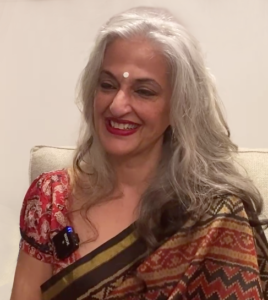
Seema Anand
The Kama Sutra is an ancient Treatise written in Sanskrit, about how to have a successful life though the art of pleasure. “Seema Anand, the author of “The Arts of Seduction” a very different kind of translator, mythologist and storyteller, whose speaking gifts are so compelling that she captivates audiences in so many cultures around the world. Seema joins us to distill the many jewels & social misunderstandings of the work of Vātsyāyana; the author of The Kama Sutra.
After 15 years of research, Dr. Anand was called to take the extracts of her findings and synthesize them into something that anyone can practice in modern times, even if one is not living in India, or part of Indian Culture. She discovered that “The Kama Sutra” is “steeped in refinement, beauty and nuanced pleasure”.
Her articulation of this ancient treatise is so detailed and energetically nuanced, that it is as if she has lived at the time of its formation. She brings erotic and magnetic nuances not only into the space of pleasure, sensuality and sexuality, but, into our very vibrations, so that we receive these teachings in our mind, body and spirit. The voice resonance of her spoken word translations and stories can transport us to vitally important untapped places in our own lives.” The Arts of Seduction” can serve to open up the exploration and discovery of mystery and help transform fear, discomfort and shame into a passionate and pleasure filled dance between lovers.
Seema Anand is inspiring people around the world to welcome physical pleasuring and is providing a much needed space for exploration, discovery and sensual delight.
She has a very special ability to bridge the sacred role of life force, magnetism, sexual guidance and conscious awareness and how they work together to bring us the experience of ecstatic pleasure.
Join us as we welcome in Seema Anand.
Read the Full Verbatim Transcript with Seema Anand
Read Full Transcript
It’s Rainmaking Time!
Revelations from The Kama Sutra — with Seema Anand
Host & Interviewer: Kim Greenhouse
Kim: Ladies and gentlemen, welcome to It’s Rainmaking Time! It’s a great pleasure to bring you a special segment on the Kama Sutra — an ancient book that was written thousands of years ago on how to have a fantastic, pleasurable life. It’s about the arts of pleasure, the arts of seduction, the arts of what happens between lovers, how to have great lovemaking.
Kim: Some people think it’s all about positions, but our guest today will tell us — in fact, it’s an entire space of discovery, of exploration. Very, very exciting. Applicable to right where we are today. Can be utilized by anybody, anywhere. It is written for men on how to pleasure women. Yes, I know we all think it’s written for something else, but that’s why it was written. But all men and women of every denomination and every space in sexuality can enjoy it, benefit from it, and get great pleasure from it. I actually felt it was a very hot book myself. The book is The Arts of Seduction by Seema Anand — a mythologist, a consummate teacher, an incredible master storyteller. She is the seductress herself. She is what I call the consummate goddess. Ladies and gentlemen, welcome Seema Anand to It’s Rainmaking Time! Thanks so much for being here. It’s a great pleasure to have you on the show.
Seema: Thank you, Kim. Thank you for having me.
Kim: The first thing I want to ask you about, since it’s so relevant to rainmaking, is if you would kindly talk about that great rainmaking sage and what he did in the droughts — what kind of thing he suggested that would bring in the rain. I thought that was fascinating.
Seema: So I always like to tell this story because I discovered a while ago that you can actually map the history of the world according to how nations thought about sexuality. And that’s where the story first came up because come the fifth century in Europe, things are pretty bad. There’s famines, there’s drought, there’s fires, there’s invasions. And the Catholic Church say that it’s all because of the unbridled lust of the Roman emperors, that it’s their lust that has brought the wrath of God down upon them. Now, across the oceans, somewhere on the eastern edge of India, there is a kingdom where they say there has been a famine for three years. And now the king of that kingdom is starting to get really nervous because if there’s a famine for three years, people are going to stop worrying about the security of the kingdom. Now everyone’s worried about how they’re going to get their food, where their money is going to come from. Now this is a particularly devout king. He’s a wonderful man, does lots of charity. Every holy man from across every other kingdom has come and settled down in his kingdom, in the forests of his kingdom, because he gives so much money to these people. He does so much charity. He’s a good, good man. But still, no matter how much prayer goes on in his kingdom, there is no rain.
Seema: And eventually, he calls out to this very famous sage who was known as the rainmaker — much like yourself. So he was the rainmaker. And there is another man who can bring down rain and he is invited to come to the kingdom to see if he can help. And he looks around the kingdom and the story goes that he investigates and explores and then he comes back and he says to the king, “The problem is there hasn’t been enough sex in this kingdom. Hasn’t been enough lovemaking and pleasure. There are so many holy men who have settled down in your forest. They’re burning up the earth with their prayers.” And so they instituted a three-day festival of love where courtesans are brought in from all the different kingdoms. Every citizen is told that they have to take part. And you know what? At the end of three days, the rains came.
Kim: You know, I heard you talk about quantum mechanics, quantum science in one of your talks. I think it was a TED talk. And I don’t know if you know who Trevor James Constable is, but he was one of the literal rainmakers in weather engineering. And he used Wilhelm Reich’s Orgon Generators to bring in rain from all over the world. And what he said to me in an interview is that Orgon energy is no different — in other words, it works through us almost like prana, almost like chi, and it is the source material for our orgasm. It’s the Orgon is Orgon is Orgon. And he did a whole show explaining a part of this and weather engineering. But I thought it was interesting that even this king knew that if people were experiencing this kind of pleasure and ecstasy, that it could impact weather. Whether it’s a myth or not, there’s something to it.
Seema: Absolutely. I mean when you think about it, the American government got quite frightened with Wilhelm Reich, didn’t they? They actually put him into prison and he died there and they burnt his books. Yeah, I don’t know. And of course then Woody Allen made that film with the orgasmatron and the whole thing became a little bit of a joke. But yeah, I wonder. There must have been something there.
Seema: I like to believe that pleasure is an energy. We were taught in ancient India that pleasure is a Shakti. It’s an energy. And it rises within you and it powers all of you because you cannot say that when the energy rises within you, you say, “This bit is for working on maths problems and this bit is for working on your sexual energy and this bit is for cooking.” Energy is energy and it comes from one source and it powers your entire body. And in ancient times, they actually talk about energy as pleasure because it’s the opposite of falling into habit or falling into monotony or falling into a rut. So I guess when you translate from one language to another, there are words that don’t exist in all the languages to explain exactly what it should be. But yes, as you know, as you introduced me, I am a firm believer in the arts of pleasure.
Kim: You talked also — you said, “According to tantra, sexual energy is the highest form of energy in the world and to harness it is the ultimate sexual power in the world.” I hope I got that right. The Arts of Seduction was about building up, optimizing, and harvesting the power of the mind, body, and the spirit. Talk a little bit about that.
Seema: So okay, I guess let me start by saying that most people think that tantra is about sex. Tantra is not about sex. Tantra is a philosophy that actually talks about how everything has to be understood. The eventual aim is to get to God. And they say that everything was created by God, so everything has to be understood. So there’s no such thing as pure knowledge and impure knowledge. Everything has to be understood. Now, as I said a moment ago, it’s about Shakti. Pleasure is an energy, it’s a Shakti. And it’s only when you raise your Shakti, when you raise your energy, can you open up the mind, can you start to understand everything. Because nothing quite makes sense in the way that we think it does.
Seema: It takes a lot. It takes a lot of doing. And there is a lot — they do believe that sexual energy, so when pleasure is aroused inside you, when you have sex, when you make love — it’s the only time when every part of your body goes into metabolism. Everything. Every hormone is doing its thing, every gland is doing its thing, every organ is doing its thing, your blood flow changes, your breathing, everything changes. It’s the only time when your entire body metabolizes. And the idea was that this is the ultimate form of energy. Now, it doesn’t necessarily mean that it’s from sexual activity, but they correlate the rise of passion or the rise of pleasure to sexual activity. So even though tantra is not about sex, there’s a lot of sexo-yogic positions, sexo-yogic activity, which is used to raise this energy. And in the couple — two people generally do this because you have to create an entire whole. So one person becomes half of a whole. So two people come together. One is the doer and the other one is through whom the energy is channeled. So till now, most of the sexo-yogic positions that we have, it’s where the man is the doer and the energy is channeled through the woman.
Seema: I’ve been trying to look at the old tantric texts that haven’t been translated where it’s the other way around — where the woman is the doer and she channels her energy through the man. A lot of these, like I said, they didn’t really suit the men who were translating them over the centuries. So a lot of them didn’t get translated. The stories, however, did get through. So some of those stories are pretty incredible. But yes, to come back to your question — yes, they use a lot of sexo-yogic positions. I just don’t like to generally talk about it too much because I find that people will go away with that one idea that tantra is about sex and it isn’t. It’s far, far deeper than that.
Kim: A lot of people equate the Kama Sutra with sex and I remember years ago watching some movie, the Kama Sutra, and it was really exotic looking and everything, but I knew it wasn’t just about what they were showing. And the thing about your book, The Arts of Seduction — even though I know you don’t like the word seduction, you don’t feel it really gets the point across — because this is not just about seduction, it’s about the whole space of ambiance and texture and all these nuances in the interplay between lovers, right? This is the most comprehensive book, I have to tell you. It is so hot. I was hot reading it. I was like, oh my God, this could light up a revolution around the world. I mean it is really exotic. How long did it take you to write it?
Seema: Oh, okay. So the actual writing of it — a lot of blood, sweat and tears, mostly me crying and my poor editor trying to get me to carry on. So blood on her part and tears on mine. And sweat on both sides, I guess. So the actual book from start to finish, maybe about three years. But it’s the research that went into it where I finally decided that I would write it. And that took a bit. Actually, I would say maybe 15 years of research.
Kim: I knew it was years of research before the extract of that came together. I kind of look at you as a speaker, a writer, an author, a midwife of pleasure and The Arts of Seduction. And I think that as a midwife to so many people — I’ve watched so many talks that you’ve given — you’re really helping so many people detach from the suffering, lose the suffering, melt away the pain and fear and embarrassment and all these rules that men and women put on each other, whether they’re same sex couples or they’re opposite sex couples. It’s kind of like this is a tool to melt away the dogma and the shame that we came into our lives with on a molecular level from our parents, their parents, and our ancestors. Do you agree?
Seema: Thank you so much, Kim. That’s just so sweet. Oh wow. I feel special.
Kim: It’s the way I see it. It feels like that. Because we are not talking about sex positions though. You deal with that in the book — it’s a very tiny part of the space of the Kama Sutra. Also, the years of dedication of going into something so ancient that’s very seemingly remote to the modern world. When so many cultures are living in shame — I mean a lot of shame and a lot of guilt. And I also thought it was very brave of you to talk about the part of the Kama Sutra that women can get pleasure on their own. That somehow in the passed-on mythology, a woman’s pleasure and satisfaction and fulfillment sexually was solely dependent on the man. And that opens up a whole space for women to not have so much shame with their bodies. Even throughout history, women have been blamed for causing men to do things. Women were the ones accused of being witches and having magic spells on men and all of that. You agree?
Seema: Absolutely. I mean, it’s always been the woman’s fault, hasn’t it? When it comes to sexuality, it’s just so bizarre in the way that it’s been put across. Now, the reason that I think the Kama Sutra is such a special book — I always like to say to people that it was written in around 300 and something AD, at the same time as the first ecumenical council of the Catholic Church was set up, incidentally. It’s almost the exact same time. And it’s interesting because as soon as the ecumenical council is set up, they start by saying, well, pleasure is bad, the body is evil, this is the road to hell. And at the very same time, across the oceans on the banks of the River Ganges, the sage Vatsyayana is sitting there writing about how pleasure is the path to heaven. So it’s this sort of different worldview of how we are meant to be and what we are meant to be.
Seema: But the Kama Sutra is not the first book of its kind. The sage Vatsyayana actually says that he hasn’t written anything new. He’s kind of copied and pasted from other texts which were written up to about a thousand years before him.
Kim: Really?
Seema: Yes.
Kim: Wow.
Seema: So there is a lot of literature that has been written around the idea of pleasure, around the idea of bliss, around the idea of Shakti, of energy and so on.
Kim: Shakti — talk about what Shakti is too, because you’ve said it a few times. I was going to ask you about Shakti because I used to be a student of Muktananda, and I’m a student of Thich Nhat Hanh, so I thought I would ask you.
Seema: Shakti is literally, if you translate it directly, it means energy. But Shakti is more of a life force. So let’s actually say that it’s that thing that powers you. And again, in our culture, we believe that Shakti is feminine. It’s the goddess. It’s the female power that courses through you and makes you alive. It’s what makes you who you are. So pleasure in particular — as I said — the Kama Sutra talks about this whole idea of pleasure being good for you. But it’s interesting because this is what I discovered. The Kama Sutra is made up of seven sections. And it was written for men — so the Kama Sutra, most people think that it’s a book about positions written to teach women how to pleasure a man. It isn’t. It was written for men — to teach young, urbane, wealthy young men how to lead the perfect life.
Seema: So the first section is based on how to build the perfect kind of house, how many rooms it should have, how it should be decorated. How many hours a man should spend on his own toilet. How many different types of perfume should be used to massage him with. How many birds he should keep, minor birds and parrots, and how many hours should be spent talking to these parrots and minor birds. So it’s all about how a man should build his house and how he should live. The second section is about the arts of pleasure. The third section is about how to find the ideal wife. The fourth section is about how to marry the ideal wife — so if you don’t have anyone else to be a go-between, how do you go around and set up this marriage? The fifth section is on how to seduce another man’s wife.
Kim: Oh, really? [Laughter] We didn’t hear about that one. [Laughter]
Seema: Oh, yeah, yeah. The fifth section says that if there’s another man who’s very powerful and you want his favors, then you kind of get to him through the wife and, you know, so you seduce his wife and then you have her on side and then she will put in a good word for you. So it’s quite a practical book on how, as I said, a young man should live.
Kim: It’s hidden. I’ve never heard you say this before.
Seema: Oh, no, no, I’ve talked about it.
Kim: Oh my God, this is hidden. This is an important piece. [Laughter] [picks up a light to read] I’ll give you the light for this. It is what we call an important piece. Say that again. Ladies and gentlemen, she has something she wants to tell you. Go ahead.
Seema: Yeah. The fifth section is about how to seduce another man’s wife and what are the reasons why you might want to seduce another man’s wife.
Seema: The sixth section is for the courtesans — how the courtesans are expected to live, how they should charge, when they should have a lover, when they should get rid of a lover. And the seventh section is about lotions and potions. So it’s a pretty useless kind of part of the Kama Sutra. It’s like, you know, take the eye of a newt and put it into boiling cauldrons. It’s a silly little section. But yes. So that is the seventh section.
Seema: Now, I think that the reason that I focus on section two, which is on the arts of pleasure, is because this is where I think they were trying to change the narrative of women. Now, we like to think that the Kama Sutra, written 2000 years ago, society was just so amazing at that time that women were thought of very differently. There was an equal number of people even back then that were very patriarchal. Women were treated badly. There is the whole misogynistic strand of society even back then. And this is the bit where they’re trying to change the narrative of women. So this bit is based on how the pleasure of a woman is really important. It teaches men how to pleasure a woman fully — and the pleasure of a woman is so important because if you’re going to create change, it has to be aspirational. So they’re telling the men that the pleasure of a woman is so important that if you can bring your woman, your wife, your mistress to pleasure fully, actually your life will get better. Your business will do better.
Kim: [Laughing] It’s so true.
Seema: Well, but do men believe it? No. I found this part of the text actually in a book written in the 10th or 11th century by a Buddhist monk. The problem with Indian texts is that a lot of them were written on palm leaf. Much of it has got lost along the way. And we only get to know what was said through other people quoting earlier texts. It’s not just the oral tradition — it’s also the fact that it was written on palm leaf and palm leaf decays over time. So it’s other people who took from it, quoted, and then that bit stayed for longer, and then somebody else took from that and quoted further. And so it stood the test of time.
Seema: And so it says that if a man can make sure that his wife, his partner is fully pleasured, his business will do better because — if she’s fully pleasured, she will look after your house, she’ll make sure she doesn’t waste your money, she’ll make sure everything is set up nicely for you. If she’s not fully pleasured, she will go out there and spend your money needlessly. She’ll go out and have other affairs, she will have other lovers, she’ll spend your money on them. So make sure that she’s fully pleasured. And then it says that if you can make sure that your wife, your mistress, whoever it is, is fully pleasured, you will become a better warrior. So you’d be better on the battlefield if you’re a better lover.
Kim: This guy was really smart.
Seema: He was.
Kim: This guy was really brilliant. I want to know more about him. Do you know much about him? He’s still a kind of mystery figure.
Seema: He is. He’s a little bit like Homer, you know. Did Homer write the Odyssey? Now, I actually believe that the erotic texts of ancient India came from the pen of women.
Kim: That’s fascinating.
Seema: I don’t think that a man wrote it because this is literally the only set of ancient erotic texts where — you know what — in the Kama Sutra, in that second section which is on pleasure, not once does it mention the act of sex. It only talks about pleasure and it talks about pleasure as though, you know, the woman’s pleasure — it takes a week to raise, then that’s fine too. It is literally focused. If it takes her a month to come to pleasure, that’s cool because that’s what you need to be doing. It does not at any point end with the act of sex.
Seema: I think, and you know, you were talking about the book — thank you so much for reading it. And there are chapters in there which talk about, let’s say the jewelry or the perfume. It’s so refined.
Kim: That was a great chapter. Oh my God, those are great chapters. [Laughing] Literally you can get lost in this.
Kim: You can totally get lost in this. This is a forever book you put together. This thing’s gonna be around long after you and I are gone. It’s going to be floating around the world. I’m serious. Because you basically brought something — I mean, I have other books by the man who wrote the Kama Sutra. I have five books here. Most people are not going to read them because they’re not accessible. They’re not translatable. They’re not palpable in the now with what we’re dealing with now.
Seema: That’s because a lot of the Kama Sutra was written as a treatise. So it was written in metaphor like any other treatise. Unfortunately, the people translating did not know what those metaphors meant. So they translated word for word. And hence the passage on positions, which is the most talked about, because that’s the one thing that was easy to translate — you know what positions are.
Seema: But do you know why the positions were created? A lot of people want to know about the positions. So let’s get that out of the way.
Kim: [picks up map light] Let’s hit it. [Laughing] Wait. Before we do it — she’s going into the positions.
Seema: Here we are. So Vatsyayana says, or the book says, that pleasure should be equally mutually pleasurable. Intimacy should be mutually pleasurable. If it isn’t, there’s no point having sex. If the woman and the man are not getting an equal amount of pleasure, then forget about doing anything at all. And the thing is that for pleasure to happen, for really good mutually pleasurable intimacy to happen, one of the first things is that the sexual organs should be synchronized in size. Because if the woman is really, really big and the man is really tiny, then it’s going to be hard to raise that kind of pleasure. And if the woman is really small and the man is really big, she’s going to end up in pain. So the idea is that the genital sizes should be synchronized. They should match. But nobody ever was able to say, “I’d like the hand of your daughter in marriage, but what’s the size?” I’ve never seen that on the dating sites.
Seema: And the author of the Kama Sutra probably realized that somewhere along the way men would try and figure out a way to measure women. So he says that actually the vagina cannot be measured. It’s an elastic organ. It cannot be measured. And so the positions were created to synchronize the sizes. So if the woman was really big and the man was very small, the idea was that she should try positions where she’s lying on her side, where her knees are pulled up — so it makes her a little bit smaller. If you’re too small and the man is too big, then there are the positions where your legs are wide apart or where you have your bottom raised a little bit, which actually makes it easier for penetration. So the positions were created for a reason — to make sure that the sexual organs could come together in compatibility.
Kim: Very structural and yet very energetic at the same time. I’ve never seen that on the dating sites.
Seema: Yeah. I mean, there is one position that I’ve never quite worked out. All of them make sense. And it also says, by the way, that every bedroom should have at least eight different cushions of different shapes and sizes, because every time you put a cushion under a different part of your body, the whole angle of penetration changes. So you actually bring so much variety to your pleasure just by doing that. But there is one position that I have never been able to make sense of and I often mention it. It’s where the man lies down flat, the woman sits on top of him, penetrates, and then she goes round and round. And I have never worked out what that particular position is for.
Seema: We did used to know someone who had a girlfriend from Thailand and he said that she would do this and then she would tie herself with a ribbon to the ceiling fan and then that would help her go around.
Kim: It’s like Cirque du Soleil.
Seema: It’s like Cirque du Soleil. [Both laughing]
Kim: Are you filming with Sadhguru?
Seema: Yeah.
Kim: He talked about — I saw like a five minute clip of him the other day — and he was talking about how, because men get too excited too fast, that women should get on top of men and it should be that way. But he didn’t bring in the part that you’re bringing in. The thing about dispersion — he was basically saying to eliminate men getting too excited too fast and going too quick, it would slow them down. Which may be true.
Seema: I think that a lot of it was created actually to slow them down. So if you read the chapter on love bites, for instance—
Kim: I did. I had to run out of the room. [Both laughing]
Seema: Well, I just think it’s hilarious that love bites was not something that you could just go off and do. You had to be taught. Love bites were a skill and you had to be taught what kind of love bites and how they had to be placed and what is their message and what was their occasion and what is the shape and what is the spacing between the love bites. And I always figured that if you have a man doing that — if he’s having to sit there and measure out one love bite to the next and then say, oh my God, did I go wrong? Did I measure this right? — it is going to slow him down. He is going to drop his excitement at that point.
Kim: Yes, because it’s going to be like an encyclopedia of bites.
Seema: Whereas for the woman, because it is actually physical contact, her pleasure continues to rise. And the woman does need much longer for her pleasure to rise. So I think that it was a very cleverly crafted book.
Kim: I’ve a few doozies for you. You ready? I love the part about codes and secret languages. That was so interesting. And how lips are electrically charged. There is so much in this book. But I want to go back to the very beginning where you talk about — we are not animals, and yet in order to elevate our animal instincts. So you kind of said we’re not animals, but yet in order to elevate our animal instincts — which is it? I say that one of our problems is we do belong too heavily to the animal kingdom and our consciousness and our conscious awareness isn’t brought in enough into this area of life. So you talk about, are we animals? What’s your real view on this? I got a mixed thing. We’re not animals but we better elevate that animal instinct.
Seema: All living creatures at some point have an animal instinct. I mean, if we are evolutionary creatures, if we’ve evolved from something, we do have a reptilian brain that is still pretty animal. But we also have been granted the thinking brain. And that is at a much higher level than the animal brain. It’s about time we put that to use. We always seem to think that if we’re going to talk about rocket science, then we need to bring the thinking brain in. But when it comes to sexuality or pleasure or desire, then that should go out the window. That doesn’t belong there. And we go back to being animals. And again, it’s part of the introduction of the Kama Sutra where he says — the author says — that people say to me, but you know, even animals have sex. Anybody can have sex. They don’t need to be taught what to do. So why should we need to be taught what to do?
Kim: It’s a totally different shtick.
Seema: Yeah, and he says — we don’t make love. We don’t have sex like animals do. We have one mate. You don’t go around on the road with your sexual organs exposed. You know, you’re not an animal. You are a thinking human being. Thank you for elevating yourself. And actually I have to say that the Kama Sutra itself was written to create — he says — the most refined society. Because a society that can understand that the pleasure of the woman is that important, that it has to be treated as an art form, that is a truly refined civilized society.
Kim: Don’t you think the art — the whole art of making love, lovemaking, the space of it, the texture of it, the nuance of it, the color in it and the prana in it — is not something that is taught from generation to generation? It’s not even taught in the oral traditions, maybe by a few behind the scenes. It’s not even really discussed because there’s so much taboo in the realm. You agree?
Seema: Absolutely. Which is why I was saying that, you know, when they refer to it as an art — when you refer to anything as an art form, you feel that you have to learn it. There’s a virtuosity that has to be acquired. But we don’t see this as an art. We see this as animal instinct and you can jump up onto somebody and hump your way to what you think is an orgasm and hey, I’m done. But we don’t believe that it’s an art form. And there was a time in every civilization when they believed that it was an art form and it was something that would be taught and practiced and made better with time. And you look at the geishas or the courtesans or the mistresses of kings who would reach such heights of power because of what they were able to bring to the table. And that is not — you know — when you get to the eventual bit of penetration, there is only so much the body can do. It’s everything else that comes with it. It’s the mind, it’s the conversation, it’s the—
Kim: I think that this is such an enlightening book for both men and women and even very young people because it’s the introduction that they never got. Many from their own parents and grandparents — nothing in the schools. What books are there to acquaint people with this realm? What? What’s there? Tell me. There was a guy I interviewed, a very well known author who wrote a book on Mastery and The Art of Power — Robert Greene. He wrote a book this thick on Seduction. I was going to do a piece with him on seduction but ended up traveling and living in Europe and then back to the United States. Sorry I missed you, Seema. I have to tell you I’m glad I got to this. [Lifts up book] I’m glad I got to this because this is for this and future generations to get over all of these things and to really get over it. But also it’s a tapestry. It’s not a rule book. It’s a tapestry in which to constantly check in with and to refine one’s sensibilities and skills. I really do.
Kim: And the other thing I want to talk to you about — I do want to talk about oral sex with you because this is an area where there’s awkwardness, there’s shame, there’s disgust, there’s everything in this realm having to do with oral sex. Now I know the author of the Kama Sutra has had a whole warning about it or there’s mixed information about it. I’d like you to share about it. Go ahead and share with us. This is both for heterosexual and homosexual couples both.
Seema: Absolutely. Actually, every little bit of the Kama Sutra, they talk about how a man gets pleasure or how a woman gets pleasure. It doesn’t say that it can only be gotten if it’s a different sex partner doing it to you. So I think it works really well for everybody because it’s all about how you get pleasure as opposed to the partner who’s giving it to you.
Kim: What’s getting you pleasure? [Laughter]
Seema: So, yes, oral sex — as you said, it’s funny — it’s the longest chapter. So the section on the arts of pleasure, it’s the longest chapter in that. He said there’s a lot of our ancient texts that are very, very against the idea of oral sex. It’s considered to be a bad thing. The Kama Sutra then goes on to say that it’s part of the arts of pleasure. This text says that. And we’re told that there are all sorts of do’s and don’ts. You cannot ask your wife to perform oral sex on you because if you do, then your ancestors will suffer. They lose a couple of lifetimes.
Kim: They won’t be able to reincarnate.
Seema: Yeah, before they can manage to come back into this life.
Kim: Reincarnation denied.
Seema: Reincarnation denied for yet another lifetime. So there’s all sorts of things. But he basically then comes back and he says, however, it is one of the most pleasurable things and we should talk about it. And it is something that people do, so we should talk about it. And most people, even if they’re told that they’re not supposed to do it, they would do it behind closed doors. So it’s important to talk about it because not everybody will talk out loud about it. So he does bring it in. And then he says, one of the things is that it’s got to be mutual. So if you ask a woman to perform oral sex on you, you need to be able to do it back for her. And then he goes on to say, hence, if you don’t want to do that — this is at a time when, as I said, the book is for wealthy, urbane men — to employ someone. And in those days, it would either be the barber or the masseuse, to perform it for you. And for them, you would not have to then return the favor by performing oral sex on them. It says you can pay them with a little bit of money and by twisting their nipple to help them to get over their excitement. So yeah, I think that little bit of detail is really funny.
Seema: But what I find really interesting is that he says that when people have oral sex, they tend to always do it the same way. So if you do it the same way, the same set of nerves get stimulated. The rest of the nerves aren’t getting stimulated. It causes an imbalance which can create ill health. And so he goes into detail to say how it should be done — eight types of kisses, both for men and for women — so that all the nerves of that area are stimulated to lead to a pleasurable as well as a healthy experience.
Kim: [Laughing] Sounds like this guy got some really, really good—
Seema: Information.
Kim: Oral sex. Well, no, I mean, it sounds like he had some good oral sex.
Seema: Well… I don’t know.
Kim: I mean, whoever this quote guy was, whoever it was.
Seema: Because the story about him says that he actually wrote it in celibacy. I don’t know. But as I said, I truly believe—
Kim: Do you accept that?
Seema: Well, no. I actually, like I said, I actually believe that this was written by women. So whether he was celibate or not is a moot point.
Kim: [Laughing] Okay. Very interesting. Wow. I noticed that you also quoted Naomi Wolf’s book, that you read her book.
Seema: And I actually thought that what she says about this idea of language is so important. You know, I’m a storyteller by profession. I do believe that the stories that we tell define who we are and the words that we use define our actions. So the stories establish our identity and the words that we use define how we behave. So if you use rough, aggressive, nasty words, you treat that particular thing as rough, aggressive and nasty. If our entire lovemaking vocabulary, sexual vocabulary is around abusive language, you think of the act as abusive. And I just love the idea where she says that — she’s taken from, as you know, she quotes the Chinese text primarily when she talks about the languages, but also the Indian texts. And she says, imagine a girl growing up in a world where her body is referred to in such exquisite language. And the fact that her pleasure is what is going to keep the world afloat — that this universe, the balance of the universe depends on her pleasure. Imagine how differently girls would grow up, how differently we would think about ourselves.
Kim: Very much so. She wrote several very interesting books. I don’t know if you know her other books, but she’s quite a dynamo.
Kim: Nandini. I have listened to the story of Nandini over and over and over. That was a beautiful piece. It’s available to everybody on YouTube. The storytelling — your storytelling — talk about the Kama Sutra and the art of seduction and the art of love and the art of pleasure. The art of storytelling, you got it down to us. You got it. And Nandini — everybody should hear Nandini. Wow. Wow.
Seema: It’s a beautiful story.
Kim: And to all you flames out there, to all you flames out there, may your flames ignite across the world. Right? This one’s for you.
Seema: Thank you.
Kim: Because that was an initiatory story. I think that story was an initiation. You know how there are stories that are referential and there are stories that are initiatory — stories where you go into the mosaic and the feeling tone of the story. You definitely have the gift of bringing people right into that space, into the energy. It was very, very impressive.
Kim: I wondered if you could talk a little bit — I don’t know if you would be open to share a little bit about your take on whether you feel that we have lived other lives. Because people come in with different things into their lifetime, even as children, about sexuality, about pleasure, what’s okay, what’s not. I remember before my father passed away and he was taking care of my mother who had Alzheimer’s, I brought him this piece of music called When History Repeats by Shirley Bassey and he goes, “Oh, that’s dirty.” I go, dirty? Are you kidding? It’s so sexy. My God, this is a beautiful piece. But, see, different things evoke different experiences — even music. One person hears something, it sounds dirty to them. Another hears something, it sounds sensual or sexy. And a lot of times people come into their lifetimes with these things — they don’t even come in from this lifetime. Do you agree? Do you not agree? What are your thoughts on that? Just as an aside — you don’t cover it in the book but it’s interesting.
Seema: Oh, absolutely. Just to go back to one point before I come to this — I don’t think that people… So I had a young girl say this to me as I did a talk and she came to me at the end and she was like, “Thank you, you know, for somebody like me who’s young” — she’s about 18 or 19 — “so I’m stepping into this world, it’s so nice to have somebody like you talk to me about certain taboos which shouldn’t exist.” And then she went on to say, “You know, the other day I was playing some music for myself and—” It was, I think, Middle Eastern music. And she said it was really sensuous. And she said, “I felt so guilty because I realized that was just so sensuous and oh my God, it was so sinful.” And I suddenly thought, oh my God, it’s not that the music that he heard when Shirley Bassey was singing was dirty. It’s just the feelings it evoked in him, which, you know, a lot of people were brought up to believe was a bad thing. And when you think about it, in the 1920s America, wearing perfume was only something that a slut would do. Good women didn’t even wear perfume.
Kim: I didn’t know that. That’s fascinating. Wow.
Seema: Yeah. If you were a good church-going girl, you did not wear perfume. That was what a loose woman would do, a scarlet woman would do. But yes, talking about previous lifestyles — you know, I come from a culture where we truly believe that we come back life after life.
Kim: Here too. I just hope we get to come back and have more freedom than we do now.
Seema: Yeah, that’ll be nice.
Kim: In the soul.
Seema: On a personal level, I really don’t know. I think at some kind of inner level, I believe that we have other lives. Now, whether they are successive lives, or whether — they say now in science that there are so many universes that exist side by side—
Kim: Parallel lives.
Seema: And whether we have parallel lives, we have consecutive lives, I don’t know. But I do think that we do have other lives because there are times when you have this little moment of deja vu and you really do. You have this thing of where you feel, I’ve thought this before, I’ve said it before, I’ve known it before. So I think that—
Kim: Don’t you think you came in knowing this body of work? I just had a feeling listening to you that, yes, you gathered all this information — it’s amassed for 15 years.
Seema: So let me tell you what we believe in our culture. Again, we believe that you cannot just be a storyteller. You get permission. So the gift of storytelling is something that the goddess gives to you. She gets to accept you. If she accepts you as her storyteller, you get to become a storyteller. Once she says you can be her storyteller, you then do not get to go to the land of the dead. So what happens is that when you die, you go to the land of the dead where they wipe your memory clean, then you’re born again. But one lifetime is not enough to learn all the stories. Once you get accepted as a storyteller, you have to come back in every lifetime and be a storyteller. So in between lifetimes, you get turned into a mouse and you get to live in her temple as a mouse and then you come back again as a storyteller. So that the stories don’t get wiped out of your brain. So yeah, I do believe that this is many lifetimes of stories.
Kim: Are you talking about the Akashic records, the kind of Akashic realm, but translated into — the Hindu translation — who is the goddess? Is the goddess Lakshmi?
Seema: No, Saraswati. Lakshmi are merely manifestations, the aspects of the goddess. When we refer to the goddess, literally Devi or Shakti, and sometimes we refer to her as Durga, but we refer to her simply as the goddess and then there are different names for her different aspects. Because a woman, a goddess — we all have different aspects to us. That’s what makes us up as a whole. So yes, basically I think that in my head exist many, many lifetimes worth of stories.
Kim: I want to share something with you and it may be something you already know, but I don’t know if the audience knows. About 40 years ago, there was a remote viewing team that was tested at Army Research and the purpose of this remote viewing team was to figure out how to get information to protect military people and military operations using psychic ability. So they brought this team together called Stargate. Are you familiar with it?
Seema: [Ah, ah — yes]
Kim: Okay. So you know that they figured out in the last 40 or maybe 50 years that the brain is not the mind, that the brain is an interface. But that nothing — like the whole sum of everything and everything we’ve ever been or done in the past, present and the future — doesn’t exist in the brain. It exists in our mind. When you talked about the mind and consciousness and that consciousness lives outside the brain. And therefore through the subconscious, we have access to everything that ever was, is and will be. And therefore you could probably go back using remote viewing, ask questions about the time of the original author of the Kama Sutra. It would be a fascinating thing to task a remote viewing team to do that and find out what was happening. They do it, and they actually are on call to different agencies around the world for protection, and they solve a lot of problems. Anyway, they’re called military-grade remote viewers, but the breakthrough that they had in doing this was that they found out that we have access beyond space and time to get information, whether it’s the backside of the moon, whether it’s the original author of the Kama Sutra, what was going on then, who was around. You may even find the women that you feel actually wrote it.
Kim: And he translated there. It would be very interesting. But I wanted to say to you that that’s a very interesting piece because it tells us that we are absolutely not our brains and that the stored memory — the one thing that they got out of it that should have been known all over the world — is that all matter carries everything that was, is, and that anything that’s been experienced is stored in the world of matter. And that’s fascinating. So when we come in, we come in through our parents, we pick up all their molecular structure, we pick up all these systems and we pick up their consciousness as we come into this lifetime. It’s there. So I think a book like this, no matter what we’ve picked up, has a powerful impact. And it’s a celebration of pleasure. I don’t think we’ve had the celebration of pleasure at this level or even talked about it — not in schools, not with families. A lot of parents don’t want to talk about this with their children. It’s embarrassing for them. They don’t know when to do it, if to do it. The children are embarrassed. You agree?
Seema: Yeah, unfortunately. And it’s funny because it’s amazing the kind of words and the kind of concepts they’re ready to teach their children. They will teach them about murder and rape and femicide and all sorts of awful stuff, which is absolutely okay to talk to their children about. Pleasure, desire, sexuality — no.
Kim: Do you think that if this book got in the hands of more parents, that more children, young people would be less hung up and more free in terms of looking at this — not just as a one-off, but as a joyful artistry to be refining and learning all through life?
Seema: I certainly think that if people could be less intimidated — I just think that if it ever comes up in conversation, a lot of people have that inner fear almost, because we’ve been subconsciously geared into thinking that it’s a bad thing. So I think that if you can remove that fear — I mean, that’s what I have tried to do in all of my talks and all of my work — is try and use language that doesn’t intimidate you, that doesn’t scare you, it’s not graphic. And it sort of goes to the slightly gentler part of the brain and helps you to get to the next point, just so that it stops you from feeling scared about a subject that we’ve always been afraid to approach.
Kim: How does your daughter take in this publication?
Seema: So all my kids have grown up around it. I have three children and now a daughter-in-law as well.
Kim: Congratulations.
Seema: Thank you. And I work on my dining table and at any given point there are at least 10 versions of the Kama Sutra piled up on my dining table. So, oh — and my dining table is in my kitchen, so it’s in the heart of the house. And any visiting friends of the kids have equal amount of access to it all. This has never been kept as something that’s like, oh, we mustn’t talk about this. They’ve grown up knowing about the book, about my work. The boys still don’t like to discuss it with me. They’re like, thank you, mother. But my daughter, her friends — they absolutely love it. My daughter is a very big part of the work that I do in helping me with the technology and my daughter-in-law supports it. So yeah, the girls are really brilliant. And I certainly would like them to grow up knowing that it is absolutely okay — it’s not a bad thing.
Kim: I would like in the last 10 minutes — because I know we have to keep this tight, even though it’s been a long interview already — I would like to go through some of what you wrote about the first kiss. I felt that this was so important and the way you described kissing as an art as well and the delicacy of it. I’d like you to freely talk about it. I think it’s really important and it’s something that is kind of a beginning — like for a lot of people it starts and it leads to all this other stuff fast. But there’s a lot more there and I’d love for you to talk about it.
Kim: Let’s talk about the kissing chapter because I found that extraordinary. The level of detail and the level of artistry in the kissing chapter I thought was remarkable. It was one of my favorite chapters.
Seema: Oh yeah, the slower the better. And we always say that the less the touch, all the better — because when there is the gentlest or the lightest of touches, it creates more anticipation and it’s far more exciting. So according to the Kama Sutra, the kiss should always begin at the left corner of the mouth and you gradually travel in on the lower lip. So you don’t travel in on the upper lip, you always travel in on the lower lip. And it says that the first kiss — and the first kiss is not just the very first time you kiss somebody, it could be the first kiss when you’re just starting to make love, or the first kiss of foreplay, or the first kiss after a couple of weeks, whatever — it’s about keeping it as light as possible. You make sure that you dot the lower lip of your partner with little tiny kisses, the tiniest little kisses, almost like little pecks. When you go back and forth, you pull back, give it enough time to breathe. You come back again. You use the absolute edge of your teeth to sometimes graze the other person’s lips. But there is absolutely no groping, no grabbing, no biting, no shoving, no tongue. It should be the lightest, the absolute lightest of touches.
Kim: [Laughing] I’m well aware of what you’re talking about, but I wanted you to describe it.
Seema: Every now and then, you actually rub the lower lip as well. It’s just all the different textures — between the softness of the lips, the grazing of the teeth, the thumb that feels totally different. It’s all those different textures. It sensitizes that area. And it’s the anticipation that’s really amazing.
Kim: I am sure that you have emails coming in every day asking you, what do I do about this? What do I do about that? Do you end up feeling like the Indian version of Dr. Ruth?
Seema: Yes. And a lot of times some of them are really sweet. Some are awful. Some are tragic. I find that I can’t respond to all of them. I don’t respond to most of them. I now have a wonderful psychosexual therapist who I work with and we respond to questions one at a time. So funnily enough, we recorded something today for this Sunday where somebody had written in to say that every time she gets aroused she has secretion and that she finds that with different people and different situations, it smells different. And I thought — this is one really aware young lady. I thought that was amazing because I hadn’t come across the idea that it smelled different or it felt different. But then she went on to say that there’s this one particular guy — it’s just about talking on the phone. And even if she’s talking about philosophy or art or whatever, it just feels so exciting. There’s nothing sexual in the conversation, but she’s so turned on that by the end of it, she actually has to go and lie down and nap sometimes. It’s almost like that’s an orgasm without even an orgasm.
Kim: Why just nap? [Laughing] How could she just nap? I would just wrap it up.
Seema: You know, I just think it’s fantastic when you have that kind of arousal. A lot of people think that orgasms are something that sort of burst into fireworks. But passion and arousal and desire comes in so many different shapes. So yeah, we were trying to talk about the fact that you should learn to understand your own arousal because it can come in so many different ways and it should be just there to give you a lot of pleasure and a lot of joy.
Kim: One of the things I thought was very, very poignant throughout the book is that part of a turn on had to do — I don’t know exactly what part it was — but it had to do with restraint. In other words, the woman knew that the man wanted her so much, he was so desirous of her, he was going crazy, and he had to restrain himself. Talk a little bit about that. I thought that was very, very hot.
Seema: It says that a woman will love a man who does not penetrate her too soon, but only if she knows that he really wants to. So expressing that desire without jumping on somebody. And I think that’s what we talk about in Nandini — this idea of pleasure being permanently imminent. Just that holding off. And in that first kiss when we were talking about it, it says that you have absolutely no hands — so you don’t touch the other person. You wrap your finger around her hair just a little bit to keep her head in the same place but that’s it. Or she would hold on to the tip of your collar, but that’s it. It’s about holding back to take it that little bit further. A lot of people, when they think about lasting longer, they think it’s about taking Viagra and making sure that they don’t ejaculate and you keep hammering in. It’s not about that. It’s about the bare minimum touch. Because when you’re at that point of arousal, it’s that that’s the really exciting bit.
Kim: It’s about holding the tension. Restraining but holding the tension, letting the tension be there.
Seema: Yes. Yeah.
Kim: I actually thought the book was very seductive.
Seema: Oh good. I’m glad. I thought it was very seductive.
Kim: Have other people said it?
Seema: Yes, people have. And I guess it’s bound to be — I mean it is on the subject. And my aim in this was — I find that even when we have sex ed classes, it’s so clinical and we forget to tell people that pleasure should be joyous. So we take the pleasure out, we sanitize it. And I think it’s really important to understand that there is a certain frisson — a certain arousal, a certain deliciousness that belongs in this space. And I wanted people to experience that.
Kim: Yeah, you definitely delivered on that. I can’t thank you enough. And I want to invite the audience to pick up your book. Where do they go? What’s your website?
Seema: Okay. So the book is on Amazon. It’s on Audible, it’s on Kindle, it’s in the printed version. I personally am old-fashioned. I like the feel of the paper. I like to be able to go back and forth—
Kim: Me too.
Seema: —and highlight bits and make notes and so on. Yeah.
Kim: That’s exactly what I did. You mean like that?
Seema: Yeah, like that. Just like that. And I think that rather than a website, there’s a lot of the talks and the stuff that I do which is either on Instagram or YouTube. I think it’s so much nicer to go over there and delve into things. My pages are all under the name of Seema Anand Storytelling.
Kim: Beautiful. Ladies and gentlemen, we have been talking with, learning from, and listening to Seema Anand, and she is the author of The Arts of Seduction. I want to invite you to pick it up. And I want to invite you all to come back to It’s Rainmaking Time! We’ll have new websites in the next few months, and we’re going to be doing specials like this. And Seema, it would be great to have you on again in the near future, in the next few months, and we will tackle some other subjects that are perfect for who you are and what you’ve done and all the lifetimes you’ve been in. And I can’t thank you enough. Thanks so much. It’s Rainmaking Time!
Seema: Thank you, Kim. Thank you.
Kim: Here’s to the flames!
Podcast: Play in new window | Download

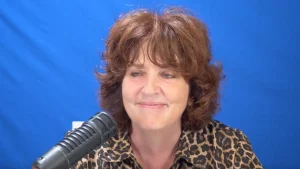
This interview is a refreshing and more accurate reevaluation of the wisdom the original authors of the kama sutra were trying to convey about the cultivation of life force energy through the practice of mindful sensuality.
Great interview Kim. It is so awesome to see you sharing one of your greatest gifts. You are the interviewer extraordinaire! I encourage people to watch this interview and share it with their friends!
While you are it, listen to any of Kim’s countless interviews. She was ahead of her time. She’s now on time! You won’t be disappointed. 🙂