

Robert Felix
This broadcast segment addresses the urgent need for verifiable facts about climate and weather that have been unable to make their way in a cohesive, understandable way to the public.
The first of two parts, this show features Ice Age Now founder Robert Felix, the author of Not by Fire, But By Ice and Magnetic Reversals & Evolutionary Leaps. Bob has spent considerable time researching climate and weather, extinctions, magnetic reversals, and ice ages. His books present staggering evidence of global cooling that suggests an ice age could begin at any moment.
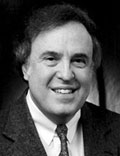
Joe D'Aleo
Meteorologist Joe D’Aleo and climatologist Dr. Tim Ball also join in to provide a broader perspective on climate and weather and explain what’s missing from the established climate dialogues. The information these men bring to bear will shake you to your very foundations!
A gross body of distortion and misinformation exists about the climate dangers we are truly facing. The truth is that very few of us understand climate and weather. Most of us have taken a blind faith approach to researching these subjects.
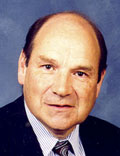
Dr. Tim Ball
Unfortunately, this will be to the great detriment of all of humanity. In order to adequately prepare for coming changes, we need a different framework to quickly and properly understand climate and weather. Get ready to learn things you have never known before about weather, climate, and the business of climate change!
Podcast: Play in new window | Download
Read the Full Verbatim Transcript — A True Inquiry Into Climate Change & Weather: A Hot Potato on It’s Rainmaking Time!
It’s Rainmaking Time!®
A True Inquiry Into Climate Change & Weather (1/2): A Hot Potato
Original air date: October 25, 2009
Host & Interviewer: Kim Greenhouse
Guests: Robert Felix, Joe D’Aleo, Dr. Tim Ball
Kim: Climate actually has something directly to do with the Sun, with our magnetic field, with vulcanism, with our Solar System. Ladies and gentlemen, welcome Robert Felix, the author of Magnetic Reversals and Evolutionary Leaps: The True Origin of Species. He is also the author of Not By Fire, But By Ice: Discover What Killed the Dinosaurs and Why It Could Kill Us. Mr. Felix has one of the most compelling syntheses of explaining weather and climate in a way I’ve never heard before. And while on this show today, we have meteorologists and climatologists who are going to help us understand what weather has to do with. Robert Felix is here today, and he’s going to help us understand the truth about climate and weather. Ladies and gentlemen, please welcome Robert Felix. Robert, welcome to It’s Rainmaking Time!
Robert: Thank you, Kim. I’m really happy to be on with you. And you know, you talk about what’s going on here with the climate. And I just want to start it out by saying it’s a cycle, it’s a cycle, it’s a cycle, and it has nothing to do with what humans may, or may not, be doing on this planet.
Kim: Let me ask you something about it’s a cycle, it’s a cycle, it’s a cycle. In your book, Not By Fire But By Ice, you speak about the correlation between extinctions and ice ages, and extinctions and pole flips, or magnetic flips as you call it, every 11,500 years. Can you bring us in to the verifiable, evidentiary body of knowledge that needs to be articulated, to even have a frame of reference, to be discussing this subject?
Robert: Well there’s a cycle, called the Milankovich Cycle, and this cycle — I really don’t know of any geologist in the world who would disagree with this cycle. And the cycle — it’s not something I’ve invented. We’ve known about it since at least the 1970s. In the 1970s, there was a group called CLIMAP — Climate/Long Range Investigation Mapping and Predictions. And it was spearheaded by people at Lamont-Doherty Earth Observatory. It had more than 200 institutions involved. What they did is they drilled cores into the ocean floor, where they could look at sediments that had been deposited as much as 500,000 years ago. They discovered that ice ages have come and gone, according to a cycle, approximately every 23,000 years, with a smaller ice age at the halfway point — every 11,500 years. So I look at this cycle — every 11,500 years — where the climate warms up, to periods of warmth even warmer than today, and then we descend into an ice age, almost instantaneously.
Kim: And talk about the instantaneously. Because what blew my mind, reading the book, was that it doesn’t have to get that much colder to move into an ice age. What do you mean by that?
Robert: Oh, it’s already cold enough. Going back to Lamont-Doherty Earth Observatory — the head of Lamont-Doherty Earth Observatory, back in the 1970s, a guy by the name of Maurice Ewing — said it’s cold enough right now to have an ice age. All we need is more moisture. And boy, have we been getting it. I believe the precipitation has increased in the United States by more than 20% than when Maurice Ewing said those words. So to me, I see it happening right now. And when I say fast — you know, when I went to school, way back when — we were thinking that it took thousands of years for an ice age to begin. But in the late 1980s, there was a group called GRIP — Greenland Ice Core Project — and they drilled cores into the ice in central Greenland. They went down more than two miles into the ice, and then pulled up these cores that were about 4 inches in diameter. And they were able to look at those cores and see what happened as much as 250,000 years ago. They discovered that every ice age in the last quarter of a million years — and I mean every single one, without exception — began in less than 20 years, sometimes in less than 3 years. And they did it from periods of warmth, as warm as today, or even warmer. There was the Eemian Period, about 120,000 years ago. Actually, it lasted from about 125,000 years ago to 115,000 years ago. And the Eemian Period was even warmer than today’s interglacial. And when it ended, it ended with a bang, and went into full-fledged glacial severity in less than 20 years. That’s what I mean by fast.
Kim: That’s great. And also, I appreciate what you just said. Could you explain the fact that the glaciers are growing? Because what I’ve heard is that the glaciers are shrinking. What is the story, and how does one verify evidence of that?
Robert: Well, you know, that drives me nuts. Because I keep seeing pictures of mountain glaciers. And we’re just not being told the truth. When I do radio interviews around the country, I ask the host if they are aware that glaciers are growing right here, in the United States. And almost invariably, they’ve never even heard of that. But in California, on Mount Shasta — Mount Shasta has 7 glaciers; all 7 glaciers are growing on Mount Shasta and have been for 50 years. Some of them have doubled in size, but we’re not being told about it. In Washington state, on Mount Rainier, there’s a glacier there called the Nisqually Glacier. In the 1920s — I believe it was 1929 — the Tacoma City Light began measuring the Nisqually Glacier, because they needed to know what water levels were going to be coming down the various rivers, in order to generate their electricity. So the Nisqually Glacier is the most measured glacier in the Northern Hemisphere. The Nisqually Glacier is growing thicker, at the rate of 18 feet per year. And yes, it had been receding. But since 1998, the Nisqually Glacier has been advancing. The Emmons Glacier, on Mount Rainier, has been advancing. Crater Glacier, on Mount St. Helens — when did Mount St. Helens erupt? I think May of 1980. There was a great big glacier on Mount St. Helens that totally melted. And the ice and slurry and mud and trees and everything came raging down the Tolt River. So the glacier was destroyed. Well that glacier on Mount St. Helens — it’s now called Crater Glacier — has made a tremendous comeback. It’s now bigger than it was in 1980. But are we hearing about it? No. Glaciers are growing. Glacier Peak, in northern Washington — glaciers growing. Mount Shuksan, in northern Washington — glaciers are growing.
Kim: Why, for example, do I read that the Arctic shelf is receding? And pictures of polar bears are seemingly being taken, falling into the water, because the ice is melting. What is occurring that is manifesting pictures like this and information like this?
Robert: Part of the reason is those pictures of polar bears were taken in August, when the ice melts every year. So that’s part of it.
Kim: And I heard it’s on the eastern side of the Arctic.
Robert: Well what I look at — now I know that some of the Arctic ice has been melting. I agree with that. And it’s like in Antarctica, the ice on west Antarctica, which is a peninsula sticking out into the ocean — that’s melting. But the ice in the rest of Antarctica is growing thicker. No one seems to realize how big the Antarctic ice sheet really is.
Kim: How big is it?
Robert: Well when you look at the globe, you just see this little tiny area of ice down at the bottom of the globe. The Antarctic ice sheet is twice as big as the continental United States. The area where the ice is melting is tiny in comparison to that. The comparison I make is if you were looking at the entire United States being covered with ice, and then half of the ice in Oregon were melting — that’s essentially the percentage we’re looking at. So the ice is melting in half a state, and our headlines are telling us the ice is melting all over.
Kim: It’s out of context, then, isn’t it?
Robert: It’s not true. Now in the Arctic, I agree that it appears that the ice seems to be melting. But you know, even during the depths of the last ice age, the ice in the Arctic was not much thicker than it is right now. And that has had scientists confused for a lot of years. How could that happen, that the rest of Canada was covered with two miles of ice, and the Arctic was not covered any more than it is today. Well the reason, I think — and we can get into this later — but I think it has to do with underwater volcanoes.
Kim: Yes, and in your book you talk about vulcanism. I keep thinking of Star Trek when I hear that word. That underwater vulcanism has a huge impact on our weather. I don’t understand that. That’s wild. Explain it.
Robert: Well if you think about El Niño — during an El Niño, the Pacific warms up on the Asian side. And then, that heat travels across the Pacific. And when it comes to the United States area, or to South America, it creates these giant, giant rainstorms. Because as that area of the ocean warms, it sends ever more moisture into the sky. You mentioned clouds at the beginning of this. Well that heating ocean is what sends all the moisture up there, to create those clouds. And it comes to us as giant rainstorms.
Kim: But how does the vulcanism impact weather?
Robert: Well because the underwater vulcanism heats the ocean. You know, I hear about humans heating the ocean. And yet the ocean — the heat begins at two miles down. I do have a paper on my website that shows that scientists have found that the heat begins at two miles down. Now I don’t know how we humans can be heating the ocean two miles down, before the surface heats. Anybody who has a swimming pool — if they’ve tried to heat their swimming pool by blowing a fan over the top of it, they know it doesn’t work. It has to come from beneath.
Kim: So the ocean is primarily warmed from down, two miles deep. And ocean warming — if I’m understanding your books and what you’re saying — ocean warming also plays a role on weather.
Robert: Oh, it controls the weather. And I don’t understand all of it. And I think when we have Joe D’Aleo on, a meteorologist, we’ll learn more about that. But yes, because it controls the jet stream — everything about our weather comes, essentially, from the ocean. As you said earlier, and even before that, from the Sun.
Kim: Ladies and gentlemen, please welcome Joe D’Aleo. He is the owner of IceCaps.US. He is a meteorologist. He is a person who’s articulate and committed to getting the truth out about weather and climate. He has an extremely popular site — IceCaps.US — with millions of people going to it. Joe D’Aleo, welcome to It’s Rainmaking Time!
Joe: Thank you, Kim. And I would like to follow up on what Bob has said. He did talk about the ice in the Arctic and Antarctic and vulcanism. And the Arctic ice has, indeed, diminished — especially since 1999 — and reached a record in the satellite era. During the period from 1979 on, we’ve been able to see the Arctic ice and measure its extent. And we had the least amount of Arctic ice in 2007, and they made a big deal about that. But you haven’t heard that it has recovered quite a bit since then. This year, at the minimum in September, we were 26% more in our extent of the Arctic ice than in 2007. So it has come back. Now the Arctic ice is floating on water, unlike the Antarctic ice, which for the most part is on land. There is certainly some sea ice in surrounding waters. But it is subject to melting from beneath. If the oceans in the Atlantic and Pacific are warm, and some of that warm water can make its way underneath the ice — and it does, the currents carry that warm water under the ice — it thins the ice, and you wind up with a smaller extent, thinner ice that melts during the summer, but comes back during the winter. This is not a new phenomenon, though. As Bob has said, there are cycles. And there are cycles in this Arctic temperature and Arctic ice that have been observed. The 1930s through 1950s — we had similar reduction in the ice in the Arctic. Also back in the 1800s, when Siberian oceanographers and fishermen tell us they caught codfish off of Siberia, in the Arctic. So this is not an unusual phenomenon. It does not relate to CO2, but does relate to ocean heat.
Joe: In the Antarctic, as Robert said, the ice has thickened. And in fact, the total extent of the ice, according to those same satellites, has reached a record maximum in 2007 since 1979. And the melting last year was the smallest ever on record. And we continue about a million square kilometers above our 31-year average in the Antarctic ice coverage. When it comes to vulcanism — volcanoes affect the climate also by spewing ash, but more importantly sulphur dioxide high into the atmosphere. And when it gets high up — 80 to 100,000 feet or more — it has a long lifetime. And it quickly gets converted to what we call sulfate aerosols, that act like little mirrors to reflect the solar radiation that comes from the Sun back to space. And the result is that less Sun energy gets through to warm the surface. And we wind up with three, four years of cooling. And that’s been clearly seen in the temperature records, in the ’80s after El Chichón and Mount St. Helens, in the ’90s after Pinatubo. In times of very low stratospheric, or high-level sulfate aerosols — like we’ve had in the early part of this decade — the atmosphere is cleaner and more radiation gets through, and we wind up with a warming. So some of the changes that we’ve seen in the last two decades can be explained by vulcanism in the atmosphere.
Kim: Why do you think — not to derail the scientific part of this — but why would something, NOAA, and can someone explain who NOAA is?
Joe: They’re the National Oceanographic and Atmospheric Administration. That’s our government agency responsible for studying and reporting data on the oceans and the atmosphere.
Kim: OK, thank you. You know, NOAA has said that 80% of volcanoes are actually under water. I didn’t know that. I don’t think the public would know that. So when you talk about vulcanism — volcanoes being a key, one of the keys impacting climate — I’m stupefied that it’s off the table of human consumption and awareness of being a huge impactor of warming the oceans, but also altering weather.
Robert: Kim, can I come in on that? Because when NOAA said that 80% of volcanic activity occurs under water, I first heard about that in the early 1990s, when I began researching for the book. But that was in 1991. In 1993, NOAA thought there were about 10,000 underwater volcanoes in the entire world. That was 1991. In 1993, they discovered another 1,133 underwater volcanoes down off the coast of Easter Island. They were shocked. So they increased the world supply of underwater volcanoes by 10%, in just a matter of months. They also discovered underwater volcanoes — rift volcanoes — off the coast of Oregon, off the coast of Washington, that they weren’t really aware of. Now that was 1993. So they thought there were 11,000 underwater volcanoes. Now, if you visit NASA’s website, they estimate that there may be as many as 3 million underwater volcanoes. It is incredible how the knowledge has changed since 1991.
Kim: Well do you think — I just want to stay on it, till I have a clear sense of this, for the public. If that’s true — even if it’s true by 20% — isn’t that going to impact ocean warming critically?
Robert: It has to impact it. You know, vulcanism has increased. My understanding is that above-water vulcanism has increased in the last 100 years. And that if underwater vulcanism has increased — I would assume that above-water vulcanism increasing means underwater vulcanism has increased even more. So what we’re looking at is that the above-water vulcanism is pouring ash and sulphur and everything else into the sky, which is cooling the skies. While at the same time, the underwater volcanoes are heating the water and sending more moisture into the sky. So you have more moisture rising into skies that are cooler, which to me is a recipe for disaster.
Kim: Let me ask you this. If the glaciers are growing — I want to go back to the glaciers for just a minute. What are the tools, or what are the instruments, or who are the people that measure the glacier growth or recession? Who are they?
Robert: Well first, let me just mention how many more glaciers are growing than we’re being told about. Because glaciers are growing in New Zealand — all 50 glaciers are growing in New Zealand. Glaciers are growing in Greenland — at least growing thicker. Glaciers are growing in Antarctica. Glaciers are growing in Iceland. They’re growing in South America. There’s the Pio XI Glacier — the largest glacier in Chile. It is growing. The Perito Moreno Glacier in Argentina — the largest glacier in Argentina — it’s growing. Glaciers are growing on the tallest mountain in France — Mont Blanc. Glaciers are growing in Canada, on Canada’s highest peak — Mount Logan. But you know, they try to cover this up. The article I read about Mount Logan said that Mount Logan was growing taller. Satellite measurements show that Mount Logan is growing taller. You had to get about five paragraphs down into that article before you discover the reason it’s growing taller is because there’s more ice accumulating.
Kim: I didn’t know that ice had anything to do with mountain growth.
Robert: Well it — only in the respect of measuring it with satellite measurements. So the mountain itself is not growing. But the satellite measurements show that something’s there. So it’s ice.
Kim: Can we bring in Dr. Tim Ball? Tim, from Canada, who is a climatologist, trained out of London, England, who is also a teacher and a writer for Canadian Free Press. Dr. Tim Ball, thank you.
Tim: Yes, amongst —
Kim: Amongst many other things.
Tim: Yeah. Well thank you, Kim. It’s very interesting to listen to all of this, because of course, I’ve watched for 40 years the evolution of climate, and climate science. And what’s interesting is that meteorology is actually a subset of climate. It’s the study of physics of the atmosphere. And just to clarify some things for the public. When they stand outside, they experience weather. And that weather is what scientists call white noise. That is, it’s the sum total of a whole bunch of individual noises that scientists call red noise. And each of those red noises — you’re discussing some of them here — the volcanoes and the ice glacier and so on. But that white noise, that is the weather, is everything from cosmic radiation in deep space, to what you’re also discussing — the heat off the bottom of the oceans. Now that’s collectively called geothermal heat. When you discuss it as volcanoes, that leaves the impression in the public’s mind that it’s individual volcanoes. It is, but the public also need to know that there are what are called mid-Atlantic or mid-oceanic ridges — long ridges, where very thin crust of the Earth and a lot of heat from inside the Earth is being put into the oceans, as well. If you’re going to understand the weather, what you experience — the analogy I’d like to use is like standing outside of a football stadium, with 500,000 fans all cheering, and the noise you hear is the collective noise — the white noise — that’s the weather. But what we’re trying to do is identify individual noises from within that stadium. And it is that complex. And that’s why it’s so difficult.
Tim: Now that’s weather. And that’s what you experience at any moment, or during a day. But climate is the average of that weather — over time, or in a particular region. And one of the difficulties is that studying the weather is difficult enough. But the study of climate is a generalist discipline. In other words, you’ve got to bring together all of the expertise of everybody who’s studying cosmic radiation to studying the Sun, and on and on and on, and bring that all together. And the analogy I like to use is that the climate is the full picture. But what we’ve got in today’s world, because of specialization, is individuals who’ve got one piece of the puzzle.
Kim: Kind of like touching an elephant, and you touch one part of its body with your eyes closed, and you say I’m touching a tree. You’re touching one part of an elephant and you think you’ve got the whole thing.
Tim: OK, and of course, they’ve made that even worse. Because as you and I discussed, they’ve got the focus on CO2, which is one very, very, very small part of the total weather and climate system. And they’ve been able to focus attention on that — get the world’s attention on that. And that’s the question that people need to ask themselves. But back to my original point about weather and climate. Bob mentioned Milankovich. Well I recall at the beginning of my career, you’d go to conferences, and if anybody dared to suggest that the Milankovich was an explanation, they got attacked immediately.
Kim: What are you talking about? Hold on, one second. We’ve got to take you back, because you’re very much within your discipline and Gestalt of understanding. We’ve got to stay very, very slow with the public, who needs the grounding. So I just want to bring you back and talk about — what is it called?
Tim: Milankovich.
Kim: The Milankovich. Say what it is.
Tim: Well he was a Yugoslav — Serbian, actually — scientist, who realized that the various Sun-Earth relationships were a critical factor in determining the weather and the climate that we have on Earth. Now this is not a new idea. The first people to look at changing orbit of the Earth, as it affects the climate, was a Scottish scientist by the name of James Croll. 150 years ago, he was calculating how the changing orbit of the Earth, caused by the gravitational pull — mostly by the gravitational pull of the planet Jupiter — would affect the amount of energy the Earth received over time. And then therefore, that would affect the weather and climate. And then a little bit later on — about 130 years ago — they realized that the tilt of the Earth is constantly changing. And I’m not just talking about the wobble — the actual change of the tilt. We say it’s 23-1/2, but as I like to joke, that’s just close enough for government work. But what Milankovich did was he brought all of these things together, and he did his work in the 1950s — incredible the amount of calculations that he did, pre-computer — and then came up with how the amount of energy the Earth receives varies, with the combination of the changing orbit, the changing tilt, and something called the precession of the equinox. And that gave an average of variation of the amount of energy that the Earth receives from the Sun. And of course, that was plotted. And Bob talked about Ewing. And Ewing and Dunn had a theory about Arctic ice. But there was another book that came out about the 1970s, called The Deep and The Past. And this was a sort of a trade book that was trying to link those deep sea sediments, that Bob talked about, with the glacial weather patterns. But as I said, Milankovich still wasn’t accepted at that time. I recall 1989 — a conference where somebody presented Milankovich, and nobody questioned it. And so I knew that about that time, the whole Milankovich concept, as just part of the cycles of the weather system, was generally being accepted.
Tim: And I think that one of the things that you’re hearing from Bob and from Joe, and so on, is how recent — how short the weather records are. We were talking about Arctic ice, and it’s really only valid data from 1979 to the present time. And yet, the Earth is 5 billion years old. And then also, the fact that so many of these mechanisms and things — I mean I watched the introduction of the El Niño. It started as the Walker Circulation and then it became the Southern Oscillation, and then it became El Niño, El Niño Southern Oscillation, and on and on and on. So I would like to say that with the climate puzzle, we haven’t even got the four corner pieces. And that’s how you do a puzzle — you find the corner pieces. So our understanding of the oceans, our understanding of the atmosphere, our understanding of the land surfaces and the understanding of space.
Kim: We are in space.
Tim: Yeah. So our understanding of those — and then, when you start talking about the edge pieces of the puzzle, they’re simply not there. Now just to finish up on the geothermal thing. I wrote a textbook — published 1987 was the first edition. And I had a reviewer — I put in there that geothermal, that is the volcanic under the ocean, should be considered. And a couple of the reviewers just rejected it. And I still put it in the book. But these ideas — because all of the textbooks assume that the only source of energy for the Earth’s atmosphere and weather is the Sun. And of course, when the textbooks start with that, and then you go to the computer models, where they virtually ignore the Sun, it’s incredible what’s going on.
Kim: So let me ask you this.
Tim: So as I said, what we’re really doing is we’re seeing the evolution of a science, but being blocked by — and I know we don’t want to get into this part of it yet — but being thwarted by political inputs.
Kim: I do want to delve into the IPCC, and I want to talk about the community of inquiry and the terms of reference, which have to do with limiting the scope of discovery, a little bit later. But I want to stay on two more things that I want to bring in.
Tim: Just one comment I wanted to make — we were talking about the glaciation, and Bob’s bringing forward the fact of the glaciers advancing. One of the big mistakes that’s made is that it’s assumed that glaciers are only about temperature. And when I did my graduate-level classes in climate, one of the first ones — the general one on climate change — the first lecture I would give was showing how a glaciation is caused by the Earth cooling. The second lecture I gave was how — and I proved — glaciation can be caused by the Earth warming. And of course, what Bob is referring to is how quickly you can go into glaciation. But the glaciers are built by snow. Yes, the temperature has something to do with it. There’s no doubt about that, at certain points. But if you have more snowfall and enough of it survives through the summer melt, then you are in a cycle of building of layers of snow, which then become glaciation. The mistake that’s made is that glaciers are simply about temperature. And the same mistake is being made about tree rings. They assume that tree rings are all about temperature.
Kim: What’s a tree ring? Wait a minute. Hold on, one second. What is a tree ring?
Tim: Tree rings — it started out when you cut through a tree, and you got these concentric rings. Each ring supposedly represents one year of growth. Originally, it started out as dendrochronology. Dendro is Greek for tree, chronology is time. And so using the tree rings to determine time. But starting at the University of Arizona, with people like Fritz, dendroclimatology developed, where they realized that the width of each ring was an indicator of the weather patterns. But again, it was assumed primarily temperature. And from that, you could then reconstruct temperatures of the past. So that became one of the indicators of past climate change. And it’s unfortunate that it’s been so badly abused in what’s called the Hockey Stick, because one of the difficulties we have, Kim, is that we’ve basically got three periods of climate study. One is what’s called the secular or instrumental period, which everybody assumes gives us very detailed and accurate record, and that’s simply not true, either. And then you’ve got the historic, which is human records and observations and so on. And that generally covers about 3,000 years. And then you get into the biological and geological. One of the advantages to tree rings, of course, is that the trees are growing now, but they were also growing before we had instruments. And I worked with people like Peter Scott, up at Churchill, and I had reproduced temperature records for Churchill, going back 200 years. Well they could then take those temperature records, compare them with the tree rings that they had, and then presumably, you could link back. And of course, this is part of the difficulty, as well. I mean we’re talking about the mechanisms of climate, but what’s really lacking as well is good, long, detailed records — data. And one of the things that’s happened — and I watched it in my career, and yelled about it but got nowhere — we’ve got less weather stations in the world now than we had in 1960.
Kim: While you’re on that. I want you to stand by. I want to bring in Joe D’Aleo. Are you there?
Joe: Yes.
Kim: Could you talk about — in our initial conversation — you were sharing with me that there’s an organization which took a look at the 1221 weather stations, that basically they were not kept up to date, that they were not accurate, that they were the primary data for some of the underpinning of what is considered to be global warming. Let me make sure you articulate it correctly.
Joe: Well those stations are in the United States only. Although there’s some indication that similar issues exist internationally. And it was discovered first by a professor at the University of Colorado — Roger Pielke, Sr. — who did a study of the climate stations in eastern Colorado. And he was very surprised to find that the majority of them were not cited properly. They weren’t located as the National Weather Service’s prescribed stations should be located, which is on a grassy surface, 100 feet away from the nearest building or trees, open to ventilation. A lot of these were next to buildings or on concrete, or on rooftops or next to air conditioners. So he published on that, and that got Anthony Watts, who was a meteorologist in California, interested in looking at that problem, and went to look at a few stations in California, and discovered that indeed was the case. And he decided to start a volunteer network of meteorologists, climatologists, other scientists interested in the issue — to go and investigate all 1221 stations — take photographs from all directions, use satellite photography to look from the top, and document the siting of these stations. And they were surprised to find many were on concrete, on roads, in parking lots, on rooftops, next to air conditioners, in waste treatment plants. And in fact, of the 1221 stations, they’ve currently surveyed about 1,000, and 90% of them, they’ve found to be poor or very poorly cited, using the government’s own criteria. And in all cases, the siting favors a warm bias — of more than a degree Celsius or two, say two degrees Fahrenheit. So that is certainly a contaminant to that data. But that’s only one. Tim mentioned the big dropout of stations globally, that took place around 1990. In the 1960s and ’70s, we had about 6,000 stations reporting. After 1990, it dropped to less than 2,000. In fact, in the last year, in most months, our data centers are using about 1,000 stations. So 80% of the world stations are not being used.
Kim: Why?
Joe: Well some of them dropped out with the fall of the Soviet Union, probably because of inability to continue to support them financially. But it appears that in a lot of cases, it’s our governments and our data centers not going after the data. In Canada, for example, we have very few stations in the global databases. We do have big holes also in Brazil. Most of Africa’s missing, large holes in Australia and in the former Soviet Union, Greenland.
Kim: I have a question for the lay audience, which includes me. Why would we depend today on these separate stations? Why can’t we just do everything by satellite, and look into real weather or climate via satellite, and get our information?
Joe: Well we do, actually. We do have satellite microwave sensing of the atmosphere and lower atmosphere since 1979. And we believe it is more accurate than these station databases globally. In addition to the stations that disappeared and a lot of the other stations, there was a tenfold increase in the number of missing data inputs or months. So big holes in that data. But we do have good satellite data, going back to 1979. But because it doesn’t go all the way back to the 1880s, it is not used by our governments when they do their long-term analysis. And it should be. It is a better data source than our station databases.
Kim: So when we get the news about weather, where is it emanating from? What is tracking the weather in different parts of the world, then?
Joe: Certainly, there are data centers that are responsible for assessing, on a monthly basis, the state of the global atmosphere, and also the US. NOAA — the National Climatic Data Center, in Asheville, does an assessment at the end of the month. And there’s another center in the UK — the Hadley Centre — that the IPCC uses in their analyses, that does their own assessment of the global temperatures. NASA does theirs using the NOAA data. They do a little bit of an adjustment to that data, and come up with their numbers. It’s pretty close to NOAA. But we get it from those primary sources. But you also get data from two different locations that track the satellite data: One at the University of Alabama, one in California, that takes the satellite data and assesses the global temperatures from that.
Tim: Kim, can I chime in here?
Kim: Yes, and then I want to bring Robert back.
Tim: Just very quickly, to follow up on what Joe said. One of the reasons that they closed down some of the surface stations — which are the ones he was talking about that are problematic — was they thought the satellite would be able to provide all the data. And there were a lot of problems, because first of all, they found out the satellites couldn’t see through cloud, couldn’t tell them when it was raining or snowing, or even if there was precipitation. So the satellites were looked at as the panacea, and they basically closed the stations before they found out that the satellite didn’t provide all the data they wanted. As Joe pointed out, the satellite gives you better coverage, in terms of temperature. But it’s actually taking the temperature down through the atmosphere. And again, I recall when the first satellite information came out, and it was showing sea surface temperatures much higher than we were actually getting from thermometers in the water. And then they discovered that they hadn’t allowed for the fact that the satellite was actually measuring those particles of dust that we talked about earlier, from the volcanoes, the aerosols in the atmosphere, and then they have to adjust for that. So again, all of it’s in its infancy. Joe mentioned the different agencies, like the Hadley Centre and so on. Well they each come out with their own estimate of the average temperature for the Earth each year. And quite often, they vary considerably. You say well how can that be, if they’re all using the same weather stations? Well they’re not using the same weather stations. And not only that, but they’re adjusting them separately. And I remember one year, where the difference between the British estimate and the American estimate was half a degree Celsius. Well the listeners would say well that doesn’t sound like very much. But then, if you remember that they’ve told us that the global temperature will increase by .6 degrees Celsius over 130 years, and that was a terrible thing — it gives you an idea of the inaccuracy of the whole data system.
Kim: I totally get that. Several years ago, I did some television work for It’s Rainmaking Time! in Los Angeles. And I had the pleasure of interviewing Dr. Carol Rosin, who was the speechwriter and communication strategist for Werner Von Braun. And she had talked to me extensively about the fact that satellites can see 20 stories down below the ground, at the level of a pin — that there is nothing that satellites can’t see, and there’s nobody that satellites can’t find. She made it very clear to me to understand the level at which satellites can see, particularly at a military intelligence level. So what they say, with regard to tracking weather — if that’s true — you know, maybe the fact that snow can’t be seen, it would be hard for me to believe. The fact that rain can’t be seen, maybe. The fact that there are some things it can’t pick up — it’s hard-pressed, when you think at a military intelligence level, what can be seen and what is being done.
Joe: Yeah, but Kim, what you have to understand is that the satellites are set up to detect the things that they want to detect. And so, for example, if you want to detect infrared, then you put up an infrared-detecting satellite. And so yeah, we’ve heard those stories about being able to read a license plate from space, and all of the rest of it. And we see with Google Earth some level of that sophistication. But when you’re starting to sense from a satellite all of the things related to the weather, it depends upon how you set the satellite up, what frequencies you’re looking at, what level of ability to detect. So there’s a whole lot of factors that determine it.
Kim: So it’s another instrument. It’s what the instrument is told to look for, correct?
Joe: Yeah.
Kim: Bob Felix. Welcome back to It’s Rainmaking Time! I wanted to ask you if you could explain to us, what does the magnetic field have to do with the Sun’s activity, as it relates to climate here and weather?
Robert: Well what I see with the magnetic field is that — earlier we were talking about the Milankovich Cycle, and how ice ages come and go every 23,000 years, with a smaller beat every 11,500 years. And then we go into precession of the equinoxes — what Dr. Ball mentioned. And all of these things tie together — in my view — with magnetic reversals. Because a lot of textbooks will tell you that the last magnetic reversal occurred about 780,000 years ago, at the Brunhes-Matuyama magnetic reversal. But there are a lot more, and it depends on how you define them. But there’s something called a magnetic excursion, where the magnetic North Pole moves south. For those who don’t even know what a magnetic reversal is, maybe I should start there.
Kim: Please, go right ahead. What is a magnetic reversal?
Robert: Well that’s a time in the past when compasses, instead of pointing toward the Arctic, would have pointed toward the Antarctic. And scientists now realize that the Earth’s magnetic field has been reversed probably half of history. And the way they — volcanoes and the lava, when it pours out of the ground, is nonmagnetic. But as it cools down through what’s called the Curie temperature, it takes on the magnetic field of the day. So what scientists can do — and again, I’m simplifying — but they can drill a hole into ancient lava. They can drop a compass down there and see which way was north at the time. So in that way, lava is absolutely recorded in the rocks, as to which way the compasses would have pointed at any time in history. But what we’ve discovered is that magnetic excursions, where the North Pole moved south for a while, and then moved back — those seem to occur about every 11,500 years, in synch with the ice age cycle. There was the Gothenburg magnetic reversal, or excursion, from 11,500 years ago. That’s when the mammoths went extinct. It was a big extinction.
Kim: In your book, you talked about how they’re still finding millions and millions of bones frozen, and millions of animals frozen still in time. Explain that. That was so profound in your books.
Robert: Well this is from 11,500 years ago, and from 23,000 years ago. Some people always want to blame humans. And we still have people who are blaming humans for having killed off the mammoths. And yet, there are estimates that there may still be the remains of a million mammoths, still encased in the ice. As the ice melts in parts of Siberia, we still are finding mammoths — some of them still standing up, some of them with food still in their tummies. There was the Russian Academy of Scientists — they dissected one of the mammoths they found, about 50 or 60 years ago. But they dissected one of those mammoths and the meat was still dark red and fresh looking, as if it had been frozen just yesterday. They fed the meat to their dogs, and their dogs loved it. When they dissected the mammoth, they found fresh food in its tummy. Now what that means is that wherever that mammoth was living, it was warm enough that trees were growing, that plants were growing, that food was growing. And then suddenly, something happened to bury that mammoth in snow — I call it nine stories of snow. But something trapped that mammoth so quickly that it got fast frozen with that food still in its mouth. I think that comes from giant snowstorms that trapped those mammoths. And that’s why I worry so much now about the fact that we’re having more and more moisture go into the sky. We’re having more and more giant snowstorms. We’ve already had — here we are toward the end of 2009, in October — but we have already had record snowstorms in the United States and in Europe and in South America. I fear that we’re headed into an ice age right now.
Kim: I want to talk about the Sun with you. It is estimated that the Sun is 93 million miles away. Am I correct?
Robert: Yes.
Kim: That’s the distance from the Earth to the Sun. And yet, activity from within the center of the Sun impacts our magnetic field, and our climate and weather. Can you explain it?
Robert: Well let me back up just a little bit, because Dr. Ball had mentioned precession of the equinoxes. So that has to do with the Sun. Let me see if I can draw a picture of it. Our Earth revolves — we all know that — every 24 hours. And the Earth is tilted — as Dr. Ball mentioned — it’s tilted 23-1/2 degrees. Well if you could shove a stick all the way through the Earth, right at our axis of rotation, that stick would point, right now, toward the star Polaris — toward the North Star. But it doesn’t always point that way, because our axis of rotation slowly rotates. It’s kind of like a top. If you’ve ever spun a top, you’ve noticed that the top never stands straight up and down. It’s always at a tilt, and its axis of rotation is always rotating — the same thing happens with the Earth. Right now, that axis of rotation points toward the star Polaris. 11,500 years from now, however, that axis of rotation will point toward the star Vega. 11,500 years from then, it will be back toward the star Polaris, again. And ice ages seem to occur in synch with that rotation. It’s called precession of the equinoxes. Now there are going to be people who say the precession of the equinoxes takes 25,580 years, or whatever it is. But I’m talking about this happening in relation to the Solar System. Because the Solar System also slowly rotates. So when you put those two things together, the precession of the equinoxes part takes 23,000 years. I see — I don’t know why — but as this happens, as we do this rotation, our magnetic field strength declines and declines. And then, at a point where it gets to be about 15% of its normal strength, it suddenly turns and reverses. Well our magnetic field strength has been declining. Our magnetic field strength has declined two-thirds, in the last 2,000 years — since the time of Christ. And the rate of decline is picking up. So it concerns me that we are on the cusp of a new magnetic reversal.
Kim: And I interviewed Dr. Dean Bonlie, who is a magnetism expert in Canada, who developed a bed called Magnetico. And what he shared was that the Earth loses 5% of its magnetic field now, every 100 years. And that actually the loss of the magnetic field is actually partially responsible for a lot of the ills and the diseases that people are experiencing, and they don’t even know why. It’s just a part of the puzzle. I’m not saying it is the whole puzzle, or blaming the magnetic field change. But that it has an effect on health, and it has an effect on wellness.
Robert: I’ve heard that. I don’t know. I haven’t researched that at all. So I have no idea how true, or not true, that might be.
Kim: You said in your book that our magnetic field is not understood very well.
Robert: Oh no, it’s not. Right now, scientists are in total disagreement. Some think the next magnetic reversal could occur 10,000 years from now. And yet others say — and I do quote others in Not By Fire, But By Ice — that it could happen within the next 200 years. There are other scientists who say that a magnetic reversal would take thousands of years to occur. And yet there are scientists at the University of California who think it could occur in as little as 30 days. And they base it on volcanic activity, again. At Steens Mountain, central Oregon, these scientists from the University of California drilled cores into the center of a lava field at Steens Mountain, in Oregon. And then they drilled cores into the edges of the lava field. And they discovered that their compasses pointed in different directions, which means that the reversal occurred during the time — the difference in time for the center of the lava flow to cool, as opposed to the edge of the lava flow. Meaning that it may have occurred in as few as 30 days. So it’s a very open science, still.
Tim: Can I chime in a minute, Kim? Tim Ball. One of the things where we started to discover about the magnetic reversals was in the development of another whole theory that was very controversial, and that was the continental drift. The idea that the Earth’s surface is made up of plates and they’re moving around, as the underlying mantle material moves around. And the magnetic striping, that Bob is describing, was one of the things that showed that these plates separated. And as they separated, the lava came up and cooled. And as they went across the Atlantic Ocean, you found parallel magnetic stripes, which really was like a tape recorder of the reversals. Now again, this was great controversy. Vine and Matthews, at Cambridge, came out with this in ’72 — a lot of objections to it. In fact there are still people that don’t accept the idea of continental drift. But the problem is, again, the mechanism. What induces the Earth’s magnetic field?
Kim: Doesn’t the Sun, in some level, have a direct relationship to the Earth’s magnetic field?
Tim: Well no, the Sun has its own magnetic field, as each body does in space. But the Earth — you’ve got the magnetic lines, at the present time, coming out at the South Pole and going back in at the North Pole, and we call that normal. And then, of course we talk about reversal as the opposite. But originally, it was thought that the magnetic field was created by simply the Earth rotating. But the debate — and I recall this, going to conferences on this — the debate was well if it’s reversal, and that’s the mechanism, then the Earth has to stop rotating in one direction and start rotating in the opposite direction. And of course, there’s no evidence to support that. The latest theory is that the Earth is actually three separate spheres: the solid inner core, the liquid outer core, and then the mantle.
Kim: There are some that even think that the Earth is hollow.
Tim: Well no, I know they do. They talk about the Hollow Earth, but no, it varies from very solid to relatively liquid. But each of these spheres is rotating at a different speed. And the theory is, now, that each of those spheres creates its own magnetic field, that complement themselves to create the pattern of magnetic field that we have now. But then, because they’re rotating at different speeds, they cancel each other out. And then they come back with a different reversal — a polarity reversal. But that’s the theory. And Bob is absolutely right. The debate about how long these reversals take to occur is very difficult, because in the geologic record, it’s estimated it’s about 1,000 years from the beginning of the decline to the zero point of what’s called the Gaussian strength — that’s the strength of the magnetic field — till then it rebuilds with a new reversal. And as Bob intimated, we know that there are very extensive extinctions associated with those reversals. Because of course, without the magnetic field, you’re not being protected from a lot of the harmful radiation from the Sun and from space. So again, this is all part of the complexity of understanding our Earth and our world. And so for people to come out and say oh, the science is settled, or we know what’s going on — it just absolutely boggles the mind, if you’ve done any study of this at all.
Kim: How would an astrophysicist speak to what we’re all speaking to, in terms of being a different discipline? How would an astrophysicist differ from a climatologist, which differs from a meteorologist, and Bob, who’s put together the synthesis of a lot of evidence in all the areas?
Tim: I’ve worked with people like Willie Soon and Sallie Baliunas and other astrophysicists. And of course, what they’re looking at is how the Sun functions. And in the same way that geoscientists are looking at the way the Earth functions. For example, how many people know that the Sun is tilted by 7 degrees? We talked about the tilt of the Earth at 23-1/2. The Sun is tilted by 7 degrees. We’ve talked about Milankovich, which is changes in the Sun-Earth physical relations, but there’s also —
Kim: Apparently we’re in a solar cycle, they say. They say we’re in Solar Cycle 24, and that there are solar flares that they’re watching.
Tim: The solar cycles — the first one starts with Galileo in 1610, but they’re not numbered until 1755, I believe it is. And so starting with that as number 1, we’re now in cycle 23 and supposed to be going into 24.
Kim: And that’s the one some people are concerned about.
Tim: That’s an 11-year cycle, but there are a whole bunch of cycles. I just want to make one quick comment about Bob’s comment about cycles on cycles on cycles. There was a conference in Warsaw in 1990. The scientists were arguing that everything’s cyclical. It’s just that there’s such a complexity of cycles to separate out any one. And the Russians have also done a lot of work on the cycles of weather affecting economies — for example, the Kondratieff Cycle. But the Western world was arguing no, they were into chaos theory — that none of this is cyclical, none of it’s predictable, and it’s just chaos. You can’t assume, because you’ve got a correlation, that you can say because there are more sunspots, the temperature’s higher — that the sunspots, therefore, are causing the temperature to change. All you can do is say look, there’s a high correlation, but that isn’t necessarily cause and effect. And it’s one of the ones that I spent hours talking to my students about, giving them examples. And the classic one that’s kicking around now is there’s a very high correlation between obesity and Diet Coke. Because the biggest drinkers of Diet Coke are obese people. But you just simply can’t make the cause-and-effect relationship like that. And that was the problem with the sunspot data. But now, starting in 1991, there was a guy by the name of Christensen and Svensmark. They came out with this cosmic cloud thing, that Joe was talking about. And we’ve known for a long time that there’s more clouds than there are particles in the atmosphere to create the clouds. And then this idea that it was cosmic rays reaching the lower atmosphere — so this was a mechanism. Now the IPCC rejected it, because they said it’s not proven, it didn’t come out in time. And in the latest report, they just got a few lines directed at it, and that’s it. But if you think about it, the cloud is acting like a screen in the greenhouse. And everybody’s sort of getting an understanding of what the greenhouse is about. Well the cloud cover acts like that screen, so it blocks the sunlight and cools the Earth. Or if it isn’t there, the Sun gets in and warms the Earth. So we do have a legitimate mechanism now.
Kim: Why is the focus on carbon? And what is this preoccupation with carbon? Where did it come from? When I read in your book that carbon is heavier than air, it completely blew my mind. So how is this possible that we’re focused on taxing people for carbon, when it’s organic and it’s heavier than air, and it’s everywhere?
Robert: Yes, I remember giving a talk in Coeur d’Alene a couple of years ago. And this old chemist stood up on the stage and asked anybody there if they remembered their periodic table, and reminded them that CO2 is heavier than air. So how in the world can it be rising up into the sky and creating these problems that you’re talking about? In fact, this last summer I was visiting Chicago, and I went to visit the Museum of Science and Industry. And in the Museum of Science and Industry, they have a reproduction of a coal mine. And one of the things they had was one of those old-fashioned canary cages that the coal mines would have, because the canaries have such small lungs, and if there was something wrong with their oxygen supply, the canary would be the one to die and warn them to get out of there. Well they look out for carbon monoxide. But one of the big things that those canaries could also warn them was of carbon dioxide, which sinks. So it’s just amazing that we’re worried about that. I think that it all has to do with global governments. I don’t think it has anything to do with the climate. I think that this has to do with taking control of our lives. I think that the cap and trade thing that they’re talking about could be more appropriately called control and tax. So to me, it has to do with control and power — nothing to do with the climate, other than that they can sneak it by us.
Kim: The whole world — almost the whole world — all of the environmental advocates. I’ve been an environmental advocate for years. And I was sure we were doing it. Now I want to say this to all of you. You can’t — nobody can fault the people that are upset and want better for the Earth. Or the people that are connected to the planet and want to get rid of this enemy called carbon. But the thing is, that it’s an enemy that’s been created or mis-communicated. Because carbon is not our enemy. And the percentage of it that we have anything to do with — is it like 1 to 2%?
Robert: Oh, it’s not near that high. I think in our atmosphere, if you took all of the CO2 — if you could compare our atmosphere to a basketball arena that holds 10,000 people, the carbon dioxide would amount to four seats in that arena.
Kim: That’s shocking.
Tim: Kim, can I jump in on this? First of all, we’ve got to clarify, for the listeners, that carbon and CO2 are two different things. Carbon is a solid. CO2 is a gas. And this is one of the games that they’ve played, is getting this confusion. We talk about carbon footprints and so on. Bob is correctly talking about CO2, all right? And CO2 is represented as a greenhouse gas, and it’s less than 4% of the total greenhouse gases, which most people don’t know. And he’s correct that it’s more dense than air. But they assume that it’s mixed evenly throughout the atmosphere and so on. And I mentioned earlier the analogy I use is — it’s like somebody’s going to do a physiological study of Kim, and they take one wart on your left arm —
Kim: Which you won’t find. Go ahead. Use a better example, for God’s sake. Go ahead.
Tim: Yeah, well this is representative of your whole body. And that’s what they’re doing with the CO2. Now the question I keep asking people — and you’re implying — is why has that become the focus? And I happen to think that it goes back to Maurice Strong’s statement 30 years ago. Maurice Strong was an advisor to the Secretary General of the UN — Kofi Annan. He came out of Canada and made a lot of money as an industrialist, and then decided that the problem — and this is his quote from 30 years ago — the problem for the planet are the industrialized nations. And isn’t it our responsibility to get rid of them? And I want the listeners to think about — how would you go about doing that? Well if you consider that the industrialized nations are fossil-fuel driven. And to shut down that engine of those nations, then you’ve got to shut off the energy flow. But if you do that, people will scream immediately. But if you can show that the byproduct of those industrialized nations is destroying the planet, through climate change and global warming and so on, then you can effectively convince people to stop using the fossil fuels, which effectively gets rid of the industrialized nations. So Maurice Strong — and he was challenged by Elaine Dewar — and you can read about it in her book Cloak of Green. And it’s a wonderful book, because she set out to write a book praising the environmentalist leaders in Canada. And in her research, she found out that these were not people with purely environmental concerns — they had a political agenda. But anyway, Maurice Strong — when she said to him why didn’t you go into politics to change things, if you think that was the problem — he said you can’t do anything as a politician. I’m going to the UN, where I can get all the funding I want, and where I’m not accountable to anybody. And he set up the United Nations Environment Program, out of which came the Intergovernmental Panel on Climate Change, the IPCC. Now one of my experiences — I’ve served and chaired commissions and been on commissions of inquiry — the way that the politicians control commissions of inquiry is in the terms of reference. And if you go and look at the terms of reference for the IPCC, the first thing they give is the definition of climate change. And it effectively limits them to only looking at climate changes due to human causes. And if you look at any of their reports, they say well what are the major forcings? That is, what are the things that cause climate to change. All the forcings they list are human in origin. They don’t even talk about natural forcings of climate. And we’ve talked a lot here about the Sun. Well they don’t even include the Milankovich effect. It’s not in their computer models, and yet we know it’s one of the major mechanisms of long-term, and actually year-to-year, climate change. So Maurice Strong narrowed it down to the CO2 for that reason, and that’s why it’s become the focus for the whole world. And of course, the politicians have bought into it — Al Gore, in particular. That’s the reason that one little brown wart on the climate body has become the focus of attention.
Kim: How could other scientists throughout the world — I understand on your site, Bob, at IceAgeNow.com, that you said 31,000 scientists do not accept global warming, or CO2 warming, as the cause of warming. How can any scientist, then, get on board something that is already, by definition, skewed in its definition? The terms of reference are tying the hands of real discovery. How is it that scientists can wake up every day?
Robert: Well I can give you just a little microcosm of an answer there. In Washington state, the State Climatologist — the politicians said that the snow pack in the Cascades has been going down because of anthropogenic global warming. The State Climatologist with the State of Washington disagreed with it. The politicians fired him. In Oregon, the State Climatologist said no, humans are not causing this. It’s a natural cycle. The politicians fired him. In the State of Delaware, the State Climatologist — a climatologist, that’s what he’s paid for — he said no, it’s not humans. They fired him. In Virginia, Patrick Michaels, a climatologist who’s written books on climatology — he said no, the humans are not causing this. The politicians fired him. Well you know, when you are a scientist, and you see your boss get fired, what are you going to do? You’re going to shut up. And I think these people are being bullied — I mean their very livelihood is threatened. So I can understand how scientists who disagree won’t speak up. And even the ones who do speak up, then they’re marginalized or they’re fired or they’re called crazy or they’re called on the fringe. Dr. William Gray, in Colorado, is the top hurricane researcher in the world. He’s been doing this for 40 years, and he calls it a total scam, and so they’re marginalizing him. To me, that’s how it’s happening. I think it’s an absolute shame.
Tim: I think that, just to support what Bob is saying, and I’ve gone through this myself — and you’ve only got to Google my name, and you’ll see the personal attacks on me. But I think to put this in a better, wider context is important. Science works by creating theories or hypotheses. And then what happens is other scientists, who are skeptics — because all scientists are skeptics — challenge that theory, and they test it. And if the theory holds up, then at some point, it becomes a law, such as Newton’s theory of gravity became Newton’s Law of Gravity. But what happened in this case was that they came out with this — and we’ve already heard the term Anthropogenic Global Warming Theory, AGW. They came out with this theory and they said oh, CO2 is a greenhouse gas, it traps heat. If it increases, the temperature of the Earth will go up. And it will — the amount of CO2 will increase, because humans are putting more in the atmosphere. That became a fact almost immediately. And Richard Lindzen, many years ago, the Alfred Sloan Professor of Meteorology at MIT — he made the comment years ago, in Discovery Magazine, that the consensus was reached before the research had even begun. Well then, when some of us came along and started to question and tried to do the research, we were immediately marginalized. But there’s other factors involved with it. I spoke in Winnipeg, in Canada, a while ago, and three government scientists came up after and said we agree with you, but we’re afraid to say anything. Now you could say well, where’s your courage? But I understand. People have mortgages, they have children and so on. But there’s another interesting part to this, Kim — an awful lot of scientists have said to me look, I don’t agree with the global warming thing. But the minute I say it, I’m branded as a conservative, a right-wing nut. And I’m a socialist, or a Democrat, and I don’t want to be classified politically that way. So again, they keep their mouth shut. But as the comment was just made, the term bullying applies. They’ve effectively blocked the scientific method. But of course, science has continued, in spite of that — very slowly. And all of the evidence coming forward shows that the theory is simply not correct. And that’s why they’re scrambling now, to push data out and try and convince the politicians, before they abandon it and abandon the Kyoto Accord, which is due to die shortly.
Kim: There is an international treaty, as we all know, that is about to be signed in Copenhagen, in December of this year — that if signed, will change the face of life on Earth, for all of us, by creating taxes and footprints and regulation and monitoring, and being penalized, if you take up too much CO2 or use too much carbon. And my question is the following. I read the book An Inconvenient Truth. How could a book like that, with supposed computer modeling — and I saw the movie. How could something that elaborate be so wrong? How could that be constructed as being science?
Tim: Well of course, it wasn’t science. The one thing you’ve got to give to Gore’s movie, Inconvenient Truth, is it’s a superb piece of propaganda. It deserved the Oscar, because it’s from the Land of Make Believe. But it didn’t deserve the Nobel Prize, because a week before Gore got the Nobel Prize for that movie, a UK court ruled that there were nine major errors, and that the movie was politically biased. And obviously, the Nobel Committee may not have seen the outcome of that court report. But all of the information that the court used to reach those rulings was out there on the Web. So clearly, the Nobel Committee didn’t do their homework, and made a political decision. And of course, they’ve done that now with Obama getting the Nobel Prize.
Kim: About the computer modeling, though — stay with the computer modeling. There is some phenomenon —
Tim: Yeah. Well the computer modeling is at the heart of all of this. Because the computer models, of course, have become the bane, both of economics and of climate science and a lot of other science. The most stunning statement so far in the 21st century was when the former Chairman of the Federal Reserve — Greenspan — appeared before the Waxman committee and he said, well, my model was wrong. My economic model was wrong. He said, well how long have you been using this model? 40 years. Well I watched the introduction of models, and modelers, taking over all the climate conferences and dominating everybody, because we know better, our models show this, that and the other. The models simply don’t work. You cannot model the complexity that is the Earth’s weather system. And I have no problem with them using the models in the laboratory, in the universities — fine. But the minute you go public with the outcome of your models and say no, this is accurate, this is predictable, and that becomes the basis of policy, then a whole different set of responsibilities kick in, and those simply haven’t been addressed.
Kim: Well is that also because whatever’s put in the model — like model in, model out — is as good as whatever you put into the model? Isn’t that the nature of a model? It’s only going to be as good as the factors —
Tim: I don’t want to dominate the conversation, so Joe, you can respond to that.
Joe: Yeah, absolutely. Garbage in, garbage out, is what they say. And as Tim mentioned, the Solar Factor is minimized in the model. In fact, in the last run, in the most recent IPCC report, they downgraded the Solar Factor by a factor of 7, based on a single paper with an untested model, that showed that the Sun was not as important as they originally thought. And they certainly continued on with their CO2. They also built into the model a lot of what we call positive feedbacks. And that’s really the key to producing the extreme warming in 100 years that some of the models produce, of 10 or 14 degrees. It isn’t the CO2 that produces the warming. But the assumptions that they make — that with a little bit of warming, you get a little bit more water vapor. With a little bit more water, maybe you get more convection, or thunderstorms in the tropics, more high-level cloudiness, which traps more of the heat — and the Earth’s heat builds up more and more. And it’s been found with the satellites and with the weather balloons that that warming in the tropics is not there. That the feedback is not positive, but a negative feedback, which makes the CO2 warming minimal. And that’s why the models are failing. That’s why the temperatures have gone down for eight years, when the model said it was going to go up, even as CO2 has continued to rise.
Tim: And I think another thing — to go back to my point about theories or hypotheses and assumptions. For example, Einstein’s theory of relativity is still a theory. The reason is because one of the basic assumptions is nothing can go faster than the speed of light. But there are physicists who are doing experiments, showing that there are likely things going faster than the speed of light. If that turns out to be true, then E=mc2, which is only valid if the assumptions are valid — then it becomes invalid. Well what’s happening with the computer models — they’re built on that same theory that if CO2 in the atmosphere rises, the temperature will go up. But here’s the difficulty. In every single record that we have, of any time period, for any duration, the temperature rises before the CO2. In other words, the levels of CO2 are being driven by the temperature, not the other way around. So the most fundamental assumption in that computer model is wrong. Which partly explains why every single forecast that they’ve made with those computer models has been wrong. And yet, they continue to use them to claim that this is the future.
Robert: That’s exactly right. You know, Kim, you had mentioned the film Inconvenient Truth. And in that film, it has a graph showing CO2 levels rising. And then below that, it has another graph showing temperatures rising. And it looks as if the rising CO2 levels are driving the temperature. I think that was the first part of that movie where I realized how propaganda-driven it was, what a lie it was. Because if you put those graphs one on top of the other — which would be a more logical way to look at it — you find that CO2 levels rise after the warming. In other words, in the past, for the last millions of years, just as Tim said — CO2 levels are a result of warming, not the cause. They’ve got it exactly backwards.
Tim: Bob, one of the things — when the ice core record, which is the one that’s used most, that shows the temperature and CO2 going up in consequence — when that first came out, the French scientist that produced that and did the ice core work said look, don’t rush to judgment on this. But of course, what happened was it looked so good, that immediately they rushed to judgment. And if you go and look at that graph, you’ve got 400,000 years of record squeezed onto a page, so it’s less than 4 inches long. And then what you don’t know, and most people don’t know, is that they’ve smoothed the raw data with a 70-year moving average, so that so much of the variability is taken out of it. And as I said, the original producer of that graph said don’t rush to judgment. But because it suited the theory that CO2 is the problem and humans are causing it, they rushed at it. And by the way, Kim, it’s interesting now that everybody agrees that in that ice core record, the temperature changes before the CO2. But again, those few scientists that are pushing this — particularly associated with the IPCC and the Climatic Research Unit at the University of East Anglia — they’re not out there saying these things. They’re not out there saying well look, Gore’s movie has got all these errors. And yet, they must know. And so it’s the same thing as when James Hansen appeared before Gore’s Senate Committee in 1988, and said that I’m 99% certain that humans are the cause of the warming — no scientist would say 99%. And he told Stephen Schneider, after the meeting, that maybe he shouldn’t have said that. But he didn’t go back and tell Gore that. He didn’t go back and correct the record. And so this is the difficulty that you’ve got. We talked earlier about the scientists being silent. But the ones that are the real problem are the 42 or 43, that Professor Wegman identified in his report of his investigation of the Hockey Stick — who all published together and clearly are all peer reviewing each other’s work. And one of the things that I noticed several years ago — I couldn’t figure out why are they making such a big issue out of peer review. Because there’s an awful lot of rubbish published that’s been peer reviewed. Well now I know why. It was because they knew that they were peer reviewing each other’s stuff, and that nobody could check them on it, because editors will not release the name of who the peer reviewers are. But Wegman, in his report — and it’s the most astounding report that I’ve ever seen a scientist write — basically said this is what they’re doing.
Kim: So in a sense, facts are that there is no global warming. That whatever’s occurring with climate, we can’t do anything about. And that the Earth is cooling.
Tim: Kim, can I just correct that a minute? You see, this was the argument. Up until 1998, the Earth was warming, but the shortest-term warming started in about 1980, up to 1998. Prior to that, it cooled down, from about ’40 to ’85 or so. And then before that, from 1900 to 1940, it warmed up. And I like to tell people I’ve lived through four climate cycles, and I hope to live through a couple more. So when you say well the Earth is not warming, it depends on what stretch of the record that you choose to pick. Now you could say, as Bob was talking about, we’re 22,000 years out of the peak of the last ice age, so really it’s been warming for the last approximately 18,000 years. But there’ve been significant periods of cooling in that — the little ice ages that Bob talked about. So you have to be very careful. What you can say — and this is the more correct thing — is that any temperature change, whether it’s cooler or warming, has nothing to do with human activity. That’s the critical point here. And so when they come along and said oh, you’re a global warming skeptic — yeah. Well all scientists should be skeptics. And I was as skeptical about the predictions of global cooling in the ’70s as I am about the global warming in the ’90s.
Kim: Right. But I totally get that.
Tim: Then they say oh well, you’re a climate change denier. Well they switched from global warming to climate change, because the evidence didn’t agree with them. Here you had cooling from 2000 to the present, but CO2 levels continued to increase, in contradiction of their theory, so they shifted the goalpost to climate change. And then they said oh, you’re a climate change denier, with all of the Holocaust connotations of that. And I was first named that, in the Times of London, about six years ago. And I keep pointing out to people: I’m anything but a climate change denier. My whole career has been trying to teach people how much climate changes. And I think that’s one of the critical things for the public to understand. They’ve been educated to a view of the world that changes gradually, over long periods of time. And as Bob is showing so well in his book and his work, and as Joe has shown very well in his work and on his IceCaps.US webpage — you’ve only got to look at a very brief period of any part of the Earth’s history and see that change, and dramatic change, is the normal. But what they’ve been able to do is convince people that sudden, or significant changes, or the changes we’re seeing now are unnatural, which means therefore, they must be something humans are doing. When in fact, they’re natural. So that means they can never be wrong. Because tomorrow, there’s going to be more natural changes, but they’ll present them again as unnatural. And that’s the rabbit hole that we’re stuck into.
Kim: That’s very well put. Bob?
Robert: Well you know, I look at — right now, we’re being told we’re going to be forced, if the law is passed, to cut our energy usage by 80%. And I don’t think people quite understand that’s not the same as just putting in a few of those curlicue light bulbs. If we cut our energy use by 80% in the United States, that means you’re going to get to use your dishwasher once a week. You’re going to get to use your hair dryer probably not at all, because that would be superfluous. You’re going to get to drive to work one day a week. It’s all going to be rationed, and if our president signs the Copenhagen Treaty in December, we’re going to have to be applying to someone in Brussels for permission to cut down a tree in our backyard. We’re going to have to apply to somebody in Copenhagen for permission to repave our driveway. The farmer will have to apply to somebody, for permission in Holland, to buy a new cow. It is horrible — horrible what this will do to the standard of living of everyone in the world, if this happens.
Kim: If in fact weather does get colder, and if in fact, we do end up in a little ice age in different parts of the world, aren’t we going to need our energy? Aren’t we going to need our heat?
Tim: Oh, absolutely.
Robert: We’re going to need every bit of it. Yes, during the last little ice age — this comes from H.H. Lamb, who was probably one of the world’s greatest climatologists. He studied the little ice age, and he said that in the 1600s, during that period, the little ice age — they know it was a little ice age, because farmers were petitioning their local governments for lower taxes, because their fields were covered with ice. But what happened in the United Kingdom is that the rainy season lasted for five weeks longer than normal. It meant that the farmers weren’t able to plant their fields. Literally millions of people died of starvation. I think that the global cooling is so much worse than any idea of global warming.
Tim: Yeah, a couple of things with that, Kim. I had the privilege of visiting with Hubert Lamb at East Anglia, on a few occasions, while I was doing my doctoral thesis. And Bob’s right. He’s the father of historical climate. Reid Bryson, of course in the US, also I want to give kudos to. But just to emphasize Bob’s point. You don’t understand history, if you don’t understand climate change. To me, you don’t understand the fur trade and the demand for furs, unless you understand how cold it was. For example, in 1683, there were three feet of ice on the Thames River in London, England. And as we’re heading now, with the decreasing sunspot activity, that’s entirely within the realm. But there’s a couple of other points I want to make. One is we talked about environmentalism. And one of the attacks that is made against those of us that dare to raise questions is oh, we’re not environmentalists, we don’t care. Environmentalism was in a new paradigm — absolutely essential. We needed to start living within the confines of our Earth and being aware of our environment, and so on. But a small group took the high ground. They get up there, saying oh, we’re the only ones that care about the environment. We all care about the environment. How dare these people steal that moral high ground and then preach to us about how we should live and what we should do. And of course, they’re partly doing it, because it’s the new religion. So that idea is infuriating. But another point — probably the most hostile reaction I’ve gotten, I’ve got death threats included in that — was to an article I wrote, saying what’s wrong with global warming? As Bob is implying, I mean for flora and fauna and the human condition, the Earth and people are much better off with a warmer world. And yet, all we hear is the negative impacts of warming. I mean Britain going on about oh, there’s going to be more deaths due to the warming. Well far more people die every winter, in Britain, from the cold than from the heat. And yet, that’s never mentioned. And so it’s such a biased presentation of the whole thing. And again, this marginalizing of people. And of course, the real problem is that the politicians are leading us to prepare for warming, and it’s cooling. And from an agriculture point of view, it may be that the only hope we’ve got is genetic modification, to produce the plants that will allow us to adapt quickly.
Kim: I hope that doesn’t end up being what’s needed, to have to genetically modify food. That’s a whole other show, and hopefully we’ll —
Tim: Of course it is. But if you take the wrong action, you paint yourself into a corner.
Kim: Sure. Definitely.
Joe: I believe that we’ll look back on the decades of the late 20th century and the early part of this decade, as the modern climate optimum. Shake our head, how we didn’t know how good we had it. NASA has been able to see from satellite an increase in crop greening, or crop yields, by a factor of three in the past 50 years, with 10% more land that’s arable — because of slight warming, more rainfall as Bob said, and increased CO2. And plants love CO2. In greenhouses, they pump in CO2 at three times the ambient, or outside, level, to get the plants to grow more vigorously. When they put them out in display, they don’t look as good after a few days, and part of that is because they’re starving of CO2. CO2 is a benefit, more than it is a problem, and we need to recognize that.
Tim: Joe, can I add to that? They’ve tried to label CO2 as a pollutant, and of course, that’s also tied in with the confusion between carbon and CO2. As we’ve already talked about, CO2 is essential to plant life. Recently, the EPA listed CO2 as a toxic substance, or said they were planning to. And under American law, you have a chance to write and argue against that proposal. But one of the things that I proposed was that we get power of attorney for the plants, so that if they want to reduce CO2 in the atmosphere, we should vote on behalf of the plants. And as Joe is indicating, at 385 parts per million, which is the current level, the plants are essentially malnourished. Sherwood Idso, who has also been fighting this battle for a very long time — and I’ve known Sherwood for 30 years, and his son Craig — they’ve done research showing how much better plants grow at up to 1,000 to 1,200 parts per million. Commercial greenhouses, as Joe implied, are doing that. And one of the things — when you look back at the geologic record, you see that at 385 parts per million, contrary to what Gore is saying — that is the lowest readings in 600 million years.
Tim: If you look at the last 300 million years, the average is 1,000 to 1,200 parts per million. And what it appears to indicate is that the plants, which mostly evolved during that period of time — that is the level that they prefer. And that’s what’s showing up with the commercial use of the CO2. And by the way, if the level goes down, then at 250 parts per million, the plants start to die. And of course, you start reducing the amount of oxygen in the atmosphere. And without that oxygen, there’s no life on Earth. And I sometimes wonder if that isn’t the ultimate goal of some of the extreme environmentalists. If we could just get rid of the people on the planet, it would be a great place to live.
Robert: I have a question for Joe or Tim. Joe, you said that they pump the CO2 into the greenhouses. And I wonder — do people still work in those greenhouses? And are they surviving those thousands of parts per million?
Joe: Very well, and as Tim has mentioned, the work of Craig Idso has shown that with the tripling of the CO2, one experiment in South America, they got 40% increase in biomass for their sugarcane in the field, with three times the CO2. Now in submarines, where the air is trapped, CO2 levels reach 6,000 parts per million. It is still not harmful or toxic at that level. In most auditoriums, where people listen to lectures about global warming and how bad CO2 is, it’s not uncommon to have CO2 levels increase to three times the level of the air outside.
Tim: I would just support that, Joe. And in fact, in mines, the level that’s considered the point at which you shouldn’t stay longer than 15 minutes, is 5,000 parts per million. So we’ve got that in the health and safety standards. But you can get a small auditorium, and you can actually have levels of 10, 12,000, and really no effect on people. Now if you stayed there for a long time, you get drowsiness and so on. But to suggest that anything above 385 is harmful to anything or anybody is simply absolute scientific rubbish. But of course, that’s what they want to promote.
Kim: OK, we’ve gone through just about every element that’s part of the wheel of this subject — meaning climate and weather. My question now is, what’s next, if in fact Bob Felix is correct, and a little ice age is on the way? First of all, I want to say something. I would bet 99.9% of all people cannot fathom a swift weather change like that. And they will not consider it, because it’s not part of our paradigm for living on the Earth. When I did that interview with Carol Rosin a few years ago, we talked about how the Earth is in space. And because the Earth is in space, and we’re so based here and focused here, most of us don’t have an awareness that we’re living in outer space, on Earth. And that context keeps us from understanding that we’re part of a bigger picture, a bigger phenomenon, a cosmic phenomenon — just being alive. And so, I don’t see that most people — even if you get a percentage of the population to think about and consider that what we’re being told is erroneous science that is being skewed — I’m not sure that people are willing to consider that we may encounter, and be alive for, an ice age that’s coming. Because when you even think about it, it brings about an ancient feeling, an ancient reference that ice ages happened to people in the past — not to us, not with modern technology. The preparations for an erroneous global warming construct are different than the preparations for a pending ice age — totally — including where you’re going to buy property, where you’re going to set up shop for the next 10, 20 years. Am I correct, Bob Felix? Tell me.
Robert: Absolutely. You know, first I’d like to say the IPCC — I think those initials stand for Irresponsible Political Climate Cover-up. With that said, yes. We’re being prepared for global warming. I think if people knew the truth — you asked what could happen in the future. I think if we knew the truth, that we could handle this. If you put me on a plane to Alaska, and you tell me in advance that I’m going to Alaska, I’ll figure out what to do. And people will figure out what to do. But if you put me on a plane, tell me I’m going to Miami, and I prepare for Miami, and then you dump me off in Alaska, I’m in a heap of trouble. And I think that’s what’s happening right now. We’re being told it’s global warming, we’re being told we’re going to Miami, and we’re headed in the opposite direction. Tell us the truth, and people will figure out what to do.
Kim: I think that people will figure out what to do, but I think they’re going to need whole systems guidance, on how to even begin formulating the right questions. For example, if you want to talk about insulation for your home, or for a property, and you’re not thinking of geomagnetic storms, or you’re not thinking of tremendous amounts of ice coming, you’re preparing totally for the wrong thing. And no matter how much you green your environment — no matter how much you do organic, and you make your materials from everything natural — it won’t work to support the wrong assumption.
Robert: I keep hearing this talk about the rising sea levels, and I see it going in the other direction. During the last ice age, sea levels were 370 feet lower than they are right now. That’s where all the moisture came from, to build up those ice sheets, two miles thick, covering Canada, covering parts of the United States. But one thing I’d like to leave with people, too, is that just because we’re in an ice age, doesn’t mean it’s going to be that much colder.
Kim: See, that’s what we don’t understand.
Robert: No, people don’t understand that. During the last ice age, Seattle was covered with 4,000 feet of ice — 4/5 of a mile, straight up. But the ice only extended as far south as Olympia. 150 miles south of Olympia, it was only about seven degrees colder than it is right now. The ice then — and I do have a map of this on IceAgeNow.com — the ice then moved north, so that Coeur d’Alene, Idaho was not covered with ice. Then the ice essentially followed the Missouri River. So on the north side of the Missouri River, there was a cliff of ice, 15 stories high. But on the south side of the Missouri River, people could have survived. In my past, I’ve lived in Juneau, Alaska, just a quarter mile in front of the Mendenhall Glacier. No problem. We can live in conjunction with that, but we would have to change our planting habits. There would have to be lots more farms developed further south.
Kim: Would planting need to happen through things like hydroponic?
Robert: I would think that would be good. I think greenhouses will be like gold. And the climate changes at that point — like in the American Southwest during an ice age, at least during the previous ice age — it was a lot wetter, so things would have grown better. So there’s a lot of things that we could be looking at and preparing for.
Kim: What do you think’s going to happen with Canada, Bob?
Tim: Can I answer that, as a Canadian?
Kim: Sure.
Tim: You Americans better stand by for 38 million Canadians moving south. That’s the threat, and we’ll bring our healthcare system with us, too. So watch out. But I think that there’s an important point to make here — a couple of important points. One is you mentioned the term extreme weather. It’s not extreme weather. Hurricanes are normal weather. It’s just that they are problematic for humans, or if your house is in the way. But the second thing is all of the focus — and I agree — it’s fine, I agree with what Bob is doing. The focus is on temperature, but we’ve also hinted — and I talked about it with snow on glaciers — what’s the precipitation going to do? They’re telling us oh, there’s going to be more droughts. Well that’s counterintuitive, because if it warms up, there’s more water vapor in the atmosphere, and the potential for more rain, not less. And so what’s the precipitation going to do? That will have as big an impact as the temperature change. And of course, as Bob is saying, areas that currently can’t produce will in fact be able to produce foodstuffs, and those kinds of adjustments. Now how that will be affected by boundaries and nation-states and so on is another matter. But there are a couple of important things here. One is, of course, the immediate consequence of the policies that are coming out of the carbon being the problem — and how that’s going to destroy Western economies, particularly. Clearly, China’s not going to go along with it, and neither is India. And India have trumped the environmentalists by saying look, we’ve got people starving to death. We want to get our priorities straight here. And so you’ll see a huge change in the balance of power within the world. But I think in the longer term, as it cools down, the food production becomes a big, big problem. And as Bob talked about, with that little ice age in Britain and Europe — the harvest failures and the difficulties that it created. And of course, so much of the migration of the Europeans to North America came about because of those severe conditions in Europe at that time. It wasn’t just the political. The political unrest was due to food supply problems. But the response was the migration. And so I think we’re likely to see a lot of those things. But we’ve got such a rigid system in place, that whether we can accommodate them is another question.
Robert: You know, you talked about mass migration. There’s a cycle — I’ve been talking about the big cycle of ice ages. But there’s a smaller cycle of little ice ages, which essentially correlate with the sunspot cycle. A little ice age approximately every 360 years. The collapse of civilizations match the little ice age cycle. The Sumerian civilization collapsed in synch with a little ice age cycle. The Roman civilization collapsed in synch with that cycle. The Greek civilization collapsed in synch with that cycle. Genghis Khan swept out of the north, in synch with that little ice age cycle. And I fear that we’re going to be seeing the collapse of modern day civilizations, in synch with that same cycle.
Joe: I would point out that we had a mini-migration in the 1960s and ’70s, when we had some very cold weather and cold winters, to the southern part of the United States. The population of places in Georgia and Florida increased rapidly, at the expense of northern states. And the public is prepared for global warming, as you said. And they’re being told that they have to watch out for more heat waves. The heat waves are increasing. And the actual fact is if you look at the data, we’ve had less heat records in this decade — the 2000s — than any decade since the 1800s. When I gave a talk yesterday to a large group of people, I talked about the cycles, like Bob talked about the longer range. And also there’s a 60-year cycle that’s very evident, that ties to the Sun and cycles in the ocean. And I talk about vulcanism to the public. But I always get questions afterwards. They’ll come back and say but Joe, what about the Arctic, what about the polar bear, those images in An Inconvenient Truth they saw. The images in the movie were very powerful — of the polar bear and the Arctic ice. But you can explain that away, as I discussed, from the warm ocean cycles and the intrusion of warm water into the Arctic. And perhaps with Gakkel Ridge vulcanism underneath the Arctic. They discovered a large volcano took place in 1999, that may have contributed to the decline of the ice in the last decade. And the Kilimanjaro — they say well you talk about glaciers increasing, what about Kilimanjaro? I see pictures that it is decreasing. But as Tim pointed out, it’s not just temperature that determines whether a glacier will advance or decline. The temperatures at Kilimanjaro, for the last 25 years, have been declining. But the ice has been decreasing, because there’s been a significant amount of deforestation in Central Africa, near Kilimanjaro, with less trees, there’s less moisture, less thunderstorms. Those thunderstorms are what deliver the snow to the higher elevation that build a glacier. And so it’s been retreating from lack of precipitation, not because of any warming. And when you explain those things away, it helps the public then to perhaps accept your position on cycles.
Tim: Just one thing to add to the Kilimanjaro thing. With the deforestation and increase of agriculture, of course, more dust in the atmosphere. And the dust falls on the snow, darkens it, and of course, makes it melt more quickly because of the change of the albedo — more sunlight affecting it. So that’s another small factor with Kilimanjaro, as well.
Robert: Joe, I’d like to come in there, too. Because you mentioned the Gakkel Ridge in the Arctic Ocean. And I don’t think people realize that there are underwater volcanoes in the Arctic Ocean. That’s what I think is heating the ocean. The Max Planck Institute sent submersibles down into the Arctic Ocean to look at the Gakkel Ridge. Now the Gakkel Ridge is 1,100 miles long. It’s a chain of underwater mountains, underwater volcanoes, bigger than the Alps. And they were wondering if that was active. Well they discovered that the Gakkel Ridge is so active that they had to be careful that the heat didn’t melt the cables on their submersible. So that is what I think is heating the Arctic Ocean. I don’t know how some farmer in Nebraska, driving his tractor in the cornfield, is going to be heating the below-water temperatures in the Arctic Ocean. It’s got to be coming locally.
Joe: And the same thing is happening in the Antarctic, near the Antarctic Peninsula. It is a volcanic region, with volcanoes on the peninsula, above the ground, above the ice — but also underneath. And they are active underneath. And they’re maybe doing the same thing — warming the water from beneath, and melting the ice from beneath, and causing some decay of the ice in the western part of Antarctica.
Robert: We had mentioned about the food production. And that’s one of the things I say in Not By Fire, But By Ice. I fear that we will be fighting in the streets for food, long before we’re covered by ice. So I would certainly recommend that people would at least have a food supply on hand.
Tim: I wouldn’t disagree with that, Bob. And of course, one could argue that’s one of the reasons that the Mormons require you have a one year food supply in your house. But when you look at — I’ve worked with Chinese climatologists, and with Russian — Borisenkov, in particular. And they have very, very long records of both crop conditions and production, and the weather. And not because they cared about the weather and how it affected, but because they knew if there was crop failure, then there was going to be social unrest, and they wanted to get the troops in place to stop the unrest. Most revolutions — the French Revolution, for example — there’s always been the animosity between the Aristocracy and the peasants. But what triggered it was the harvest failures. Which, by the way, Benjamin Franklin predicted because of the volcanic eruptions in Iceland, and peasants spending the first year about 55% of their total income just on bread. And then in the second year, 82% of their total income just on bread. And the third year, of course, they stormed the Bastille. And so when you look at history, it is the failure of the food supply that causes people to rise up. Because mostly, people will tolerate incredibly bad government, as we prove every year. But when it comes down to food, then it becomes a very, very critical issue, and I think that your point on that is well taken.
Joe: And it’s aggravated by the fact that if energy prices go up, then people at the lower income have to decide between heating and eating. And that’s already taking place in parts of Europe and in England, when they had an extremely cold winter. There were stories of women — retirement widows — living in their little apartments, with the thermostat set at 50 degrees, with their coat on, during the day. And the cold went on for over a week. And they had to — even with that lowered thermostat, they had very little money and had to ration their food. And there were stories of people actually starving, because they couldn’t afford to buy food — in Michigan — last winter.
Tim: I think that one of the things that people forget is that before the Industrial Revolution, there was an Agricultural Revolution. And one of the great achievements of the US, besides the concept of democracy and free speech and so on, is the fact that the US has reached the point where 2% of the population produces enough food for the other 98%, with food left over to export. And so what we forget — and economists forget — is that the basis of all civilization is surplus food. Surplus food is surplus time, and then you can create and do all the other things you want to do. And so if we see that food supply diminish, as Joe is implying and Bob is implying, it eats into your time and takes away. And that’s one of the concerns I have, too. Because if we push the energy prices up completely unnecessarily, because of the supposed CO2 problem, the potential within the society to come up with the solutions, to have the free time, and have the people working on these issues is also diminished.
Kim: I think we’re at a time where things are already happening. And I think that everything is already on its way. The question is not how many people can you get the message to, but how many people that you get the message to are going to be receptive to rethinking this subject. Because it really has to do with getting into a totally different mindset, and not thinking of ice ages or weather as something local, but something from outer space, and something from vulcanism, and something that has to do with different elements that are all connected and related, but it’s ancient. This is an ancient phenomenon that is recurring and re-emerging, as it always has been. And it’s natural. And so for the people who are advocates — let’s say this. For those who are formal advocates, and it’s been their mission to help the Earth and to create organic products and to save trees and save the environment — all power to them. But at the same time, there needs to be an expansion of what that means with different scientific rounding that’s verifiable. And putting all the puzzle pieces together to say — not that others aren’t, but people who are in that category perceive themselves as being the ones who are right. But now, how do they take that passion and that connectedness and that concern, and open their field of receptivity to allow in a more complete composite of input — more substantive whole systems input — that has no political agenda, except to help prepare people for the coming time? And that’s the task, I think.
Tim: Yeah. Kim, can I just add a quick comment about that, because I’ve been involved in this for almost 40 years now. The most common comment I get after a presentation — well, there’s two. One is I had my suspicions, but I didn’t know enough to know. That applies to most of the public. Michael Crichton, who by the way shared a room at Harvard with Richard Lindzen — which is where he got all the science for his book, State of Fear. But the state of fear has been exploited. The Chicken Little, the sky is falling and so on. And the other thing that’s been exploited — and that’s what we’re talking about here — is people’s lack of understanding and knowledge. Only 20% of the population are comfortable with science. And of course, that means that they don’t understand when you tell them. And all they’re looking for, if they’re looking at the science, is sensationalism — and then of course, what’s fed to them, oh, the world’s going to fry and it’s the end of the world and all of this stuff. That sells. Now on the other side — so what I’m saying is then the public generally are receptive. The public are generally healthily skeptical about things. They’ve heard all the doom stories before, but they just simply are still afraid. And the politicians are afraid to speak out, because the politicians will say to me yeah, we agree, we know, but it’s political suicide right now, to suggest that we might even, you know, not care about the environment, even a little bit. So we’ve got that going on.
Kim: Politicians have defined the navigational structure of the conversation, so that if you navigate certain terrain to verify evidence for something, you’re in a political minefield. And so the construction — the architecture of the focus is already set, and the dialogue is set, and the energetic minefields in the public ethos — the psychological, sociological, emotional ethos — is already prepared. And the collective concern fit perfectly into this story that we’ve been fed, and which I bought. I bought that story. It fit a lot of things that made sense to me, and I had zero scientific understanding. I mean if it weren’t for Robert Felix’s books Magnetic Reversals and Evolutionary Leaps and Not by Fire, But By Ice — and going to IceAgeNow.com, to even get a handle on some of the truths that are verifiable — that this is a cycle — that cycles correlate to changes in the Sun, changes in the magnetic field, that it has to do with extinctions. Even just this little, but big, part is a revelation for somebody who knows nothing, who bought the story. Yet, I’m a committed individual. I’ve been on a mission for 25 years. I’ve covered subjects with It’s Rainmaking Time! I interviewed Muhammad Yunus with the Grameen Bank, before he got the Nobel Prize. America wasn’t interested in him. I went all over, to satellite networks, to radio and television networks, with a one-hour blockbuster interview with him. Nobody cared — not public broadcasting, nor private broadcasting. This type of content, which is about true discovery, has to be provisioned for, with regard to doing programming. The reality is that this is the story that’s selling. I bought it, and millions of other people are buying into it. So I am delighted that you’ve all taken your time today — on a Sunday, when you could have been with your families right now, doing many other things — and working with me, to try to get the public on board with the most important ways that they need to be thinking about this. And the reality is that nobody can afford to be wrong. Nobody can afford to be wrong on this. And I know that Europe can’t afford to be wrong. Because the first places that are going to potentially go into an ice age, is Europe. I wouldn’t believe anybody if they told me the Queen of England and the Monarchy doesn’t have grave concerns. I would bet anybody that the people who are watching what’s going on with weather, know exactly what’s going on with the weather. The real people watching the weather put a Doomsday Seed Vault — in the Arctic — with 20,000 seeds there. I mean what’s going on? Something’s being prepared for. Somebody knows something that’s going on, and it’s not just ideology or conjecture. Something’s shifting. Concurrently, with real knowledge of what’s going on — what you’ve all been sharing — there is a running to seize control over the new industrial complex, that its basis is on this carbon trade and tax and footprint. An entire industrial, international complex is on the way. And what’s happening is that once you buy the seed — the seed is off — and then you’re running off with the tree of new fortunes that are to be made in this new industrial complex. Even a portion of what you’re all saying is true — this is sacrilegious to humanity, to all plant life, to animals, to this planet, and to civilization, in general. And so I’m stupefied. And I would like this to get to as many people as possible. I’d like to invite you to please put links to this, when it’s up on the site, It’s Rainmaking Time! I’d like to invite you back with some other people on the show — astrophysicists, possibly — to do a TV piece of this. But I think that as a basic rounding, you have covered it today. You have more than covered it today. Again, if only 20% of what you’re saying is true, we’re in trouble. And so on behalf of people all over the world — this generation and future generations — I want to invite you all back to It’s Rainmaking Time!, and to please link this to your sites, let as many people know about this as possible. And I really thank you for coming here today. We’re not done. We’ve started the conversation, and I’m very honored that you’ve been here. Thank you so much. Thank you, Robert Felix, author of Magnetic Reversals and Evolutionary Leaps and Not By Fire, But By Ice, Joe D’Aleo, the founder of IceCaps.US, and Dr. Tim Ball, a wonderful climatologist in Canada. I thank you from It’s Rainmaking Time! God bless you.

I was able to steam once on the hot potato climate discussion but when I went to the second climate discussion, it locked up when I tried to stream and now I can’t stream anything from you site. Any ideas to the cause?
Tom
One of the problems I have is that the alarmists say one thing is a fact and the sceptics say another. I am a layman and am very interested in so called climate change but don’t know what facts to believe are true.
Help me.
Remember the movie Jerry Maguire? “Help me so that I can help you”. Remember that line? I am still laughing about it. Don’t worry about taking sides or joining a camp. It is all a big trap to make sure that you don’t do your own inquiry. Don’t allow yourself to be pulled into the state of emergency. Hold your own counsel regarding ingesting all the publicly declared official statements about Global Warming & Climate Change. Try to stay calm. Don’t be afraid to ask what you need to ask and to review what you need to review.
What is important, at least in my view, is that you put Climate Change in a context that is clear and realistic and not get dragged into a feeding frenzy about it.
Right now, it is being placed into an emergency context, into a problem, into a perceived location of a stated problem. Firstly, don’t buy it. Sit with it. Contemplate it, but don’t drink it like
a new adrenalin drink. Find out if Climate Change is a cycle. Really dedicate yourself to finding out. Put it in a proper time-line and context. Find out all about the time-frames over history.
Find out what is being used to declare and affirm this stated emergency. Dedicate yourself to learning about Carbon Dioxide and try not to get pulled into a “tit for tat” on every point about Science. Find out why the sun is being totally omitted from the arena. Find out about many factors that are influencing Climate and Weather. Learn about the Deal and the Treaty. Find out about the details of that deal. Look at who is at the helm of this global deal and financing. Look at the way the urgency is being used to upset, divide, confuse and rip the public apart as if we are all going to die if this deal in Copenhagen doesn’t go through.
Be mindful what you digest in terms of stories about how we are killing the planet. Keep your own counsel. Listen to your own inner voice. With this place of poise, you will know what you need to know and have peace and dominion about it no matter what goes on in the world. Now is an important time for clear vision and poise.
The tragedy is that we become what we declare and ingest as a part of mass consciousness. If something is said over and over to the public, most of us are very often guilty of accepting it as a flat fact. We have to watch what we tell ourselves about the planet, about being sustainable and about what is really unfolding. Thank you for writing. I hope this helps.
To Ian:
From my own personal research, I’ve come up a sensible preliminary basis on which to judge the legitimacy of a source. It’s quite simple, actually, and it’s embodied by the following question:
“When confronted with a different opinion, do they offer coherent, rational answers to the questions given – or do they completely divert (or resort to slander)?”
My line of reasoning is that someone who understands the scientific basis of their perspective has the wherewithal to discuss it comfortably.
I’ve seen a startling number of climate alarmists reduce legitimate inquiry to the subject of ridicule. I fail to see how that falls into the scientific paradigm. The loudest and angriest voices are usually the least objective. (Honestly, it reminds me of Galileo’s oppression by the church.)
Not that either side is free from negativity, of course. But it seems there are many skeptical voices who are willing to discuss their perspectives and the science behind them openly and in public forums. This seems a sensible thing, as debate on ANY scientific topic should *always* be open. Unfortunately, the forums in which alarmists gather seem to be devoid of differing opinions. That simply shouldn’t be.
It will take some legwork to understand the actual science. I think one of the best things to do when you’re starting out is to try to find a counterbalance for the perspectives you come across. It will be easy to find alarmist viewpoints, but don’t assume that means they’re infallible.
It’s sad that this issue has been so skewed that people have come to confuse skepticism with ignorance, disrespect for Earth, or alignment with corporate interest. Rest assured that it doesn’t; scientists are *supposed* to be skeptical. It is NEVER wrong to question the official story and seek truth beyond politicization.
By the way, you may want to check out the second part of “A True Inquiry Into Climate & Weather” and the interview with Lord Monckton as well.
By the way, it’s interesting to note how alarmists have griped about folks like Bob Felix because he’s not a scientist – yet the loudest alarmists are ALSO not scientists (i.e. Al Gore and the vast majority of people working in the budding “carbon industry”), and that doesn’t seem to be an issue. What’s good for the goose should be good for the gander!
Hi Kim, I purchased “Magnetic Reversals and Evolutionary Leaps” by Robert Felix and have to say it really is a mind opening experience. The interesting “after effect” is that other books such as “The Atlantic Blueprint” by Rand Flem-Ath & Colin Wilson where mention is made of unexplained phenomenons around the globe (for which they attempt a theoretical explanation), now, suddenly make perfect sense. I also checked out Roberts information on The Carolina Bays phenomenon and The Tunguska Event, and sure enough it adds up beautifully. It’s a good feeling to see things from an entirely new perspective. Thus I endorse what you say about him. The thing is if Robert Felix is correct then we should at least consider the consequences of what may well be a far worse situation than that proposed by “The Alarmists”. That timeless man in the background of those old black & white movies holding a sign reading “Repent, The End Is Nigh”, who has survived so many disasters, may well meet his end finally…lol !!!
The reason ‘they’ want to tax carbon, is to effectively gain the right to tax breathing itself.
Think about it – it’s so in your face, it doesn’t seem credible – but has anyone quantified how much CO2 HUMANS produce worldwide daily?
Why WOULDN’T that be on the table?
Did you ever investigate the theories of John Hamaker and Don Weaver? They agree with much of your data interpretation but come to rather different bottom line conclusions.
Regards,
Richard Pokorny
Hi Richard,
I have heard of his book but have not read it yet. As time permits, I will get his book and read it. Thank you for commenting.
Lady, you wouldn’t know a “Fact” if one came up and bit you on your fundament.
We can have NO FACTS until the be-all and end-all of an event is OVER! This is a FACT!
By then it is TOO LATE to do anything about your “FACT”! Err on the side of caution!!
All else is Theory!
Please go take a course in LOGIC!!
Mark, the best way to leave a comment is to engender understanding, receptivity, open dialogue and clarity.
I would like to invite you back to write a comment that is constructive & brings clarity to your point without putdowns, insults and attacks. I know that you can do this.
It is of huge interest to note that the study of Chaos came out of the study of climate.
One simply must give a look to Chaos, by James Gleick and consider the work of Edward Lorenz, a meteorologist. (Back in the 1960s.)
Lorenz had no agenda to prove; he was just a working meteorologist. He came across some things in climate that confused, then amazed him; and later other scientists.
This was the beginning of the “science” of Chaos Study.
Interesting that it was based on weather patterns — but that was just and accident. Still, its result has much to say about this current “debate”.
This is a fascinating discussion and I had to laugh. I am one who studied geology at a time when any mention of continental drift brought ridicule from renowned but closed minded scientists.
If I learned anything from this program, it is that one must have a working knowledge of many sciences in order to begin the understanding of global climate.
Let me say that I am a big fan of Dr. William Gray at Colorado State. It is criminal that He has seen his research grants all but dry up. Another example of a scientist knuckling under to the power of politics is that of a study by Heidi Steltzer, also at Colorado State. She is a researcher in the Natural Resource Ecology Laboratory and believes that desert drying caused by global warming and recreational land use was responsible for dust storms that colored the snow red in the San Juan Mountains of Colorado. There is no doubt that the fallout resulted in early snow melt last year but her conclusions are flawed. According to Dr. Lee Allison, State Geologist and Director of the Arizona Geological Survey, the dust storms were the result of high winds driving the outwash from flooding in the San Francisco Mountains of Arizona after excessive snows melted in 2008. She also failed to understand that the area of NE Arizona, where the dust storms originated, is an ancient lake bed that dates to before the creation of the Grand Canyon. That area has not and will never support the amount of plant growth that it would take to prevent dust storms. Dust storms on the Navajo Reservation were a way of life, long before coal fired power plants and automobile emissions became an issue. Ms. Steltzer’s erroneous conclusions are now being used by proponents of America’s Red Rock Wilderness Act of 2009 (H.R. 1925) that would make nearly 9.4 million acres of the Colorado Plateau off limits to nearly all human activity, including mining and gas and oil production.
I sympathize with your guests and other researchers who have been ridiculed or lost funding only to have it be given to others who will spread the gospel of those with a financial or political agenda. I believe that the debate is far from over and no discipline should be shut out.
The first time I heard about global warming was in the mid-1990s. It was from a very liberal activist friend of mine. It didn’t make sense to me especially based on my education in natural sciences and my experience as a field soil scientist and mapping Pleistocene glacial features in Illinois. I would hope while in graduate school at Illinios teaching Earth science laboratories that I kept an open mind to new ideas and new thoughts in my field. So I made it my hobby/mission to read scientific papers, books, analysis and reports; as much of the subject and related issues that I reasonably could and still maintain my full time job and family. I have come to the same conclusion as all you have. I also read several historic accounts, Vikings in Greenland , Little Ice Age (Brian Fagan), Patrick Michaels “Global Warming every 1500 years”, and European history in the middle ages. Written history documents and supports significant temperature fluctuations during the little ice age.
I have come to two conclusions in the past few years about the public perception and the “alarmist” agenda. First, I work with professional people who up until recently I believed were very intelligent and open minded. I was wrong, within my group of archaeologists, wildlife biologists, hydrologists, and soils specialists; only one has the presence of mind to doubt the global warming agenda. Other co-workers are somewhat indignent when I express doubt, rolling eyes, laughing, and ignoring me. The second conclusion is that unless people like you, and many others with all your experience and presence continue to make public statements and present the facts I am afraid that the “alarmist” type may have their way. Our youngest daughter had to watch “The Inconvenient Truth” 3 times in school during the year it came out with absolutely no counter opinion. What I don’t understand is Why? What is the reason they would misrepresent data, falsify papers, and in some cases, hide the truth. I just don’t get it.
I’ve even offered to buy the school a copy of the “Great Global Warming Swindle”. Of course I was refused. The high school library doesn’t even have a copy of Michael Crighton’s “State of Fear”. Probably because it portrays the extreme environmentalists as the bad guys. But they do have all of Mr. Crighton’s other book’s.
I rarely ever write in blogs, but I enjoy ICECAP.US and Dr. Ball, Mr. D’Leo, and Mr. Felix have all in different ways contributed to my education. Thank you for having this forum.
John, thank you for your input and feedback. Don’t lose heart. Truth has a life of its own and cannot be suppressed forever. The question is how long will the deception be empowered to continue and how many people are willing to roll up their sleeves, put the politics aside and do their own due diligence without accepting the official story. We are all trained to accept official stories. It is part of our conditioning. It takes courage to be willing to look and ask yourself the questions and do your own investigation. One need not be a scientist to sort truth from fiction. Isn’t that beautiful?
Kim, thank you, as a grad student in Illinois in the late 70’s I was able to convey an understanding of basic earth science. I am hopeful that real science will triumph over cherry picking urban heat island weather stations, false tree ring research, and ignoring the sun, cosmic ray, milancovitch cycles and historic heating and cooling events.
A typical conversation with a wildlife biologist co-worker goes like this: I say I just don’t believe in the current portrayal of of climate change: She says: Don’t you care about the Polar Bears; I say; How did they survive the Medieval Warm Period? She says: I don’t know, I wasn’t there. Makes a face and walks away. Now she won’t talk to me and doesn’t acknowledge I am in the room at meetings. Now this is an educated scientist; I know this will be an uphill battle! Keep up the good work of making the facts public. No spin, just the facts.
Seem like the people that are in favor of global population control have found a way to lower the population by getting everyone ready for global warming when global cooling is on the way. Starvation on a massive scale is on the way.
You lying bunch of paid shills. You KNOW the average person listening to this pile of lies will buy into it. Everyone in this interview know exactly what they’re doing with this obvious psy-op.
Weather has NOTHING to do with heating and cooling of oceans. Its created by ELECTRICAL (not heat) output of our sun, period. If the population (doubtful) ever find out what REALLY happened to this planet ONLY 3600-3700 years ago and how our weather really works your going to have an angry mob on your hands and thats the REASON for this interview, buying themselves time.
After listening to the clown shills in this interview now go study here:
http://www.jmccsci.com/
Lost track of how many times these liars used the term “THEY”. For a group of educated people you must have at least a tiny clue who EXACTLY “THEY” are?? Won’t go anywhere near that one obviously. Answer is clear. No way this smart group of people are THAT ignorant. Paid liars period.
Start here:
http://www.iamthewitness.com/
Now go to this site and purchase the DVD :Global Warming what the Government isn’t telling you”
http://www.thelibertyman.com/
Motivation for why the world is run the way it is? Simple; strongest human instinct. SURVIVAL.
People at the top of the illusionary monetary chain are trying to survive something THEY CANNOT CONTROL. They’re secondary goal is massive DEPOPULATION.
NOW you have the entire picture and you better get it FAST.
You better start preparing folks:
– move to a min. of 500 ft. above sea level
– move away from ocean and great lakes coastlines
– get away from population centers
– arm yourself
– learn every outdoor survival skill you can as if you were knocked back into the stone ages
Now watch the paid shill posts after this one.
To: Artie Fufkin,
There is a way to comment that expresses your disagreement without insulting and violating anyone. You need to read and honor our comment policy if you expect to participate in this realm of discourse.
Your discourse is that of someone who desires no dialogue, who sets up conflicted content with no possibility of discussion or critical thinking. You are narrowing the field of conversation and critical thinking.
Your comments have no constructive feedback. You do not even comment on the actual content of this segment. You make up your own distorted story about the content of this segment, which has nothing to do with what was communicated by the guests.
To make matters worse, you purposefully insert doubt, distrust and conflict into the mix and comment that if anyone responds to your negative post that they are “a paid shill”. This is nothing more than your own unwillingness or inability to professionally present your views.
By the way….
1. Robert Felix has done massive research about climate and has written two books that are worthy of the public’s attention that specifically deal with Ice Ages. Read them both before you accuse him of being a paid shill and a liar.
2. Joe Daleo of http://www.icecap.us, Anthony Watts, and EM Smith have just published an important new paper called, Surface Temperature Records, A Policy Driven Deception? You may find this interesting.
http://scienceandpublicpolicy.org/originals/policy_driven_deception.html
3. Tim Ball has been a climatologist for over 30 years who understands how to convey the science and its formation to the public in a way that gives people a whole-systems perspective by laying out the context in which science functions and has evolved on both positive and negative levels.
Come back and comment when you are willing to communicate in a way that invites inquiry, respect, mutuality and true discovery.
Thanks I wrote an article about climate change ande sun cycles in 2003, “Don`t let the sun catch you crying” and in 2006 “Solar sacrifices part one and two”. Unfortunately the Public went with Al Gore and Mankind became the enemy to the environment. It`s the Sun Cycles!!!
Peter Knofler, I have purposly lived on the Tropic of Cancer since 1968, my skin became my gauge for suns rays. I moved to Cancun Maya Land of the Sun, and there I learned that the vibratory rate of a single ray of sunlight has gone up VERY high, I learned to recognize this vibratory change through my skin. Now over 40 years in the Sun, I know more, and respect the SUN. THankyou fellow sun people.
Hello again last comment The USA-CANADA-Australia and most of Europe is suffering from the Corporate dictatoreship. MKT-Illusion and no substance. The public is guided by Special effects, emotional displays and good old FEAR, every pharmacutical-medical advertising, brings on fear. 1905,” there is a lot of money to be made from sick people” David Rockefeller. Like the 2YK which was a test of public fear, Xmas bomber to install body scanners, weather changes information is hidden and that fear makes money for Corporate World economics. Make humanity guilty and tax the guilt creat a problem that may not be there (2YK) but make money off the solution, all illusion no subdtance. AS for the future The Sun spot cycles will heat the core of the earth, under ocean volcanoes errupt, by the thousands heat the ocean and create weather havoc.During Sunspot activity Suns vibratory rate shoots up and effects mankinds Pineal gland which sets off a binging of hormonal activity. Suicide will go up violence also, women and child abuse goes up and people in general will feel a sense of anxiety and general unease, not explainable by the medical radar. More medication, more prison population and military will be turned on its own citizens. Get Real! Solution vegetarian food for distemper, exercise for more oxygen, meditation, for anger and emotional dysfunction. Addiction threapy without mediication, back to nature programs, consciousness therapy. Also prevention therapy to prepare for the long run not the short fragmented focus on life. The truth does set you free, free from yourself, “success through failure” the ability to respond, “the mind talks, but the body Knows” if you cant live in your body, wear can You live. Climate change starts with You. Thank You.
Artie Fufkin is too much of a wuss to even use his real name. (And, apparently, a Spinal Tap fan.)
Hi Kim!
I just want to thank you so much for your recent podcast called “A True Inquiry Into Climate & Weather (1/2): A Hot Potato”, it was the most informative and honest discussion on Climate change I have heard to date.
It ought to be compulsory listening for all of us, since the debate in the media is so biased. It is clear to me that there is an agenda at play, when the governments, media, scientists and big corporations all are pushing this green agenda, primarily using Climate change as their weapon against us.
It is not about facts or true concern for the environment that this agenda is rolled out, it is about control, power and money, in fact, it is the perfect desguise for totalitarianism!! Just like charity is the perfect cover for evil deeds. These people are smart, they have hijacked the environmental movement for their own purposes. Anyway, I will spread the word to my friends here in Sweden and send them a link to your podcast.
Once again, I appreciate your efforts to inform us out here.
Kind Regards
DEAR KIM,
although i know not much about the scientific aspects of climate change but on the basis of my interest in such topics i 100% am in this theory that is is not just a human induced global warming, it is actually a cycle that is due and will definitely reoccur no matter what we do. it is the earth’s system that must be helpful in her existence. 500 years ago there were no such greenhouse emitting industries and so it was not during the onset of the last glaciation still there were dramatic climatic changes. what really worries me is that we must be changing something nside the earth because the fossil fuel which may be leaking into the earth’s core to keep the magma hot and thus keep earth going has decreased because we are exploiting that resource, now that must affect the system otherwise i am in the favour that earth will experience another ice age in the time to come.
It is so refreshing to hear the opinions from climate experts who have been marginalized by the Official Version (Al Gore sponsors). It could be a bit of a mind blower to anyone who bought into the Official Story like I did.
What a bold and brave effort by everyone. I learned so much!
Thank you, Thank you, Thank you. I am so grateful that the commentary was straight forward and put into words the layman could understand. I love the following comment that Kim made. “One need not be a scientist to sort truth from fiction. Isn’t that beautiful?
Do planets that do not rotate have a magnetic field? Does the moon have a magnetic field? Do we know if the inner layers of the earth are in a circular motion? Would appreciate an answer to these three questions. Thank you.
How do I download the audio of this broadcast as an mp3 file?
Look on the right hand sidebar. It says Visit Us on Itunes.
Click that button. It will be on the Itunes List in our store.
Thank you for listening.
It’s obvious that the governments of the world especially the US dont want people to be aware of these facts and it doesnt take a rocket scientist to realize that the earth is on a freezing/heating cycle and we are just right at the end of the heating cycle soon to become extinct due to the next ice age. I think its great and I am not afraid to die and am so ready to get off this planet filled with evil, rich controling select few that have taken advantage of the majority of the resources for their own enrichment while so many millions have suffered and died due to their selfishness and immoral/evil behavior. God Bless You All! See you on the other side…
I do not believe you will find “the other side” as this is just more brainwashing of the public. If people believe they will live in utopia when they are dead they will have no reason to live except for a fear of the pain of dying. If people really believe there is another better side, why not commit suicide now, oh I guess there is some “ancient scriptures” that says you can’t go to heaven if you go sideways. And don’t forget the bible was written by people that didn’t know of the Milankovich cycle or that the earth circles the sun. As a matter of note according to the National Academy of Science study done each year in the USA, over 50% of US citizens today, still don’t know the earth orbits the sun and takes 1 year to do it. They also don’t believe in the theory of evolution and claim it is “just a theory”. This is quite funny as I guess they don’t believe in the “theory” of relativity,ie. gravity either. So if gravity is JUST a “theory”, then why not jump out of a 100 story building and test their hypothosis that “theories” are bunk.
Kevin James Dalton …I agree completely with your comment. I too, am so very ‘over’ my species and ready to just ‘leave’. There are many people like us, but too few, willing to speak their mind. Good luck and see you too Kevin, on the other side! 🙂
There was a page on the NOAA site where a scientist was claiming the Milankovich cycles were used to date ocean sediments and then the sediments used to confirm the M cycles. That disappeared during the Bush admin. No mention of noctilucent clouds by your “experts,” first surface mirror acting ice crystals higher than any other clouds growing steadily since the start of the industrial revolution. No mention that Milankovich also blamed the gravitational influence of stars which is tantamount to astrology. No mention of the Devil’s Hole Nevada study of oxygen isotopes captured in cave wall crystals designed to illicit the most accurate timing of the ice ages placing the start of glaciation at peaks of carbon dioxide content. No mention by your experts of the finding that the shifting weight of bodies of water on the crust appear to be why volcanism and earthquakes are on the rise. Me thinks green house gases lead to ice ages and the experiments of John Hamaker show the remineralization of soils from glacier ground rocks cause plants to grow profusely. The fossil fuel robber barrons of the world like Robert Felix’ theory. It absolves them and us from getting smart.
Hi Kim, this was a great interview you had great questions. Thank you.
Loved the broadcast!
I have to say that as a watcher of weather patterns I have noticed a CHANGE. In Florida, we are experiencing record COLD temps. For the past three years we have changed from sunny days everyday to days and sometimes weeks without the sun. We have gone from monsoons in the summer to record lows in rainfall. Clearly our weather is changing; quickly and dramatically.
I doubt the validity of global warming. A mini ice age makes more sense to me.
As a side note, as I was listening to the broadcast it occurred to me that if your guests are even 20% accurate and we are headed for an ice age in the VERY NEAR future you can presume that the areas on the planet that have warm climates will be the places to live.
If you dabble in conspiracy theories (like I do) it almost seems like the Gulf Oil spill could have been a planned event to move people out of the region so that the Global Elite can move here when it became necessary. Thankfully, the crisis has resolved.
I wonder…..
There has been a demise of all human cultures [The rise and fall of —] since humanity’s beginnings.
‘Weather’ is just one of the many ‘cyclical causes’ that thwarts our pursuit of happiness.
What about weather manipulation…prince charles predicted climatic disasters in may 2008 within 18 months..it seems he was spot on but how did he know?
Lets face it if they can manipulate the track of hurricaine Erin on 911 then they can do alot more.Research dr judy wood’s website
masonfreeparty,
Have you checked out Kim’s interview with Judy Wood? If not, you can click here to listen.
Hi, Kim,
I see that you have had a conversation with a Jim Witt regarding weather forecasting re the sun’s and moon’s effects.
Have you considered contacting Piers Corben as well. He is the English solar physicist who does the same thing.
Keep up the good work.
Best regards.
G.S. Williams
Yes! I have begun that contact and we have not scheduled the interview yet.
Keep checking the upcoming section and if we get it scheduled, it will be there.
Thank you for listening and commenting.
It’s actually Piers Corbyn, the brother of the leader of the labour party in UK
Great Interview with very credible guests. I didn’t detect any errors with their facts. A model is just someone’s algorithm.
These experts are bringing you the truth, but does not connect the dots to other issues that are part of the big picture. ALWAYS A CYCLE. There is nothing new under the sun. Humanity is now however, facing more than just space weather bringing cyclical celestial events. Corrupted science does not account for the dust coming from space as we are in an energetic region of the galaxy, crossing the glaxtic plane. We have been for 15 years and will be for another 15 years. That dust is increasing the rain fall, also adding to the coming ice age. We are in the last age of human dominance, and may only delay the effects of the adversary that rules as king of the air. Keep in mind, there is an ice age on the move, but the fire will also come as well, due to the corruption of man’s leadership.
The return of the death star known in intelligence circles as Nemisis, is the reason the shadow government is bringing many serious corruptions for the public to deal with, in order for them to go into their DUMB locations unhindered, that in reality will become their graves due to earthquakes, while they believe they will survive & return to rebuild their New World DSisOrder.
The deliberate use of falty preventers as depicted by the movie with Steven Segal was timed by BP in order to prepare for the deliberate destruction of the heart of the worlds weather systems. The collapse of the gulf loop current, to further increase destruction of northern europe, and to initiate the split of the US continent. Space weather brings earthquakes, and it’s expected a particular dead volcano in the pacific, will be sheered off & cause a tsunami which ,followed by other quakes, will collapse the salt dome of the gulf, following the hydrofracking & weakened new Madrid Falt line. Naturally this will also kill the huge populations on ocean front land up to 300 miles inland, depending on elevation. There will be a 50 mile wide river and a port at the well named Salt Lake City Utah. One great source for understanding the causes is to learn from Professor James McCanney. The speakers here would know of him.
The other issue to discover aside from the multiple diciplines to study, is the return of ancient global energetics. Today this uses geoenergetics as it is to the earth systems, bioenergetics as it is to all animal & human life, and psycoenergetics, as it pertains to the mind and emotion. In the last age this was effected by the global pyramid structures, which did much more than provide energy to live on. The replacement of this system today is commonly known to the initiated as HAARP and the entire electronic cage. One can further study this technology being used for interaction with these celestial events to increase their severity & the reasons behind it, which forces the public to beg for protection, just not from God. See http://www.authorthat.wordpress.com The Blogathon Philabuster. The witness to evil must not remain silent.
Besides the solar variations we are facing, we have come to the average end of an interglacial period. Which generally means we are in the sights of the next ice age. What the “global warmers” seemingly don’t get is that it is the combination of rapidly cooling global air temperatures AND relatively warm sea temperatures, especially in the Arctic, that produce the initial kick off capability to create massive continental ice shield glaciers. Oceanic waters absorb and give off heat more slowly than the atmosphere. They form a thermal storage capability of massive nature. That heat generally comes off with accompanying water vapor. For those who watched the seemingly incredible lake effect snows that hammered Buffalo, NY and the areas south of it earlier this fall (Nov 2014), this principle should be clear. Cold winds, blowing over (relatively) warm waters = massive snowfall capabilities.
Until the Arctic Ocean enters the Autumn/Winter with substantial open water, allowing it to kick off mega snows on a semi-continental scale, the presence of the Arctic ice cap will limit the amount of available moisture to make the initial massive snow layer necessary for continental glaciation to begin. It literally takes a snow pack deep enough, on a massive scale, to survive the summer season for this to happen. Once that first snowbound summer occurs, it’s “off to the races” for continental glaciation. The next winter’s snow falls on a layer of crystalline ice called firn. Once two solid years of compacted firn layers are in place, “going back” becomes very difficult. The increased albedo from the new continental scale ice layer assists in precluding soil warming, except (generally) on south facing slopes. But even with a layer of slushy summer icepack on much of the tundra soils of the arctic, for the first few years, the Arctic Ocean will remain open by the end of summer, due to the underlying warmer waters. Which means that the cold of fall and winter will once again be able to deposit significant amounts of snow. And thus Ice Ages begin.
For those who might suggest that the Arctic gets lots of snow, actually, it doesn’t. 100 inches of snow only equals about 10 inches of rain, which qualifies it as a desert. Using Alaska as an example, the northern side of the Seward Peninsula gets about 10 inches of rain equivalent; the North Slope gets about 4 inches of rain equivalent. So open water in the Arctic Ocean at the end of summer may not be the “trigger” of the ice age, but it certainly is the “firing pin.”
I’ve followed the current climate debates closely since Master’s degree work in the early 1990s, Interestingly, few North American and European researchers have made much, if any. use of China’s massive climate records. They have over 500 years of unbroken, continent-wide climate=related government data (albeit with some lacunae due to local library destruction, etc.) Chinese climate researchers have made good use of this data, however. I always wanted to link it with known ENSO variations, build a dendroclimatological link, and then use the Chinese data as a lens to more accurately read North American dendroclimatological records going much further back than the Chinese data set. Chinese drought / flooding patterns are certainly heavily influenced by South China Seas and Western Pacific ocean surface temperatures, and as those are the opposite side of ENSO, I figured the science would be useful. Never happened, as I chased a different dragon, but I post this here in hopes that the idea may spark someone to chase it down.
Robert Felix remains a scientist in the true sense of the word, and I have long applauded his work in crying the truth in the wilderness. For those who may not have read it, the 2003 Abrupt Climate Change report produced for the DoD is an eyeopener: http://www.climate.org/PDF/clim_change_scenario.pdf The researchers suggest that global warming will affect, possibly in the near future, the thermohaline circulation, resulting in a rapid descent into a colder period. Recall that this report was released almost 12 years ago, before there was a significant body of credible evidence that we had already entered a period of solar cooling. Here in a nutshell are the conclusions:
“In this report, as an alternative to the scenarios of gradual climatic warming that are
so common, we outline an abrupt climate change scenario patterned after the 100-
year event that occurred about 8,200 years ago. This abrupt change scenario is
characterized by the following conditions:
• Annual average temperatures drop by up to 5 degrees Fahrenheit over Asia
and North America and 6 degrees Fahrenheit in northern Europe
• Annual average temperatures increase by up to 4 degrees Fahrenheit in key
areas throughout Australia, South America, and southern Africa.
• Drought persists for most of the decade in critical agricultural regions and in
the water resource regions for major population centers in Europe and eastern
North America.
• Winter storms and winds intensify, amplifying the impacts of the changes.
Western Europe and the North Pacific experience enhanced winds.”
So, not so rosy. The good thing about all this discussion is that we are going to discover what happens to us, when it happens to us. Of course, the most recent 2014 DoD climate report is all warming, all the time. http://www.defense.gov/Releases/Release.aspx?ReleaseID=16976 But that is probably politically driven, given the current localized climate in Washington, DC!
Bundle up, kiddies! It’s getting chilly out there! Time to throw another log on the fire and read seed catalogs and think about next year’s garden. Incidentally, if climate zones move back south again, Johnny’s Selected Seeds (johnnyseeds.com) is my choice for northern adapted seeds. If you are betting on warming, check out Southern Exposure Seed Exchange (southernexposure.com) for varieties best adapted to the mid-Atlantic, South and Appalachia.
May God bless us, one and all…