If you drive a car, you know how tricky Repairing it can be, as well as getting accurate information of what the car really needs versus what the dealership or independent mechanics shop says it needs. Most of us really don’t know if we have a good mechanic or not, or even, if they have accurately diagnosed what’s happening with our cars. After watching The Car Care Nut for the past few months and after realizing that there were several maintenance processes that needed to happen, I was compelled to drive all the way through 5 states to Illinois to have my car serviced and checked out.
Ahmed, The Car Care Nut owner, is a beloved Master Toyota Mechanic that has inspired and educated millions of people to care for their Toyotas at every level, in the proper way. Not only is he honest, but, his entire philosophy about providing Service is a transformation in the entire automotive industry. He’s a skilled communicator with a Masters Eye towards Preservation & Repair that’s refreshing and uncommon.
Since I did not take her camera on this trip, but took my audio recording device and microphones just in case Ahmed may be able to make time and space to talk with me about his work and address my questions. As it turns out, It’s Rainmaking Time! was fortunate enough to be able to interview The Car Care Nut. It was a glorious occasion to remember.
Enjoy the conversation and please share it with everyone you know.
Read the Full Verbatim Transcript with Ahmed, The Car Care Nut
It’s Rainmaking Time!
My Pilgrimage to The Car Care Nut — with Ahmed, The Car Care Nut
Recorded in Illinois
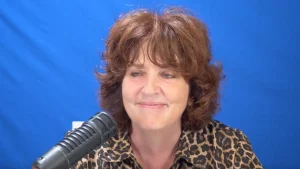
Host & Interviewer: Kim Greenhouse
[Sponsor]
It’s Rainmaking Time! is brought to you by The Rainmaking Company at rainmaking.ch.
Kim: Ladies and gentlemen, welcome to It’s Rainmaking Time! This is Kim Greenhouse and it is such a pleasure to be at this incredible auto shop where people drive and fly from all over. They fly their cars. They literally fly their cars to come here. I heard about this shop, this Toyota master mechanic specialist that has been teaching millions of people how to take care of their cars, how to maintain them, how to know when they are being told something that’s not accurate, not true, and not good for their car, how to separate the wheat from the chaff in the auto industry where people feel very upset with mechanics, with dealerships, and are frustrated and often spend more money than they have or that they’d like to because they’re uneducated.
Kim: I’ve rarely met somebody in the industry in my life that has the integrity, the decency, the honor, and the anointing of a true leader that’s transforming an industry. Please welcome Ahmed from The Car Care Nut in Illinois.
Ahmed: Hi, Kim. Thank you so much. Those are really nice words. I really appreciate it. It’s really true.
Kim: I’ve been watching you for about a year. And as I watch you, I think to myself, hey, what are women gonna do with their cars if their husbands don’t work on their cars or aren’t in the field? And what do people do that are not in a financial position to endure what happens when you go to a mechanic and you really don’t know what to look for, you don’t understand your car, and even though Toyotas are great cars — and I have a Highlander that I bought used — I cannot tell you, and I’ve been watching you a year or so, when I go to a dealer or when I go to a mechanic, I have some background knowledge. How I’ve been treated, you cannot believe what I’ve been through. So let’s talk about a PCV valve, this under $25 part that you can buy from a dealer or a distributor. I get a price for hundreds of dollars to put this thing in and a couple hours. I get a couple of quotes and I find this one gas station that’s also an auto shop. And I said, I bought the part, can you put it in? How long will it take? Well, it’ll cost around $90. And I said, how long does it take? Oh, half hour. I said, a half hour? Tell you what, do it for 50. I’m gonna stand here. A guy comes over, he does it in one minute.
Ahmed: That sounds about right.
Kim: So I get a price on a transmission drain and fill. Hundreds and hundreds and hundreds of dollars and hours and hours. And it only takes an hour to do if you know what you’re doing in my kind of car.
Ahmed: Yes. Well, for that transmission, the only thing I would delay it beyond that is waiting for it to cool down, set the level correctly, but yeah. The automotive industry is an interesting place because you have — and I feel like the majority of folks, and this is something that I wish everybody would know — the majority of folks that work on cars, they wake up in the morning, they have families to feed, they do a God’s honest day’s work and go home. It’s like everybody else. But you have the few that are in it for the most. And the problem is the person that fixes your car, usually in shops and dealerships and whatnot, that is the last person that has a say in anything because there is this hierarchy in between the customer and the person who’s actually fixing the car where they have no say in anything. Absolutely no say. So when a technician or a mechanic — or however you want to call them — finally gets the car, sometimes they’ll look at the numbers just like, what are we doing here? Why are we charging the customer this much? They have no say. And if they say something, they’re basically frowned upon — that’s not your job. You just fix the car. That happens a lot.
Ahmed: So the person that sets the prices, usually in dealerships — let’s talk about dealerships first — is a service advisor. A good service advisor usually has a technical background, was at some point a mechanic, maybe injured, decided to change careers, got older in age, or simply picked up the automotive industry as they were educated like a mechanic — same training, same everything — just never picked up a wrench, instead picked up the customer service side of it. That’s a good service advisor. Unfortunately, good service advisors are more rare these days because they basically became salesmen. They’re trying to sell, sell, sell. And sometimes I see service advisors talk about things they have no idea what they are talking about. They’re just repeating something on a text in front of them. And you know what? We have to also take a step back and understand one thing. That’s a person that also has a family. They need to make a living and they have a boss that could fire them at any moment, pushing on them to sell, sell, sell. That’s where the problem with the automotive industry comes in — when we don’t have the owner of the car’s best interest at heart.
Ahmed: Our shop is nothing special. We open every day like any other shop in the US — actually a small shop. We come in, we do the best we can, and we go home every night. I have a very comfortable night’s sleep because I have nothing on my heart. We’re not perfect, we all make mistakes.
Kim: I wouldn’t have driven 14 hours to come to you if you weren’t doing something different and special and distinguished in the industry.
Ahmed: It’s true. Regarding the industry pricing, and when something says, oh, this takes X number of hours — even private mechanics look at some standard or blue book of how many hours something takes. Who concocted that? Who made that up?
Kim: Exactly. That’s the next problem in the automotive industry.
Ahmed: So that’s called the labor guide. There is Motor, there’s All Data, there’s these multiple companies, and then the manufacturers themselves have their own labor guide. Can I just say one thing? This is the mockery of the automotive industry, that labor guide. That’s why we’re talking about it. Because I feel like the secrecy of the CIA is who wrote that book, because we have no idea who actually writes these labor times. At the manufacturer level, at Motor — Motor is what we use in the shop here for reference. In my shop, at least — I can’t speak for everybody else — but in my shop, that is a reference. That is not a one-size-fits-all because I write all my own estimates. I don’t have an estimator. I don’t have a service advisor. I write every single estimate that comes through the shop. I know what this job involves.
Ahmed: I’ll give you an example. Certain cars have a front sway bar link, which is something that is usually never a complicated thing to replace. That sway bar link in the Motor guide calls for 11 hours of labor. If you spend 11 hours of labor on a sway bar link, we need to have a talk. Maybe 10 talks. Maybe 11 talks. Maybe 11 hours worth of consultation. We charge an hour at most for a sway bar link. So when I go to write an estimate for Kim — who is someone who’s very dear to my heart and I really respect and appreciate — I go to the book of potions, if you would, the Motor labor guide, and it calls for 11 hours. I am not charging 11 hours. I’m charging one hour, because that’s all it takes. That’s fair to me, fair to the owner of the car, and we’re done.
Kim: I’m going to give you an example of something that you’re talking about, but it’s true in every single industry. In the health and wellness industry, when you get tested for iron — you know, are you anemic, quote unquote — the standards for the testing that are telling people what to test, where to look, are totally off. They’ve been wrong for over 50 years, and Morley Robbins has come up with this. So it’s also true that these standards that mechanics are following all over the country — and I don’t know about Europe, but at least here in the United States — are way off. But they are the way of prospering supposedly for mechanics. The issue is, if the job really takes an hour or two hours, doctors will say, well, you come for my expertise, whether I spend six minutes with you or an hour. So there’s this thing about time and expertise. And your expertise is phenomenal. Your communication skills are phenomenal. But these standards have warped. Like, I got three different quotes just before I got here. I was coming here, but I wanted to see what they were going to charge for a transmission fluid drain and fill. $400. And we’re not talking a flush. We’re talking drain and fill.
Ahmed: Yeah.
Kim: I found out that the dealership is not even using the oil that you’re supposed to be using for a Toyota. That they sell in the bottles. What do you call them? In those bottles. That is astounding. And the average person has no clue. They think they’re doing the right thing. They’re going in for an oil change.
Ahmed: Okay, so this is a revelation. These are things I’ve learned from you.
Kim: Why did I drive all this way to have an evaluation of my car? Because I want to know — I’m in the prevention business. I’m not in the casualty business. I’m in the prevention business. And I really feel that you have identified and you are the embodiment of the prevention side of this entire business of being responsible, owning a car, and taking care of your car for people who care.
Ahmed: The thing about this is you have just described every honest mechanic out there. There are hundreds of thousands of them out there. All mechanics want is for you to take care of your car. Now, some folks will say that that is a contradicting statement because — I’m a direct person, so I’m going to be direct — we do make more money when the car has a major problem. And that’s correct. You know, a doctor doesn’t make money on a consult, they make money on a surgery. That’s how this works. But yet here we are telling you, take care of your car. Because if you don’t, you end up in these situations that are heart-wrenching. When I see folks — a gentleman today drove all the way from Indiana, probably three hours, in a car that is unsafe. Simply because they do not trust the mechanics in their area. It is astounding to me how folks sometimes will not take care of their car and then get in these situations and now they’re faced with huge bills and they don’t trust the person giving them the huge bills. Well, the best way to not get there is to take care of your car and it’ll take care of you. Do your research.
Ahmed: Look, Kim, you’re sitting right in front of me. Let’s talk about this. Do you work on your own car?
Kim: I’ve never worked on my own car, but I never knew how and it’s scary to me.
Ahmed: Exactly. But that doesn’t mean you cannot learn about your car and know what maintenance it needs and what’s involved. Knowledge is power every single time. When I usually encourage folks, I always encourage people to do stuff on their own. Like oil changes. Basic stuff, change a filter, do something. But you know what? Doing something yourself with your car also involves tracking when things were done, keeping a meticulous record.
Kim: Yeah, I have good records here, if they’re all here. I see that they’re all in for me. But you gotta keep a good record, you gotta be involved. Look, we all have lives, and this is the thing — when you talk to mechanics, mechanics are usually car guys. And car guys live in a different planet than 99% of people. To most people, a car is a tool. I need it to work, I need it to get me to work, get me to get my kids, do my life. I don’t want it to be the center of my life.
Ahmed: It is not. And that’s perfectly fine. There are stuff in my life that are not the center of my life that are very important to others. And that’s how this works. Problem with that is folks don’t want to be constantly involved with their car. But I say this — if every three to six months you dedicate one day, one weekend, not the whole weekend, two hours of your time — where are we at with maintenance? Let’s look through the owner’s guide. Let’s research a little bit. Let’s understand what’s coming. Where are we at today? And what’s coming? That goes a very long way.
Kim: The owner’s guide, though, like for somebody like me — let’s just take somebody like me who has kept the car up very well, but is now scared of the dealership. And there are things on there that — one thinks as a consumer, if I don’t take it to the dealership, will any of the other mechanics, since they work on all kinds of cars, understand this car? Do you see what I’m saying? Talk about that.
Ahmed: That’s a fair question. I feel like sometimes consumers find themselves in a rock and a hard place type situation where you take it to the dealership, assuming that they are the specialists of this brand. And that is a correct assumption because that’s all they work on. They’re factory trained. They have access to every single thing that is related to the manufacturer. But the problem is it is not a perfect theory because the dealership is only as good as how the management wants the dealership to run, how good the service manager is, how good the department is run, and then ultimately how good are the mechanics they have. Because dealerships usually have 20 mechanics. Not all of them are good. You have one, two, three — lucky if you have five — the rest of them, not that they’re not good, but they’re not as skilled, not as experienced. And that’s perfectly fine because you don’t need a full-fledged master technician to do an oil change. Now it would be ideal — similar to the medical field for a second, does your surgeon take your blood sample to send it to the lab? Of course not. That’s not realistic because certain folks have certain skill levels and that skill level is what you see at the dealership.
Ahmed: The problem is when some dealerships drive the experienced guys out the door with bad pay, bad treatment, whatever. And now all they’re left with is junior technicians. And then they start expecting junior technicians to figure things out on their own. But for you as a consumer looking from the outside, how do you know which one is which? It’s impossible to know. At my shop and many other independent shops that are not affiliated with the manufacturer, sometimes we get stuff from the dealership and I just look at it like — you guys are supposed to be the specialists. This is work of someone that should not be working on cars.
Ahmed: Now we go into the independent side. Most independent shops, they work on everything. You know what the saying is — you are an expert at everything, master of nothing. Because it’s just not feasible for you to be an expert at one brand because you work on everything. You have to know a lot about everything and it’s just not feasible to know everything. And this is the dilemma for consumers and drivers. The best independent shops will draw the line on serious work and say, hey, this is outside of our comfort level. We prefer you take it to the dealership or take it to someone who specializes in these cars. You know what? If a shop tells you that ever, you shake their hand, look them in the eye and tell them you will never lose me as a customer. That’s honest.
Ahmed: It’s kind of like when you go to a family doctor and you’re asking them to operate. Can they operate? Yes. Do they feel comfortable doing it? Probably not. But the problem is when you go to an independent shop and they like to play the hero. The way they play the hero is they get an estimate from a dealership, customer brings the car. Their focus is how do we beat this estimate, not how do we fix the car right? Because the dealership is not this big evil thing. Sometimes, and actually a lot of times, they are correct. Their prices are higher, their labor rate is higher, they use original parts.
Ahmed: So it is very typical for consumers to do this. They’ll go to a dealership. Let’s say a job costs $300. You go to an independent shop across the street — oh, I can do this for $120. Folks automatically assume the dealership is ripping them off, but they never look at the fine print. They never look at the fact that the dealership labor rate is higher and they’re using original parts while the other shop is using aftermarket and sometimes horrible quality. So the real comparison comes in when you have a fully itemized estimate. If you don’t want to get taken advantage of in the automotive industry, get an itemized estimate. I want to see how much is labor, how much is each part and what’s the name of that part, and what are the taxes. Breakdown. Because that’s how you are really able to see who’s doing what.
Kim: I’m going to give you an example of something that’s true in every single industry. When you go to a dealership, they’re charging you an hour at $210. You go to an independent shop, they decide to charge $100 an hour. There’s a $100 difference plus the part. The dealership part is $220. Independent shop, they’re charging you $50 for the part but it’s aftermarket. And when that part fails after two months, is there a follow-up to that story?
Ahmed: No, there is not. That’s usually the problem.
[Break]
[Rainmaking Company Promo — Kim Greenhouse]
I want you to imagine that you have substantial business experience in bringing products to the market, packaging them, advising pioneers and visionaries and inventors and scientists behind the scenes, helping them negotiate with power players, getting involved in manufacturing, going through the whole process, dealing with power plant owners, very interested in global systemic solutions for the world. But you have this creative side, the spirited, can-do, pioneering side that won’t go away. And you’re split, kind of like Mick Jagger who ran his band while he’s also the head of the Rolling Stones. I don’t know where my Rolling Stones are, but anyway, and I do love to dance. I’m not much of a singer, but I do love to dance. I want you to imagine that I took off for Europe, sold my car, got rid of everything, and went off to Europe to build a new network for humankind, thinking that Europe was the place to plant it. And I started in Spain. And I went from Spain to England, back to Spain to Germany to Switzerland and then back to the US. I’d like to share my story with you live. I’m Kim Greenhouse and It’s Rainmaking Time! This is a real live adventure story. Call me at 626-398-8652 to go on stage or to go in front of your audience and share what that was like and what challenges I had to endure and face. Thank you so much. It’ll blow your mind.
Kim: Back to the show. With supply chains not being as consistent since COVID, and really for several years it was horrific — how is it now with the supplies?
Ahmed: It’s better. I feel like it is definitely better than say 2020, 2021. Well, 2020 it was different, but 2023 I feel like is when we had the most problems, at least in my experience here. It was really bad. I mean, sometimes an oil filter is on back order, a rotor is on back order. There was a time — actually, your Highlander — the rear rotors were on back order. So dealerships were putting aftermarket rotors because they have no choice. That’s how bad it got. Right now, things are better. Majority of the things are available. However, what we are still dealing with is supplier change.
Kim: Wait, say that again. Supplier?
Ahmed: Supplier change. So Toyota doesn’t build every single part they make. That’s typical. They contract out suppliers and they tell them, hey, these are the specifications, build this part exactly how we want it. And we’re going to QC it and see if we like it. What happened after COVID — so many of these smaller suppliers, some of them went out of business. And when they do, Toyota is going to gauge the interest and see, do we go out of our way to find another supplier and start the whole process, which is a very long, drawn-out process of restarting production of this part, do we even have the demand to justify all this cost and effort? If they don’t, they’re going to immediately discontinue that part. If they do, it’s going to be a while. And the problem is if this is a part that’s in high demand, by the time they get the original blueprints, contact the suppliers, make bids and all this — it’s months before you know it. And now the demand for this part is just piling up. All of a sudden you have four or five thousand on back order. Back order with no ETA. It could be a month, could be six months, could be a year, could be never.
Ahmed: So we had a problem with — and I’ll give you an exact example — a 2007 Toyota Tundra brake booster. This is a very common part. We had a gentleman that parked his truck on his driveway with no brakes for nine months until the part came in.
Kim: Oh my God.
Ahmed: Currently, as of today, if you own a 2007, 2009, or 2010 Toyota Sienna and you need a rack and pinion — good luck. Because it is the same deal. They changed supplier and it has been very scarce. I have a car right here waiting for a rack and pinion. We ordered that part about five months ago. Still nothing. Not even an ETA. And then the date ranges when they give you a date range — okay, say the ETA is October 1st to October 15th. Then on October 20th they will tell you, well, now it’s December 10th to December 15th. And then in January they’ll tell you now it’s April. And it just keeps going and going. Sometimes I don’t even know what to tell the customers. I stopped giving them ETAs because I don’t trust the dates they give you — they also have no control over it.
Kim: So what do you do with your customers in that position in the meantime? They still need to drive their car, right?
Ahmed: So we’ve come up with multiple solutions. It depends on the severity of the issue. In the case of the customer with the brakes, we actually ended up getting him a used part, installed it with the understanding this is a temporary part. We’re going to go with it until the new one arrives just to get them going. If something is not severe or non-essential — for example, a radio that doesn’t work, or a little sensor that doesn’t really affect the way the car runs or the emissions, something cosmetic — usually I tell them, let’s just wait and see what happens. If it is severe, we’ve used used parts. My least favorite thing is aftermarket parts as a temporary solution. We had an axle on a Camry that was broken, all the axles on back order. That one actually took eight months to arrive. So we ended up putting an aftermarket one, told the customer it’s temporary so they can drive. When the original one arrives, we’ll switch it out.
Kim: I love Camrys. I drove two of them in my life. I wish I’d known what I know now — which is still very little in the context, but way more than I used to. I want to talk for about a minute about coolant. Here’s a perfect example. And I am sure that many consumers have been in my position. You go to a dealership, they see your car, but my coolant has never been changed. A hundred thousand miles. Nobody has changed the coolant. Why?
Ahmed: That’s called selective scanning through a customer. So I used to see this at dealership days — not everybody, but some will do this. They will test the customer to see what kind of customer they are. They will recommend one service. If the customer says no, or gives them any grief — okay, this is a customer that doesn’t want to buy anything. I don’t recommend anything. And they become labeled like that. They don’t even try anymore.
Kim: But it’s never been recommended. I’ve been with two different dealerships — one in North Carolina and Charlotte, and one in Winchester, Virginia. So the question to you is, what were you into the dealership for?
Kim: I was examining what was needed after watching your videos. So I went in to actually see what it costs, what the jobs were. I was looking in the marketplace.
Ahmed: So when you go to a dealership — and this is unfortunately the truth that has to be said — technicians are paid flat rate. You’re basically paid by the job, not hourly. So basically you are asking the technician — if this is a master technician, that is someone experienced — for an oil change. Most oil changes on your Highlander pay two-tenths of an hour to three-tenths of an hour. So you are paying this technician approximately 15 or 20 minutes to walk the entire lot of the dealership to find the car, find the keys in the maze, bring it inside, do the oil change, top off all the fluids, check every single little thing in the car, write a full report that is 100% accurate because your life depends on it — in 15 minutes. Isn’t that a little bit unrealistic?
Kim: Well, the last time I took it to a dealership, which was a month ago — I had bought two tires from a dealership in North Carolina, but when I took it to Winchester, they were supposed to rotate the tires. They never did. You know, they say free rotate, whatever, even if you buy the tires from them. So a lot of times when you do the oil and you’re supposed to rotate your tires, they never do.
Ahmed: Because sometimes — and this is the micro level of how things become — a service advisor sometimes will look at it and think, if I go and recommend this service to this customer right now, they will likely give me a fight about it and ask a million questions. And the commission that I’m going to get out of it is not worth my time, so I’m just going to let it go, because it’s not my car, not my problem.
Kim: This is a conundrum. That’s horrible.
Ahmed: This is a conundrum for consumers. That’s the problem with it. But equally — and this is where I would like to be fair, because there are two sides to every story — on the other side, although this is also the automotive industry’s fault, we have trained our customers for free, free, free. And it’s all gimmicks. There’s nothing free in life. You know what the only thing that is free in life is? The love of the Lord. That’s it. That’s the only thing that is free. We have trained our customers that you get this for free, this for free, this for free. The multi-point inspection is laughable. Why am I going to inspect every single little thing in your car, look you in the eye and tell you your car is safe — for free?
Kim: So let’s talk about coolant as an example. My coolant has never been changed. What the heck?
Ahmed: Because they don’t look at that. The mentality is what determines the outcome. My mentality is — I’m not looking to save you money. I’m not looking to look like the hero. I’m just going to look at your car. What does it need and what does it not need? Because it is not my job to figure out how you’re going to pay for the repairs to your car. My job is to tell you exactly what the car needs. And in cases where it’s something severe or large, I’ll give you a recommendation — I highly recommend you consider potentially going the other way with this car and not fixing it because things are mounting and I see in the future potentially things will go south. That’s my job. When we start picking and choosing what to tell you is when the problems start.
Kim: Agreed. That was a good distinction that you made — you’re looking at what the car needs, whatever it is.
Ahmed: I always tell my customers this. If your car needs $20,000 worth of work, I will flat out say it without any hesitation and without any fear because that’s what your car needs. If your engine is blown and it’s a $20,000 engine, I will look you in the eye, very calm, and I’ll sleep like a baby at night. Your car needs $20,000 worth of repair. But you know what? If your car does not need a penny of something, then it doesn’t need it.
Kim: You’re one of the very few people in the industry that I’ve met that will do a session where you will evaluate what’s happening with the car and spend the time to look at what’s needed. I don’t know of people that do that. How do you do that?
Ahmed: You look at the front of the car and underneath the car. We specialize in one brand so we know these cars in and out. I know what’s a normal noise and what’s not normal. Because sometimes folks will have concerns about specific things that are normal characteristics of this car. I start all my inspections with the focus on things in order. Is this car safe? Is this car reliable? Lastly, is this car comfortable? Because if your car has a little rattle that’s annoying but it’s not a safety concern, you need to know that. Because spending four or $500 to fix a noise that is not a safety concern is simply a nuisance. It could mean you making that mortgage payment or not. The automotive industry has gotten so much into scaring people into everything and folks end up doing it and then later on they do the research and find out, that was actually not a safety concern. We could have postponed that.
Ahmed: This is very important. I want to make sure every single car that we inspect — that you are paying for an inspection — the car is safe, the car is reliable, then the car is comfortable. Because as the cars get older and the bills start racking up, comfort becomes second priority.
Kim: So what do you say to somebody who went to several people to have their wheels and their tires checked and they were told they were fine? And then they come here and you evaluate it and I’m driving with tires that need to be replaced. How is that possible? I mean, seriously.
Ahmed: That’s the thing. Tires. You know what the best part is? I don’t even do tires in my shop. But I check every single car’s tires and I’m all over my guys about I want every single car to have tire measurements and date. This is the second thing that nobody writes. What good is a tire that is basically as good as new on the tread depth but is 20 years old? What good is that tire? Tires are seven to eight years, folks. It’s a piece of rubber. It dries up over time. Tires are the number one accident causer in a car. This is the number one reason cars get in accidents — tires.
Kim: Wow.
Ahmed: Bad tires. Whether it’s bald tires and people saying oh they’re fine, they’re fine — fine for who? Fine for you as a person not caring about the safety of yourself and family and the people around you? Or fine for this customer that’s trusting you as a professional to know for a fact? Sometimes mechanics are afraid to say things because they feel like if I tell them it needs tires, they have to spend money and that’s on my conscience. No. You know what’s on your conscience? When this car gets in an accident and people get hurt — that’s on your conscience.
Kim: I’m just absolutely stupefied. I’m stupefied that I went to two different places. And I even had an alignment. And two out of the four tires were brand new but two and a half years ago.
Ahmed: That’s how it is. You have to tell things as they are. I don’t sugarcoat things. This is a lot of shops — you’ll drive by some shops that have no cars outside, an empty bay. And then you drive by some places that are packed and you’ve got to wait months to come in. You see that everywhere in the US. Why do you think that is? Because I don’t open my shop every day thinking what are we gonna sell today. I open my shop thinking which cars and people are we gonna help today. Because a car is just a car — it’s a machine. It’s the people we are working with, and that’s what’s important. That same person, they are not identified by their car. They’re identified as a person, and that’s who we care about here.
Kim: That’s sad, but I see this over and over where folks will come from long trips.
Ahmed: Actually, I’ll give you another example. A customer just bought a car from Florida — this was yesterday — we did the inspection on it. They bought the car from Florida, did a pre-purchase inspection with someone that was highly recommended to them. They’re from here in Illinois and they drove the car all the way from Florida. I’m glad they made it safely because one tire — I can share the picture with you — one tire was ready to explode. It’s from 2015. I don’t know how they made it here.
Kim: Wow. By the grace of God.
Ahmed: But they just did a pre-purchase inspection. And then I bring the car here, there is an enormous list of things that it needs. And most of them are vital things, starting with very bad tires. The customer was in shock.
Kim: I’m sure.
Ahmed: They’re like, what do you mean the car needs all this stuff? I said, well, that’s what it needs. And I immediately started telling them — this is the number one priority, this is number two, this is number three — because you maybe will do it in stages. They said, but they told us the car was fine. See, that’s the exact word. The car was fine. Car is fine. Car is in good condition. But saying a car is fine is a blanket statement. And I asked him, look, where’s the inspection report? There was none. That’s usually the biggest red flag. So what did we inspect? Nothing. They took the car for a spin around the block and these bad cars — I call them dealership sparkle cars — they look amazing inside, they drive beautiful. Then we put them on the lift and it’s like, thanks to the zip ties and glue holding them together. This thing was just hemorrhaging oil everywhere and the suspension was completely falling apart.
Ahmed: They actually ended up deciding — and I tried to portray that image to them — I don’t think you bought a good car. Maybe you cut your losses and don’t get attached to something that is not good from the get-go. Don’t put a dollar in it.
[Break]
[Voice Work Promo — Kim Greenhouse]
A person’s voice represents their energy, their vital energy. You can feel their spirit. You can feel either trust, trustfulness, authority, honor. You can feel a lot of things — love, warmth, coldness, distance. And this is communicated all the time without the person who’s communicating knowing that it’s being communicated. So when you present a project, a podcast, an audio book, and the content and the voice is dissimilar, you have what’s called a discoordinate communication. How many great books are on audio with completely improper voices, who cannot tell a story, who cannot put inflection and warmth — or whatever the book requires — into it to engage the listener, keep them there and have them referring people to listen to that audio book? The story may be great, the book may be great, but the voice detracts. It actually doesn’t add to the book. This happens all the time. And it happens with projects that are presented, products that are presented, presentations of all kinds, investment presentations. And someone’s voice is not neutral. It either engages and enhances the situation or it detracts. If you would be interested in having voice work coaching, or packaging for your products, services, businesses, or projects, call The Rainmaking Company. It’s 626-398-8652. This is a great service. Thank you so much. And back to the show.
Kim: Where did The Car Care Nut come up? When did you come up with that? What made you call your company The Car Care Nut? That’s a very cute name.
Ahmed: It’s a very long story, but a lot of people used to call me a kind of — because I’m very OCD, I can be very particular about my things — a lot of people just called me the nut, then the car nut. Then when the channel came about, like, you know what, let’s use that.
Kim: That’s great. And I like your branding too. One other question — I know we’re in a time constraint here because you have so much work to do before the holidays. And I know that you fit me in. Thank you so much. It’s a pleasure. When you went from working in a dealership to owning a mechanic shop at your level, was there fear? What can you share a little bit about the transition — from dealership to ownership when you first started — because it’s a very expensive proposition to do. How did you face that?
Ahmed: Honestly, it was frightening. I’ll be direct as I normally am. I had no idea what we were getting ourselves into. Flat out — me and my wife, no clue. Here I am at the end of my very long career. I am basically a master diagnostic technician at the dealership with awards with everything. And I’m leaving that. No more health insurance, no more job to go to, no more vacation time. Something we basically built our life around. I am leaving that to get my family into huge debt. I am the kind of person — you can’t afford something, don’t buy it. I don’t like debt. I come from a different country, that’s how we were taught. Getting my family into huge debt to go into something that I have no idea what we’re doing — I know how to fix cars, but running a shop? 15% of it is fixing cars. The other 75% — that’s a whole other level of cash flow. And then the last 10% is the things nobody can think of. That’ll come left and right that you have no idea how to deal with.
Ahmed: We go into all that, and I remember this — we are counting 100% on hopefully having somewhat of a reputation that will do something, that folks will actually trust us with their car. I have no idea. We spent all this money and did all this effort and I left my job before we even opened the shop. That day I’m just going to give you a brief thing of that day that we opened the scheduler. The shop was going to open the next week. We decided — you know what? We’re now going to open a scheduling system before the shop opens. So if there’s interest, folks can call in ahead of time and schedule their appointment.
Ahmed: We had three appointments before we even opened the schedule — friends, people whose cars we had worked on before. I said great, bring it in. We opened the scheduler at 10:45. Nothing. Me and my wife sitting there, phones on the desk, the online scheduler thing — nothing. Absolutely nothing. That’s the moment. 10:47, 10:48. My wife turns around and I can see the look in her eye. She’s like — did we just ruin our family forever? As time passes a little bit — the first phone call, the second phone call, then the messages on request. Folks are so amazing that by the end of that day, which never stopped — we never took lunch, never took a restroom break, never did anything from 11 all the way to five. Non-stop. By day one, the first month was booked. And that is such a blessing.
Kim: I know that you are a spiritual person and I know that you don’t work alone, meaning just in the human realm. Do you do any kind of prayers with respect to the well-being of the business? I’m sure you do personally for your family, friends, loved ones, but do you speak into the prosperity of your business — biblically or anything?
Ahmed: I do. So I feel like there was a time where we were afraid — are we gonna do this for real? Am I really gonna leave my job? And then me and my wife came to a realization. I’ll say this — it’s going to be a little strong to say, but I hope it’s okay. I shook hands with death one too many times in my life. Where I come from — I’m originally from Iraq — so I’ve lived through three wars. I have shook hands with death one too many times. But you know what I have? I have something much bigger. The Lord saved me and I was not born a Christian. The Lord saved me. I’m reborn in the image of Christ and that’s why ultimately mostly I care about nothing else matters. That’s the most important thing to me. So there came a moment where we were afraid, afraid, afraid. And we just looked at each other like, you know what? The Lord has gotten us this far. He’s not gonna abandon us. And even if we feel like he does, then he doesn’t approve and he’s gonna find us another way. Let’s do this.
Kim: You pray together?
Ahmed: Yes. And when we were actually opening the shop, this is something we did where — I am not the type of person that likes the public display of faith. I think faith is a private thing. But what we wanted to do was dedicate this in a way that we know it’s there, that we dedicate this business to the Lord, but it’s not intrusive. We respect other folks’ faith. Actually, underneath the epoxy that we put on the floor — and if I find the pictures, I’ll send them to you — we wrote Bible verses, asked the Lord to bless this place. We always do this in our life. But we promised that this business will have his image shine through it. And that’s what we wanted to do from day one. And the Lord has approved of a plan and that’s why things work. Because we do a good job, not because of any of that — because the Lord approved.
Kim: You know, one of the reasons I feel like I made this trip is because I felt there was an anointing on you and your family and the business. And I could feel that anointing and that you had the love of Christ in you and the Holy Spirit shines through you, your communication, your teaching online, your care, and the distinction that you’re walking in and holding in the whole industry and the lives you’re transforming for customers who are in need, desperate need — many and most who can’t get to you and won’t get to you and have to be where they are and sort this out.
Ahmed: I hope that folks that aren’t able to come to the shop and whatnot, I hope the videos help. This is the way I see life. I know where I’m going after this life and nothing in this life matters to me. I’ll be flat honest with you. I know where my heart is at. I care for my family and I do what makes Christ proud. That’s always been my case since I was saved. I’m not perfect. That’s why I need Christ. Always make mistakes. We all do. And that’s the beauty of being human. But I come in my shop every day. I do what I love. You gotta love what you do, because if you don’t, it’s gonna be a chore. Of course, even when you love what you do, there are gonna be challenges.
Ahmed: I come from nothing, flat out. There’s no other way to describe it. I don’t come from a wealthy family. I come from a very different background than most. I fully understand that we immigrated to this country, me and my wife, for our kids. Once you’ve been below zero — because immigrating to the US is a very difficult thing and you feel like you’re not starting at zero, you’re starting below zero — once you’ve done that, I feel like you grow the type of thick skin that, if you dedicate that to the right thing, you’re going to usually go far. Because I work — some folks may not realize this — I actually work too much, a little bit too much.
Kim: I knew that. I knew that coming.
Ahmed: I may put 14, 16 hours a day on a daily basis, sometimes six days a week. And even when I am on my day off, as soon as my kids go to bed at night, I sometimes stay very late. Three hours sleep days — that’s the norm. And luckily lately I’ve been trying to maintain a five, six hour sleep, but it takes a lot to run things the way we do at the shop. Because when we started, we had no clue what we were doing, flat out. I know how to fix cars. I don’t know how to run a business. I’m just a mechanic. My wife, she has a background in hospitality, but she’s been a stay-at-home mom for a while. She raised my kids. And I’m so proud of her for that. That’s the most difficult job in my book.
Ahmed: We had no idea what we were getting ourselves into. We trusted the Lord. You’ve gotten us out of below zero. We trusted in you. We followed your word. We did the best that we can. And you’ve gotten us this far. We’re going to trust you once more. If this is what you planned for us, is it going to work? And everything will go. And that’s what happened. And I feel like every day, the challenge gets bigger and bigger. My biggest challenge at the moment is I’m not only responsible for my family. I’m responsible for other people that work here. Are they going to have a paycheck tomorrow? Are they safe? Are they well? There’s a lot of that. And that responsibility is heavy, but I just wake up and do the best that I can every day. And I think that has worked.
Ahmed: We’re not perfect. Not the shop is not going to work for everybody. Some folks have negative feedback. Of course — we’re humans. We can’t be perfect. We never will be. But it’s been quite a journey. It’s a lot of work. Sometimes it gets pretty overwhelming. But some folks always say, never change. Don’t change. But at the same time they ask, why don’t you expand? Why don’t you open shops in other places? See, that’s exactly when things go south. If you have something good, don’t get greedy. Just keep it. Keep doing what you do. And life is good. Because the minute you expand too much and too fast, that’s when you do not have the systems in place to ensure that you stay within the same consistency of quality.
Ahmed: You start all of a sudden with a giant building and I have five awesome technicians that work here. You expand the building, get 15 more — how are you gonna get to know them? How are you gonna keep track of their quality? The five technicians that I have today, I trust them blindly because we have known each other. We have broken bread together. We have known each other for a long time. I hire 15 new guys, they could be the best guys in the world, but how do I know that? And how do I face my customers, shake their hand, tell them everything is good? Can’t do that. That’s why you can’t expand too fast. And this is the automotive industry’s favorite thing to do — as soon as we see success, let’s expand and triple it. No. Don’t triple it. Why get greedy? Greed is ultimately what destroys the automotive industry.
Ahmed: And this is something I am not — I’m not a greedy person. I come from a very basic background, so I’m not about flashy things. I just want my kids to go to college. I just want my kids to do better than me and their mom, have it a little bit easier, maybe go further than us. That’s all I care about. So I don’t see our shop honestly expanding. We’re renting the place we’re in. I maybe at some point will try to buy a piece of land and build a similar size shop. I don’t want to expand it further because — how do we make more? Why do you need to make more?
Kim: It’s the transfer of systems too, and the consciousness of the way you do and run the business and the duplication of your stewardship and leadership. And you’ve got to go by your instinct of what’s the right thing. You’re already overworked, right?
Ahmed: Exactly. And to maintain this quality, we cannot expand further. And that’s okay.
Kim: Do you see a day where you will have more time with your family independent of being here at the shop?
Ahmed: I try my best with my family. I’ll be honest, sometimes I feel like I could spend more time with them and that hurts. But at the same time, you have to understand that I come from a very different background. To me, that provides — mom takes care of the family. That’s a very old school method and some folks will see it in a different way. But to me, that’s how I was raised, that’s how my parents were, that’s how my grandparents were, and that’s how I am.
Kim: Do you have family from Iraq here with you?
Ahmed: My mother is actually here. My father unfortunately passed away a few years ago. Incidentally, week one of the shop opening, my father passed away. I had to shut down for a weekend, travel back home. It was, um, interesting. But when the Lord calls, the Lord calls. There’s no waiting.
Kim: So kind. Take your time.
Ahmed: Sorry, as soon as I say my dad, it’s just… chains of thoughts go away, sorry.
Kim: I’m sure he’s so proud of you from heaven.
Ahmed: He is. Sorry, I’m going to go back. So spending more time with the family is a goal. I try to go over there. I try to involve them in the business. My wife is actually always here as well. We both work too much. She’s lovely. Your team is great. So my daughter is actually one of them that is starting to drive. She just turned 16 yesterday.
Kim: Oh my God.
Ahmed: She’s gonna get her license hopefully on the 28th. She has big plans. I already built a car for her. That’s gonna be a gift for her. It’s a car that I built from the ground up for her. I wanted to give her something special. If I just go and buy a car, yeah, she would be very grateful for it. But now I want her to know that this car, I built it for her.
Kim: It’s very different when you have your energy on something that you’re building or making with love. It’s vibrationally very different.
Ahmed: It is different.
Kim: I interviewed a born-again Christian minister and physicist years ago. His name was David van Koevering and he had like 500 patents. He invented the van Koevering patent. And he did a whole talk about how when you put your love and energy and consciousness into matter, it changes that matter. And it’s a real thing.
Ahmed: It does. I just wish everyone out there — and look, I understand faith is one of those topics — but to me, I just wish people well. Because ultimately, that’s what the Creator wants. That’s what Christ wants. They want us well. And being well is not living in a big house and buying a fancy car and having fancy clothes. Being well is — is your soul at peace?
Ahmed: I feel like if I pass tomorrow, I have no strings attached. That’s the main thing. Because I trust in the Lord. I know where I’m going and I worry about my kids and my family, but I also trust in the Lord that he will not abandon them. So that peace and tranquility to me is the most important thing. Because I have seen things in my life that I wish on nobody. That’s just my background, where I come from. I am a very positive person simply because I have seen the worst — not the worst, there are worse out there, and that’s important to say — but I’ve seen a lot of things in my life. So I’m going to say this — is the cup half full or is the cup half empty? If you let that theory define your choices and your ways in life, you will go very far. Because as much as the cup is half empty, it’s also half full. And you know what? The person next to you could have an empty cup, 100%. I’ve seen it.
Ahmed: You just never know. But whatever problems you have — some folks will say, well, it could be worse. Yes. But they are your problems. You could cry about them. You could feel bad about them, feel helpless about them, or you can stand up and do something about it. Sometimes that’s easier said than done, but looking at the cup half full is saying, you know what, I have big problems. Whatever some folks will say, oh, these are not big problems, this is nothing — no, everybody’s problems are big because they’re their problems. You look at that problem and say, I got a problem. Accepted. Let’s work on it. Let’s fix it. Do the best that we can. Then turn our attention to the cup half full and move on with life. Because no matter how big the problem is, there is worse, but it could also be better. Always have a positive outlook to things and things will go. You have a negative outlook to things, things will tend to be that way.
Ahmed: I’ve applied that theory in my life. Before knowing Christ, and especially more after knowing Christ, simply because no matter how bad things are, I know where I am going and I know who I belong to. And that to me is more important than everything else. That gives you eternal tranquility in your heart.
Kim: And that comes through from you, by the way. That peace comes through. And nobody would know necessarily what you’ve been through, what you’ve seen, what you’ve endured. Nobody would know necessarily the amount of death and destruction you’ve seen. Sometimes the world can be a very horrible place — this is humanity throughout our entire history. This is how we have been. Just ups and downs.
[Break]
[Finding Your Story Promo — Kim Greenhouse]
I don’t know how many of you are sitting on incredible stories, unusual experiences, disheartening experiences, touching experiences, and they’re sitting inside you but you haven’t shared them yet. Have you ever thought of leaving these stories with your family members? Have you ever thought of actually having them brought out of you? Well, this is a new service that It’s Rainmaking Time! is doing. And while it’s easy to record something, the art of interviewing is bringing out that person, their stories, their magic, their treasures. Everybody — whether you’re known or not — has incredible stories that they’re sitting on. If you would be interested in having me work with you to bring out your story, please call 626-398-8652 and we will set this up. This does not have to be public. This is for your personal ownership and something you may want to pass on to your family. It’s not just about being recorded. It’s about who brings out the magic in your life and the excitement and the unusual experiences you’ve had in your life. And back to the show.
Kim: Going back to the automotive industry — ups and downs, all mechanics, ups and downs. Some of them are good, some of them are not. Some good ones make bad decisions, some bad ones sometimes will make good decisions. There’s always two ways to everything. I just want to say also — I noticed that even though you have millions of people watching your work and teachings online, it hasn’t gotten to you. It doesn’t appear to have gotten to your persona. Is that true? Am I right? Because you don’t seem to be affected. I come from Los Angeles where I have seen — and I have been in the presence of royalty, literally, entertainment royalty and real royalty — and I have seen the worst, the most arrogant, the most disconnected, the most indifferent. You know, indifference is worse than anger. I’ve seen it. I’ve been in the presence of it. And you don’t seem or feel like you are affected by your notoriety. You have a benevolent following of people that love you and respect you and appreciate you.
Ahmed: That’s phenomenal. I love them more. Because you know what? This is the way I see it. I’m just a guy. I’m a believer in Christ. I’m a husband. I’m a father. I’m just a guy. Here’s the theory — the faster you go up, the faster you come down. When you go up and you stake on the ground, when everyone is trying to lift you very fast but you put your feet firm on the ground, you’re not going to fall. And ultimately, we are all the same. This is this whole thing with social media — this person is famous and that guy is known and notoriety and everything. And why it gets to people is when they lose their ground. You have to stay grounded. Because you know what? It’s easy for people to lose their grounding. Just be yourself. I talk to everyone the same way, because in the end, I’m just a guy that fixes cars. I’m not perfect. I make mistakes. I never claim to be perfection, because you know what? He is the one that is perfect, not me. I’d rather focus my energy on him than on me. Because me doesn’t exist when I follow Christ. That’s the most important thing in my life and that’s the only thing that is important in my life.
Ahmed: So the whole notoriety thing — I don’t do this for that. I do this to help folks. And folks have been so generous, so appreciative and I really appreciate that. But in the end, I want to help folks. I learned stuff in my life and I always — sometimes I got to points in my life where I really needed help and someone wouldn’t help. Just because they didn’t want to. And they very easily could have. So when the channel first took off, I actually had no idea that it was gonna work. I just said, well, I’ll put the information out — if it helps two people, that’s perfect. It helped a lot of folks. And I’m so privileged by that.
Ahmed: Most folks look at it like, oh, I am this famous important figure sitting on a pedestal. Who put you there? That’s the number one question. And what do you have that others don’t? Nothing. Everybody’s special in their own way. You stay on the ground. When you’re on the ground and your ground is a firm foundation of the Lord, you’re not falling anywhere. That’s beautiful. That’s more important to me than anything else.
Ahmed: Gotta stay humble. Because I’m just a guy. In the end, the most famous actors, the biggest inventors in the world, people that have contributed so much to society, great leaders — everybody. In the end, he’s just a guy and she’s just a gal. We’re all born the same way and we all join the Lord one day. No difference. Gotta stay humble. That’s very important.
Kim: I really appreciate you taking the time that you didn’t really have to sit with me and to be on It’s Rainmaking Time! It means a lot to me. And I’m so glad that I could join The Car Care Nut-ness.
Ahmed: Or nuttiness.
Kim: Thank you so much. And it takes a nut to have traveled across the country to come here, but I’m so, so glad. Thank you for your contribution and your distinction and what you’re doing for people across the world. God bless you.
Ahmed: Thank you. Thank you so much.
Kim: It’s Rainmaking Time! Let’s say that. It’s Rainmaking Time!
Ahmed: It’s Rainmaking Time!
Kim: There you go. I’ve got to practice that two or three times. It’s Rainmaking Time! It is Rainmaking Time! There you go. And we thank you so much for being here. If you’ve enjoyed this show with The Car Care Nut and would like to hear other intimate and informative interviews and conversations with leaders in all different industries and areas from around the world, go to itsrainmakingtime.ch. We really appreciate it — with the massive censorship complex that’s in place and has been in place for the last 10 years — that you like, share, subscribe, and donate to It’s Rainmaking Time! We’re planning to go every week. And for those of you that are interested, we could really use your help. Thank you so much. It’s Rainmaking Time!
Podcast: Play in new window | Download