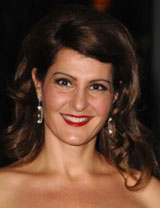
Nia Vardalos
(Photo by Steve Granitz
© WireImage.com)
Nia Vardalos is a rare jewel in the entertainment industry; a kind of salt of the earth, a magical presence with a passion for all that is real and good. She’s funny, tenacious, and warm-hearted. Nia Vardalos is known for writing and starring in the blockbuster hit My Big Fat Greek Wedding. She also starred in I Hate Valentine’s Day, My Life In Ruins, and Larry Crowne, which she co-wrote with Tom Hanks. Recently, she opened the door to her very private world and released a new book called Instant Mom.
After 10 years of trying to have her own child with her husband Ian, she finally became open to adopting. She learned so much in the process that it will spin your heads. With only 14 hours notice, Nia met her daughter Ilaria. Years of heartache, struggle, suffering, and what appeared to be God’s will for her NOT to have a child disappeared in an instant. When we don’t get what we want after many years of trying to make something happen, it can elude and perplex even the most wise. Many people give up right before their big breakthrough.
If you’ve ever felt as if your heart was the key to your happiness and fulfillment, you will feel as if this treasure Nia Vardalos offers up is for you.
Read the Full Verbatim Transcript with Nia Vardalos
It’s Rainmaking Time!
Nia Vardalos — Instant Motherhood
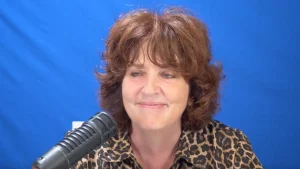
Host & Interviewer: Kim Greenhouse
[Musical Opening — Demetrios Kaitis, film composer from Greece]
Kim: Ladies and gentlemen, we want to thank you for being here and it is a pure delight to have Nia Vardalos with us on It’s Rainmaking Time! She is the author of a new book called Instant Mom. And I want to tell you a little bit about her. First of all, she asserts that she is not a grown-up, that there is nothing done that love can’t undo. She is a Tupperware addict of galactic proportion and she cannot sit at a cafe by a manicure pedicure place as the mere thought of the sound of a toenail being clipped will drive her insane. She loves musical theater so much that she thinks she might be a gay man and she cherishes real friendships. For those of you who would like Nia to come with you to pick out a dog, don’t do it — because you may end up with a coyote in your house.
Kim: Ladies and gentlemen, it is propitious that we are doing this interview with her at this time during Wimbledon. It is a royal event. In fact, Nia is a Canadian Greek exotic goddess. And the Queen of England invited her last year to the Jubilee and leaned over to her and asked her if she wrote My Big Fat Greek Wedding. She curtsied to the Queen and almost plotted. But she is here today to talk about love, togetherness, family, being a mother, adoption, and the marvel and wonder of the human spirit. She is also an Academy Award and Golden Globe nominated actress and writer of My Big Fat Greek Wedding. She is the writer of Connie and Carla, I Hate Valentine’s Day, and co-wrote Larry Crowne with Tom Hanks. It is my great pleasure and honor to welcome this exotic goddess to It’s Rainmaking Time!
Kim: Welcome to the show.
Nia: I’m wiping away the tears. That’s so sweet. Thank you. Thank you very much.
Kim: 500,000 children are living in foster homes in the United States of America, you say, and of these, 129,000 are legally emancipated and not all adoption agencies are the same no matter how they look. I want you to talk about how a person like you who’s extremely private made the transition to go public with as much personal information that’s heartbreaking, overwhelming, moving, and have so many Doreenie’s in one book. For the listener, a Doreenie is—
Nia: That’s my mom’s name is Doreen, and in our family we refer to bits of wisdom that my mom has. A never-ending well, like most moms — mom would often say things to us like, just put some lipstick on and you’ll feel better.
Kim: And I’ll be damned if it doesn’t work.
Nia: It really does. Get outside, you’ll feel better. So I set out to write Instant Mom — it was not going to be called that, or anything at all really. It was just going to be a how-to adopt manual. I went to several publishing houses and told them my story and immediately got ten offers to write the book. And that was really shocking. My agent and I looked at each other and she said, you know, it’s a compelling story. I told you it is and I think you should go public. And I said, no, no, no, I’m going to write a how-to adopt manual. That’s it. That’s all they’re getting. I’m a very private person. I’ll just provide context on how we adopted our daughter. She was almost three years old when we met. She was living in a loving home in American foster care.
Nia: When we met, after ten years of trying to be a mom, I can’t explain how impossibly I knew it — we drove toward this meeting knowing that this was it. And as we got to the parking lot, she was in a social worker’s arm. There were a lot of people in the parking lot — this clump of people. And I thought, little brown-haired girl in their arms. And I was looking at her and of all the people in the parking lot she turned around and looked at me. And all I thought was, oh, I found you. I found you. This daughter who has been out there, there’s a reason that all this happened to me. So when I told HarperCollins — I went with them because they said the magic words that every writer wants to hear, which is, we want you to write the book that you want to write. And I thought, that’s it. That’s all we ever want to hear as a writer.
Nia: So I made the deal, went back to my office, and I started to write it. What is in the back of the book now — twenty-five pages of how to adopt — that’s really all I thought it was going to be, with some extra little anecdotes. But when I got to the part about my daughter and how we transitioned her, I realized that she is the greatest person I know. And to not go public with my side of the story would be cowardly and not at all how I like to live my life. Even though I say I have been an extremely private person, I realized that I had to be honest and admit that the road to parenthood for me was filled with potholes and landmines and was not easy. And I wrote this in the same way that I wrote My Big Fat Greek Wedding.
Kim: Definitely. You could feel that in droves.
Nia: I didn’t show it to anybody. I just broke through — I didn’t care about anybody’s opinion, with the manuscript and the script. I just knew what was right and it felt right. And when I finished Instant Mom and called it that — because it’s an ironic title, that I had fourteen hours’ notice before our daughter came to live with us. I suddenly had a three-year-old in our home. I didn’t show it to anybody until it was printed. I didn’t show it to my best friend or my mom or my sisters or my brother or my husband. Because I didn’t want any raised eyebrow or silence or an effusive comment — anything. I didn’t want anything to talk me out of being as fearless as I am in the book. Because I knew it was the right thing to do. And it’s gotten the best reviews I’ve ever gotten in my life. And they don’t matter — which is when you know that you’ve been artistically pure. You don’t care what people think.
Kim: I’m so inspired by your book and as I read your book I was profoundly aware that you were totally authentic. It was clear that you were willing to come all out with the totality of who you are, which is different than a character. There are aspects of you that are part of characters, but we got an interior of you that was very, very robust. Anybody that reads the book is going to be so inspired and I tell people — since I’ve read it now three times — it doesn’t matter whether you’re a man or a woman, if you’re pregnant or not pregnant, a mom or not a mom, straight or gay. This is such an inspiration. Even the background on how you were told you’re not attractive enough to be a leading lady and you’re not fat enough to be a character actress. As you prepared My Big Fat Greek Wedding and it got funded and it got produced and grossed over $340 million, you should have made history. It’s very, very clear that one of the biggest messages — and I’ve heard you say this too — is not only never give up, but also that you really can accomplish what you really set out to accomplish. You may not have control over how it happens, which was really the theme of what happened to you, isn’t it?
Nia: Yes, it is. And I actually have tried now to change how I’m introduced at all the public speaking events. I’m just saying that I’m not actually an adoption advocate because I think the best thing that someone can do when they write something or when they act or paint something is create and not worry about how it’s going to be perceived — actually not even think about it. What happened with Instant Mom is that the reader is telling me what the book is. Again, like My Big Fat Greek Wedding, I wrote about something that was specific to me and then it’s surprising to me when the universality comes. With Instant Mom, the 20-year-old girl who tells me that it’s actually a book about screenwriting is no longer surprising to me because I’ve realized that your work is how it is absorbed and processed and digested. It no longer belongs to you once it comes out of the printer.
Kim: Yeah, it’s like a baby.
[Sponsor Break — Water Availability]
The declaration of a national and international water crisis is a declaration about water that comes directly from snowmelt and rainfall. It has nothing to do with the water that exists below your feet, underground, in faulted structures all over the world. I want you to know that there is an unlimited supply of available fresh water everywhere on earth, including the deserts. For over 100 years, teams of people have been locating water for private people. And the reason you haven’t heard of it is that it is not part of the mainstream orthodoxy of geology that’s taught at universities. When you think about people and animals in developing nations having to walk miles to bring back a bucket of water, I want you to know that that is an unacceptable atrocity. Nobody should have to go through that. I’ve made a commitment to make water available to sophisticated investors and to people in need across the world. If you listen to It’s Rainmaking Time! — the segment Water, Water Everywhere — you will hear the nature of why this is so. And when you hear about a water crisis, you will know unequivocally that it is not true. There’s only a water crisis as it relates to snowmelt and rainfall, not having to do with the third source of water, which is below our feet. Ladies and gentlemen, if you are a sophisticated investor or a farmer that would be interested in having your own water supply that is independent of the aquifers, feel free to call It’s Rainmaking Time! The good news is that there’s plenty of water everywhere for anybody and any animal on planet earth that needs it. Thank you very much. And back to the show.
Kim: You say that there’s nothing done that a lot of love can’t undo in the context of adopting. I want to go back to this because I think it’s really critical that a lot of people come from the perception that an adopted child is maybe going to be damaged goods or this or that. You definitely blow that perception away in the book. In other words, it’s finished. It’s what I call poofed. You poofed that one for us.
Nia: I hope so, because I wanted to dispel the myth. And every single time these morning shows have the rare one adoption that doesn’t go well and they scare everybody away, I wanted to put the positive — the many positive adoption stories that I cover in the book — out there. And at the same time I didn’t want it sugarcoated, which is why I’m completely honest in how we transitioned our daughter and how it wasn’t easy and some days it was challenging and difficult. And we really wondered if we were the right people to do something like this. And then it’s quickly that you have that thought — it’s gone. Because you think, I’m up to this. I am this girl’s mom and I can do that and she can do that. And we are — I shouldn’t even say I transitioned our daughter because we all transitioned together. We became a family instantly. But then the next couple of days, month by month, the bond got stronger and stronger.
Kim: Did you feel that you, in writing your book, actually came out as a more spiritual person than your public persona ever allowed you to present?
Nia: Yes, I think so. I have a relationship with God that is my own and private and unique, as everyone does. And I always say, same God, different flavor. It doesn’t matter who you believe in. The underlying theme of almost every religion, if not all of them, is be good, do good. And so I think that it brought me closer in that I think that you have a plan and God has a plan and your plan doesn’t count.
Kim: I think you’re right. I think you’re totally right. It’s very, very clear to me with a lot of things that I’ve done in my life, there is a plan that I get to be part of and I don’t get to drive it at all.
Nia: Yes, exactly. I believe that I was chosen for this. It feels completely right. Every time I get up and speak about adoption and the journey of personal happiness — which again, that’s what I’m saying — the book is not an adoption book. It’s not a mom book. It is about your right to be happy at the end of your life. Are you going to look back and have regrets? Sure. I think that’s healthy and it’s okay. But if your overwhelming whole life is spent not doing things because of your concern of what will people think — I’m hoping that with these great book signings and all these people that we’re meeting, we’re all going to go forward and be able to be a little more fearless.
Nia: Because it’s like kids saying and doing anything. My daughter pointed at a friend’s mole on her face and said, why do you have that? Well, at least she didn’t look at an African-American who was helping around the house and say, how did you get that color skin? Like some of us did and got into big trouble with our parents. That was a very innocent question. Like, how come your skin is darker than mine? Right? But I really wanted to know. But who knew? You couldn’t ask these things years ago, right?
Kim: I don’t think that’s a bad thing. I really don’t. I think that kids are guileless and their innocence is just beautiful in a way where they just say things and it stops all pretense.
[Sponsor Break — Coherent Advertising Space]
You are tuning into an advertising space, but it’s not like any kind of advertising space. It is called a coherent advertising space. It means that you are plugging into the energetics of this program, this conversation, the consciousness, and you want to be part of the magic. You could be an individual that really wants to send this segment all over the world — you just want to do it, and you want to plug in your financing to do it. Or you could be a company that has an advanced product line, a very exotic, unusual product or service that is revolutionary or revelatory that you want to put on the map and you want to be part of this conversation with Nia Vardalos and myself. Because It’s Rainmaking Time! If that would interest you, call us at 626-398-8652 and we’ll plug you right in. And back to the show.
Kim: When you say you’re not grown up — you and Ian. You refer to yourself as not grown up. You said that a few times in the book. Why do you say that and what do you mean by that?
Nia: I feel like we are immature. And you know all the examples I give in the book. Since the publication there are 30 more of just things that happen, like somebody cut us off the other night while we were driving in the evening and Ian said, Ilaria, I’m gonna roll down the window and give that guy a dirty look. And she did. And the guy started laughing.
Kim: Any other ones?
Nia: Oh, there’s just always something. We have a household where Ilaria is rewarded if she can get Ian in the ear with a water squirter.
Kim: Oh, how fabulous. That’s fabulous. And I think that this pursuit of silliness works for you. But sometimes you have to be really serious. You and Ian should go in for parent-teacher meetings now.
Nia: We are not good at it. We will make jokes, we’ll steer the topic to something we really care about, like gay marriage, and before long we’ll just— I hear you.
Kim: You just give them your book. I think that’s the best thing you should do. You’ve got a lot of kefi, I’ll tell you.
Nia: A lot of kefi. I want to tell the audience what that is — kefi is the Greek word for the pursuit of your inner spirit, your happiness. And I added it because at the time that I was reworking that script I was in the pursuit of becoming a parent. And I added it because I felt that inexplicably as I started to do that film, I had checked out with the American foster care workers. And when they told me about the 129,000 kids that were legally emancipated and available for adoption, and assured me that I would be a mother within the year, I absolutely believed them. And I went back to acting and went back on camera. And that year I became a mom.
Kim: You say that the best example on manners is to treat everyone with respect and a smile. That is a rarefied statement for somebody in the position that you’re in. Don’t you think? I’ve seen behavior on movie sets that is intolerable. It’s one of the reasons that I don’t allow our daughter to see that.
Nia: I don’t allow her on a movie set because it’s a work environment and sometimes you will see bad behavior and that would be very hard for me to explain to her. I work with people who are kind and polite and sure there are disagreements. I believe in healthy discussion, discourse, argument, absolutely, but never to take it down to that level where a person is embarrassed or made to feel less than, as if their opinion does not matter. I’ve seen it on my movie sets and I stop it immediately and that’s just the way I choose to live my life.
Nia: We recently had an example two days ago. My daughter and I were walking across a parking lot and a paparazzi held his camera at mid-waist level and tried to get a picture of her and she saw it and I saw it. So I turned my body to cover her face. And I said to her, did you see him? And she said, I did. So I walk covering her and we continued to walk toward where we were going to get frozen yogurt. And then when I saw he had put his camera down and tried to pretend like he wasn’t taking a picture of us, I took her hand, still covering her with my body. And we walked up — I said, let’s go talk to him. We walked up to him and I said, she’s a minor. You should be ashamed of yourself. This person is a private citizen. I’m an actor, she is not. You should not be taking pictures of my daughter.
Nia: And he said, I wasn’t taking pictures of you, I don’t even know who you are. And her mouth hung open because people don’t lie in her life. I don’t lie to her, her dad doesn’t lie to her, we don’t lie. I will tell her the truth even if it’s bad news. And she was stunned, just stunned. And she said to him, I saw you, you’re lying.
Kim: Oh my God, that’s awesome. Wow.
Nia: Isn’t that great? And he turned beet red and I said, you just lied to a child. You should be ashamed of yourself. And I took her hand and we walked away and then we turned back and we took a picture of him. And then she stood off to the side and I leaned in and said to him, if that picture appears anywhere, there’s going to be trouble.
Kim: I love it. That’s how it should be. Actually, I’m for a new law for celebrities honestly — even though you’re public figures, I think there needs to be boundaries. It’s just not okay. They somehow feel entitled, they feel it’s their right because you have notoriety or are a public figure, so too bad, you get to take it. And it’s not okay. It’s not okay to a minor. They don’t work for a living. If a child is a child actor, that is that parent’s choice — it’s different. But this is a kid.
Nia: If your school wants to take a picture of your child, you have to give written permission.
Kim: I agree. Yeah.
Kim: You say that there’s no such thing as being just a mom. I love that. Talk a little bit about that.
Nia: That would happen to me when I was in the pursuit of parenthood and the incredible tsunami of My Big Fat Greek Wedding had happened to me. So I would be invited to these fantastic industry parties and I would be speaking with men that I was in business with and then meet their wives. And they would say to them, what do you do? They would say, I’m just a mom. And that for me — who was secretly and privately trying so hard to be a mom, which I thought was the most important thing that I could do with my life — and again, you know, I say in the book over and over again, it’s not for everyone, it’s not for everyone. But for those people who are gifted with a child to denigrate themselves was sad. I felt it was sad because society doesn’t value the people who form children. Moms, dads, teachers, policemen, policewomen — people who do the best work are usually paid the least, if anything. So once I became a mom, first of all I did it back then — I would say, is this what you want to do? I would speak with female executives who would balance kids and careers. So then I became a mom, I became so vocal about it. Whenever I would meet people at ballet class or something and they’d say nice things about my movies and I’d say, what do you do? And they’d say, I’m just a mom. I go, listen, listen — there’s no such thing as just a mom. It’s a great thing. You’re a mom. You’re a stay-at-home mom. And they’d look at me and back away slowly because I was a little effervescent, I would say.
Kim: [Laughing]
Kim: Talk a little bit about the three types of adoptions. There’s open, there’s closed, and private adoptions and how they’re different. And I also thought it was interesting that there are no orphanages in the United States. That was surprising to me.
Nia: The back of the book — 25 pages of How to Adopt All Over the World — explains the three types of adoption. Domestic, which usually means an infant, and the birth mother. You are matched with the birth mother. The birth mother chooses you from a profile that you submit. The second type is international, which is self-explanatory. And then the third type is foster-adopt, which is short for adopting from foster care. Then there are two subcategories — open and closed. Open means further contact with the birth family. Closed means no contact with the birth family. Private does not actually mean closed. Private means that you go through a private adoption agency, which means that a lawyer facilitates the meeting between the birth mother and the adopting mother. And then you can also just use an agency and then usually you’ll need a lawyer to finalize, but sometimes not.
Kim: I thought it was interesting that in the American Foster Care system, it doesn’t cost anything.
Nia: That was surprising to me too.
Kim: Shocking.
Nia: American Foster Care does not discriminate in most states — it does vary state to state. So you should check with your local government. It’s really interesting — American Foster Care will help anyone adopt. Of course you still have to go through the rigorous background checks, fingerprinting and home study and then classes, which I found extremely helpful. I did not find that invasive at all. We still use language and things we learned in those classes now. Our daughter is almost eight and we still use things that we learned.
[Sponsor Break — Family Story Capture Service]
It’s funny how sometimes you don’t take action until people have died. I remember visiting my mother in an Alzheimer’s facility in Studio City and my cousins, Carol and Dan, were there. And I had this little tape recorder with me — my dad had passed on five years before. And I started to interview my cousins, Carol and Dan, about my parents because they were very close to them and they knew them for many years even before they were married. I want you to know that I got the funniest, most adorable stories about my mom and dad that I would have never heard otherwise. I kid you not. I found out that my dad, Buddy Greenhouse, used to invite people to massive parties, bring everybody together, and then they’d all get to the party and they’d go, where’s Buddy? And he was not there. In other words, he would just put the whole thing together, get everybody to come, and sometimes he would not show up. Many of you listening to the show are going to wait until your parents and your sisters and brothers and cousins pass on before you ever capture the wonderful stories and legacy of your family. I’m making a very special service available to those of you that would like me to interview your family and capture the wonderful stories that are the gift of your family legacy. It’s a really special service. It’s very confidential and private and can be done in either audio or video. Don’t miss the occasion to capture the living legacy of your family and the great treasures that are sitting there. I’m a miner. I know how to get to those treasures. Call me at It’s Rainmaking Time! Thank you and back to the show.
Kim: As we close the show with the last couple of minutes, I just want to ask you about your friend Kathy Greenwald, who’s your best friend. When she gave you the advice that giving birth is not what makes you a mom — during the trials and tribulations of not being able to get pregnant and the in vitro fertilization not working — talk to me about that time, what you experienced when she said that to you.
Nia: I think the role of your best friend or any friends in your life is to sometimes give you information that you don’t want to hear. And I think what makes a best friendship is telling each other those things. So when I was going through so many difficulties and wondering why — why isn’t this happening? — confiding in my best friend and my sisters and my mom and saying to Kathy Greenwald, I don’t understand what I should do next. It’s not working for me by biological means. And she quietly said, giving birth is not what makes you a mom. Now, I did not take that information to heart right away. It stayed with me. But sometimes you have to hear things 10, 12, 15 times before you’re ready to receive the message. I still say it’s good that she said it at the time and then several things that she said since, because it slowly absorbed and I turned to adoption as the last option.
Nia: And why I wanted to write the book and show people how to adopt — even though they keep saying it’s not an adoption book — with the last twenty-five pages, the appendix on how to adopt, is because I entered a world where I’ve met people who chose adoption as the first option, who chose to expand their family not out of desperation or as a last resort. People that said, oh yeah, we have their bedroom — our kids went to college and so we adopted five kids. [Laughing]
Nia: I met people who never thought about procreating biologically and turned to adoption as the first option. So for people who might be listening and thinking, yeah, I have always wondered about doing it — okay, the last 25 pages of the book are for you. And then for people who are saying, hey, I’m interested in this fearless idiot that this girl refers to herself as — the book is for you as well. It’s not just about being a mom.
Nia: And why I’m on the show and why I cannot stop talking about it — I thank you so much for giving me the platform. I’m donating proceeds of the book to get kids adopted from all over the world and it makes me feel useful and it gives purpose to the voice that you’ve given me by going to my first movie 10 times and telling all your friends about it. Thank you.
Kim: Also, you say that you’re tenacious, assertive and obstinate, but I have to tell you — in my book, you’re led by the heart, you’re kind and you’re soulful and you’re a pure delight. Thank you so much for being on the show.
Nia: Thank you so much.
Kim: It’s Rainmaking Time!
Kim: Thank you. Bye bye.
Nia: Bye bye.
Kim: I want to thank Demetrios Kaitis for the Spirit of Athens opening of the show today, Kristin Jamieson for planting the seed, Andrew Abong for being a brilliant creative minister, a digital god, sound editor, and somebody I couldn’t do the show without. And Bruce Barker who started It’s Rainmaking Time! with me and is a fabulous producer, also an incredible creative minister and somebody this show could also not be happening without. He is a master at his craft. I also want to thank the book Instant Mom for being the inspiration that it is. All of you go to your bookstores and pick up the book by Nia Vardalos. Thank you so much. It’s Rainmaking Time!
Podcast: Play in new window | Download